Client
Issues
Rapid population growth and an aging demographic strained existing hospitals. The population was projected to reach 35 million by 2028 with an elderly segment growing at 11% annually. Many facilities were outdated and at capacity, leading to overcrowding and long wait times. The client also faced pressure to align infrastructure with international standards and meet Vision 2030 targets for expanding hospital capacity and access.
Solution
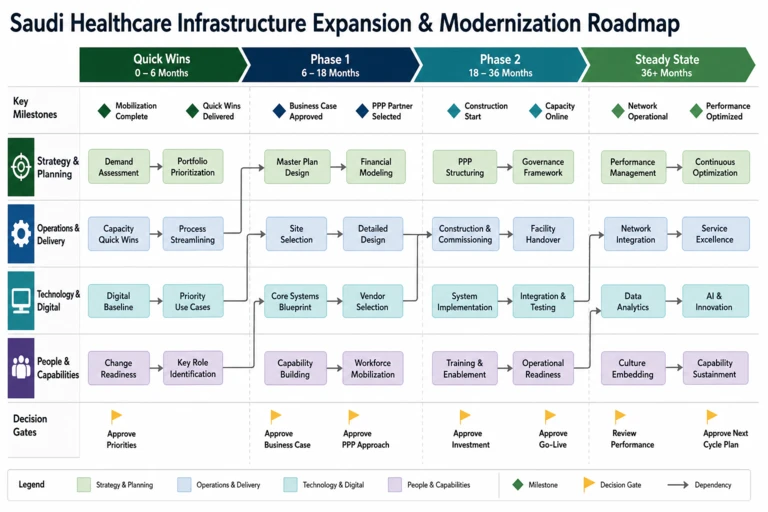
We developed a comprehensive healthcare infrastructure strategy aligned with national goals. The plan called for constructing new hospitals and specialty clinics in underserved regions and upgrading existing facilities to modern standards. A phased approach was designed, prioritizing projects to address the most urgent capacity gaps first. We incorporated public-private partnership models to leverage private investment and expertise in building and managing new facilities. The solution also integrated digital health readiness (e.g. telemedicine suites and electronic records infrastructure in new designs) to future-proof the facilities.
Approach
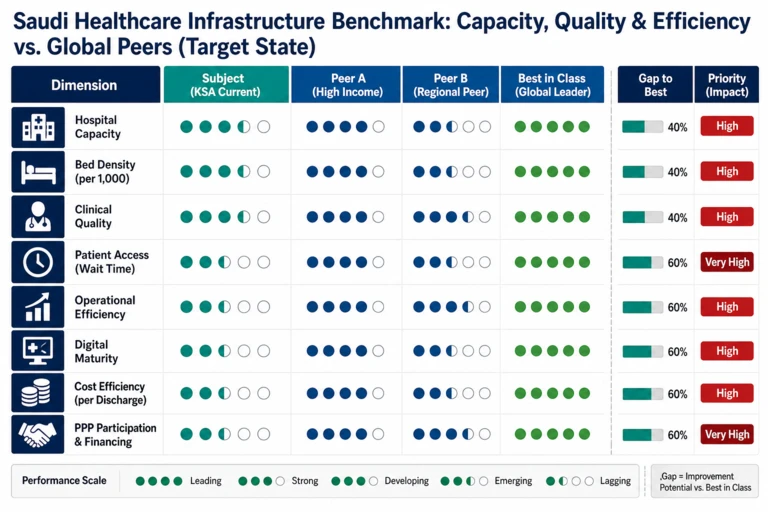
Our team conducted a thorough needs assessment, analyzing population growth data, epidemiological trends, and current bed-to-population ratios across regions. We benchmarked infrastructure metrics against global standards and identified shortfalls in capacity and service coverage. Stakeholder workshops were held with healthcare officials and providers to determine priority areas (such as regions with high population growth or limited access to care). We then developed feasibility studies and business cases for each proposed hospital project, outlining capital requirements, site selection, and operational plans. Throughout the process, we aligned recommendations with regulatory guidelines and the Kingdom’s Vision 2030 healthcare transformation framework.
Recommendations
Key recommendations included launching new hospital construction projects in high-need urban centers and fast-growing cities to add capacity. We advised upgrading several existing general hospitals into specialized centers (for cardiology, oncology, etc.) to improve care for chronic diseases. We emphasized adopting international design and quality standards for all new builds to ensure efficiency. We also recommended expanding public-private partnerships (PPPs) to finance and operate some of the new facilities, combining state funding with private-sector efficiency. Additionally, we highlighted the need for stronger workforce development (hiring and training more medical staff) and integration of digital health solutions in new hospitals to enhance service delivery.
Engagement ROI
Early results show significant benefits. The government secured funding and broke ground on multiple new hospitals and clinics per our roadmap. Surveys already report easier access to care and shorter patient wait times in areas where new facilities opened, with higher levels of patient satisfaction. The client also attracted private investment through PPP deals, accelerating project delivery and reducing public costs. By expanding capacity and modernizing infrastructure, the healthcare authority is on track to meet its Vision 2030 goals, ensuring the population is better served with world-class facilities.