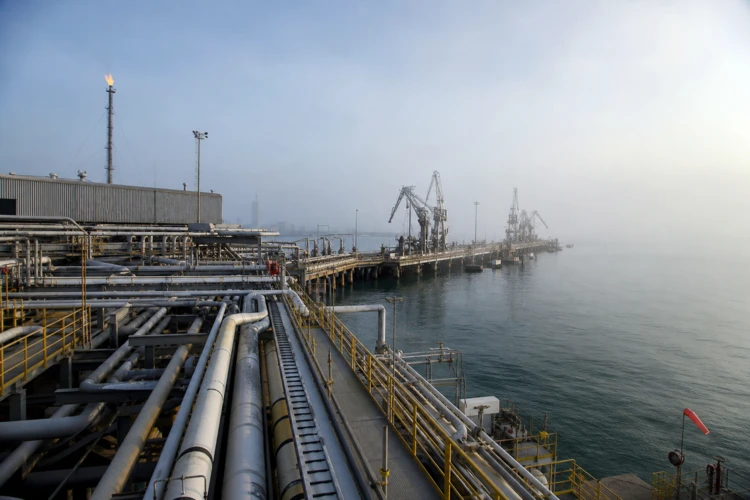
The conflict in the Persian Gulf that began in February 2026 has severely disrupted global fertilizer trade. WTO analysis shows outbound fertilizer-related shipments through the Strait of Hormuz to destinations outside the Persian Gulf came to a standstill once the conflict started and remained close to zero, with a stable resumption still uncertain. This matters because the Strait is a key channel for moving nitrogen and phosphate fertilizers, as well as key feedstocks. One industry overview estimated that up to 30% of globally traded fertilizer products, or around 16 million tonnes annually of nitrogenous, phosphates, and sulphur products, transit through Hormuz, and suggested the effective closure stalled an estimated one-third of all fertilizer trade, leaving 3–4 million tonnes per month unable to reach markets.
For Saudi-linked supply, the scale of exposure is clear in the Gulf’s export footprint. IFPRI notes the Gulf countries account for roughly 40% of global urea exports, and the WTO data blog estimates Gulf economies supplied 24.8% of global nitrogenous fertilizer exports and 11.4% of phosphatic fertilizer exports. IFPRI also highlights that, across urea and diammonium phosphate (DAP), the Hormuz closure effectively blocked around 21 million metric tons (MMT) of annual urea export capacity across the Gulf region (including Iran, Qatar, and Saudi Arabia) plus another roughly 4 MMT of DAP export capacity. In that context, Saudi Arabia fertilizer exports are not just a national commercial issue; they sit inside a concentrated global supply structure where sudden logistics interruptions can ripple quickly into pricing and availability.
Price Spikes, Then a Partial Reset—But Phosphates Stayed Tight
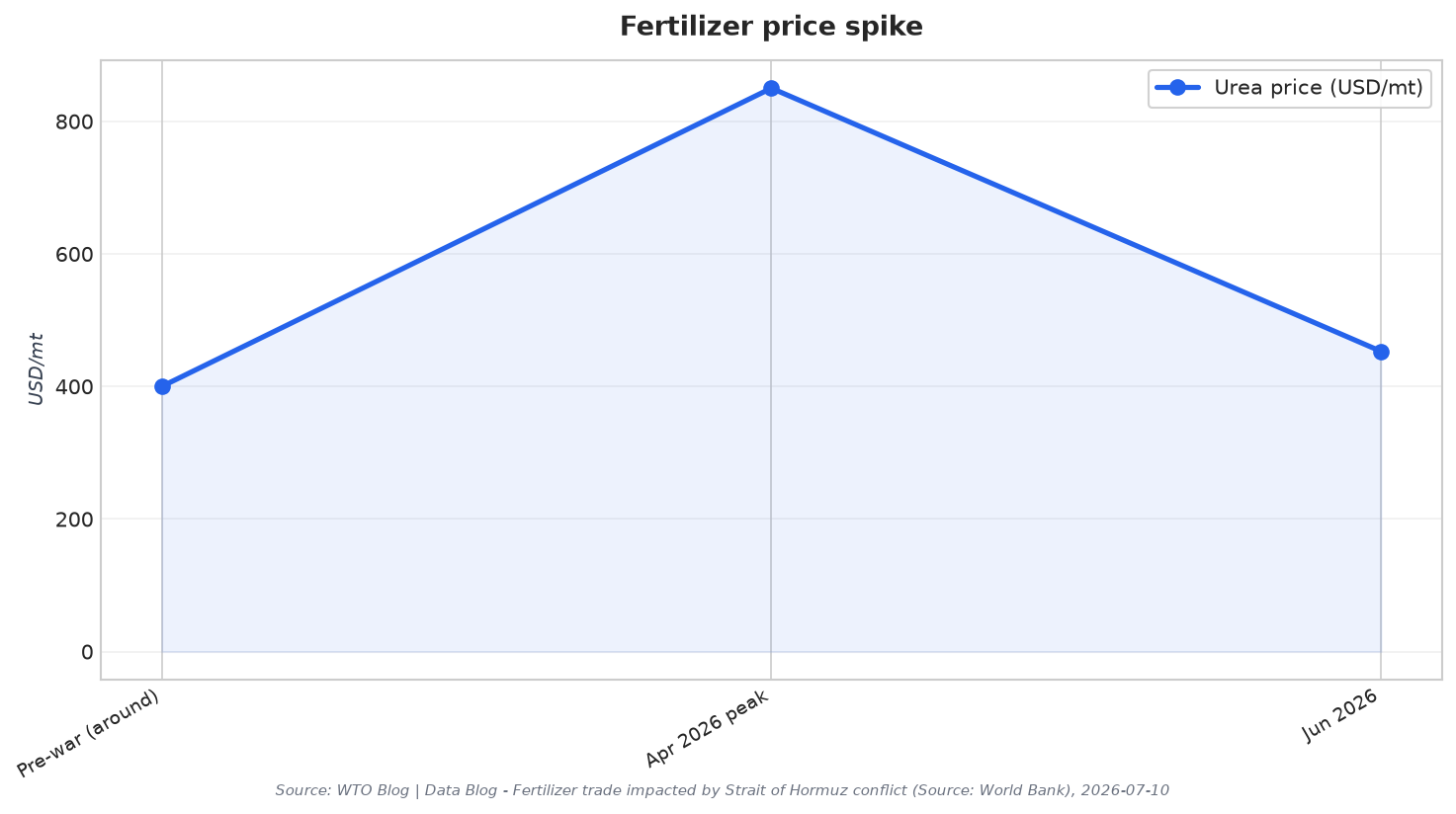
Prices moved sharply when trade through Hormuz was disrupted. WTO figures show urea prices rose from around US$ 400 per metric ton (mt) to over US$ 850/mt in April 2026, before falling again to US$ 453/mt in June. DAP prices climbed from approximately US$ 580/mt to around US$ 770/mt after the outbreak. IFPRI similarly described a surge through April, with world urea prices approximately doubling and DAP prices rising about 35%. Yet the recovery is uneven: IFPRI later reported phosphate fertilizer prices rose about 30% after the start of the Iran war and remained at those levels since mid-May, pointing to a market where nitrogen prices can cool faster than phosphate markets when feedstocks and logistics remain constrained.
Sulphur has emerged as a key pinch point for phosphate production and exports. IFPRI reported that the Strait closure curtailed exports of sulfur, an important feedstock in phosphate fertilizer production, and said sulfur shortages continued to constrain production and trade. A market note added that Saudi Arabia and the UAE temporarily suspended sulphur exports until alternative routes via the Red Sea could be secured, while granular sulphur FOB Arabian Gulf jumped from 80–90 dollars per tonne to 160 dollars per tonne in the first week of April. The same note described urea volatility as well, citing prompt cargoes FOB Gulf reaching 405–420 dollars per tonne, up from 285 dollars per tonne in mid-March, before broader easing later. These swings underline how feedstock and freight constraints can become just as important as plant capacity.
Saudi phosphate leadership is prominent in the numbers, but the 2026 disruption shows how quickly operational guidance can shift when logistics and inputs tighten. IFPRI estimates the Gulf accounts for 23% of global DAP exports and says Saudi Arabia, led by Maaden, is the largest producer, with approximately 6 MMT of phosphate fertilizer production capacity. In September 2026, IFPRI reported Maaden cut its 2026 phosphate production guidance and withdrew its ammonia guidance, citing sulfur supply and logistics disruptions. Meanwhile, global trade signals have softened: using mirror trade methods for some exporters, IFPRI found total mirror trade (based on 77 reporting importers) showed global nitrogen exports of urea, nitrogen sulfate, nitrogen nitrate, and anhydrous ammonia (in nitrogen equivalents) down 9% from January to June 2026 versus the same period in 2025. Together, these data points show why the Hormuz corridor remains a strategic stress test for Saudi exporters and their customers.
Why did the Strait of Hormuz disruption matter so much for fertilizer trade?
How did urea and DAP prices move during the 2026 disruption?
What does the disruption imply for Saudi Arabia’s fertilizer export position in phosphates?
How important is sulphur to the phosphate fertilizer supply chain during the crisis?
What broader export trend was seen in 2026 amid the disruption?