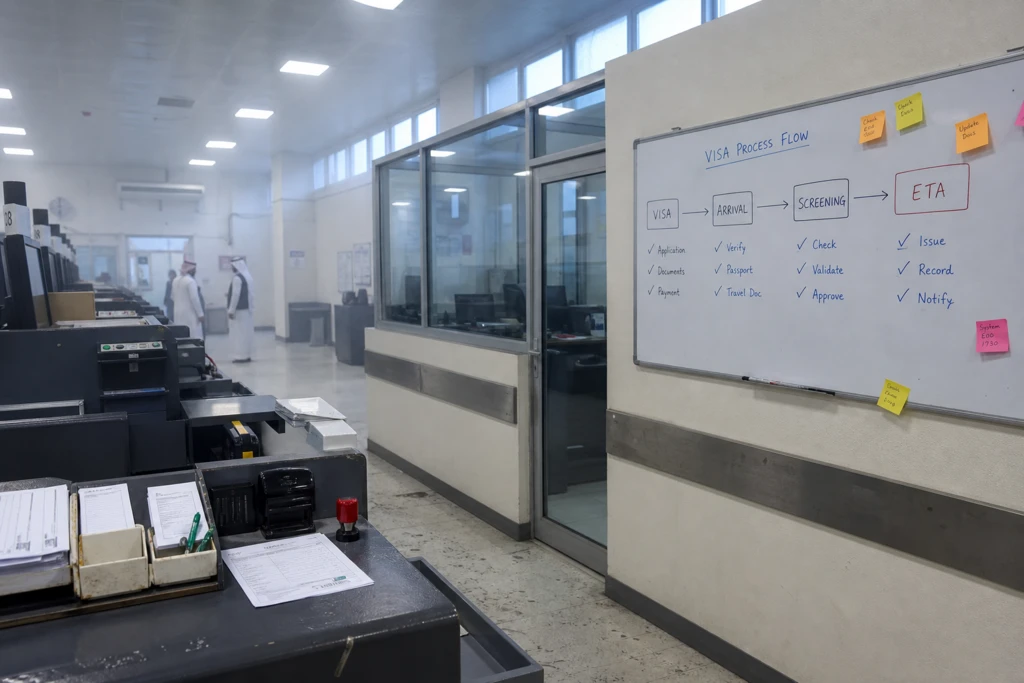
Saudi Arabia’s tourism strategy is moving from “permission to enter” toward “permission to plan.” Since the tourist visa launched in 2019, entry processes have been simplified through streamlined electronic visa systems and broader e-visa eligibility, described by industry coverage as among the fastest shifts in global entry regimes. In 2026, the reform story increasingly points to an electronic pre-clearance model that resembles an ETA approach, aimed at reducing friction for inbound travel while keeping security and data requirements centralized. Within that context, the topic of a Saudi Arabia electronic travel authorization sits less as a branding change and more as a funnel-widening tool: easier intent-to-visit conversion, faster trip decisions, and fewer paperwork barriers for short-notice leisure, business, and event travel.
The payoff for lower entry friction is visible in the latest visitor totals. Ministry of Tourism data cited publicly puts 2024 at roughly 29.7 million international arrivals, up 8% year on year, alongside about 86.2 million domestic trips, for a total near 116 million. In 2025, total visits were about 122 million, up 5%, with 29.3 million international and 93.3 million domestic. This matters for inbound policy design. International volume has held close to the 30 million mark, while overall growth has been driven by domestic momentum. That stability suggests the next gains are about conversion and yield: making it easier for new markets to enter, and easier for past visitors to come back without repeating heavy documentation steps.
Why 2026 Reforms Focus on Converting Interest Into Arrivals
Saudi Arabia’s Vision 2030 tourism target has been revised to 150 million annual visits by 2030, comprising 70 million international and 80 million domestic. Progress to date shows scale, but also the need for continued acceleration. The same tracking that notes the 2024 totals also highlights 2025 signals of demand strength: Q1 international arrivals were up 15%, with visitor spending up over 20% versus Q1 2024. In the first half of 2025 alone, 60.9 million tourists generated about SR161 billion of spend, and the 2025 summer season drew roughly 32 million visitors, up 26% on the prior summer. These are the kinds of bursts that an ETA-style authorization is built for: travel that is seasonal, event-led, and often booked quickly.
The inbound funnel also widens when access policy lines up with product expansion. Analysts note eased entry rules for many markets, expanded capacity at key airports, and regular hosting of concerts, sporting events, business forums, and exhibitions that were rare less than a decade ago. International diversification is showing in the mix: European arrivals rose about 14% in 2025 reporting, and the first nine months saw European growth of 14% and East Asia Pacific growth of 15%. Meanwhile, the foundation remains large enough to matter economically. Data summarized from the World Travel and Tourism Council’s most recent Economic Impact Report estimates Saudi Arabia’s travel and tourism sector activity in 2025 at about USD 178 billion, described as the largest market in the Middle East by a wide margin.
From a funnel perspective, a visa-to-ETA shift is ultimately about repeatability. When international arrivals hover around 30 million, the next stage is not only attracting first-time visitors but also turning one-off trips into habitual travel, including multi-stop itineraries as a planned GCC unified tourist visa progresses in the second half of the decade. Saudi Arabia’s own measurement focus supports this approach: reports describe detailed visitor and spending data being used to fine-tune promotion and guide product development. Entry reforms then become an enabler for everything else: faster processing supports last-minute events, streamlined authorization supports multi-city trips, and clearer digital steps help markets new to the destination feel confident enough to book.
How does a Saudi Arabia electronic travel authorization widen the inbound tourism funnel?
What were Saudi Arabia’s international arrival levels in 2024 and 2025?
How fast did total visits grow in 2025, and what drove the increase?
What spending and volume indicators point to strong demand around 2025?
How large was Saudi Arabia’s travel and tourism sector activity in 2025 in regional context?