When shipping lanes tighten, pharmaceutical continuity becomes less about procurement intent and more about logistics reality. Saudi Arabia is the largest pharmaceutical market in the GCC, yet it still relies on imports for 70% to 80% of its pharmaceutical supply, according to Mordor Intelligence. That import profile makes the national distribution system central to medicine availability across hospitals, pharmacies, and public procurement channels. It also raises the stakes for how fast products can clear, move, and be replenished when global routing becomes constrained. In that context, the Saudi Arabia drug shortages supply chain conversation starts with transportation capacity, compliant handling, and an operating model that can cope with sudden variability.
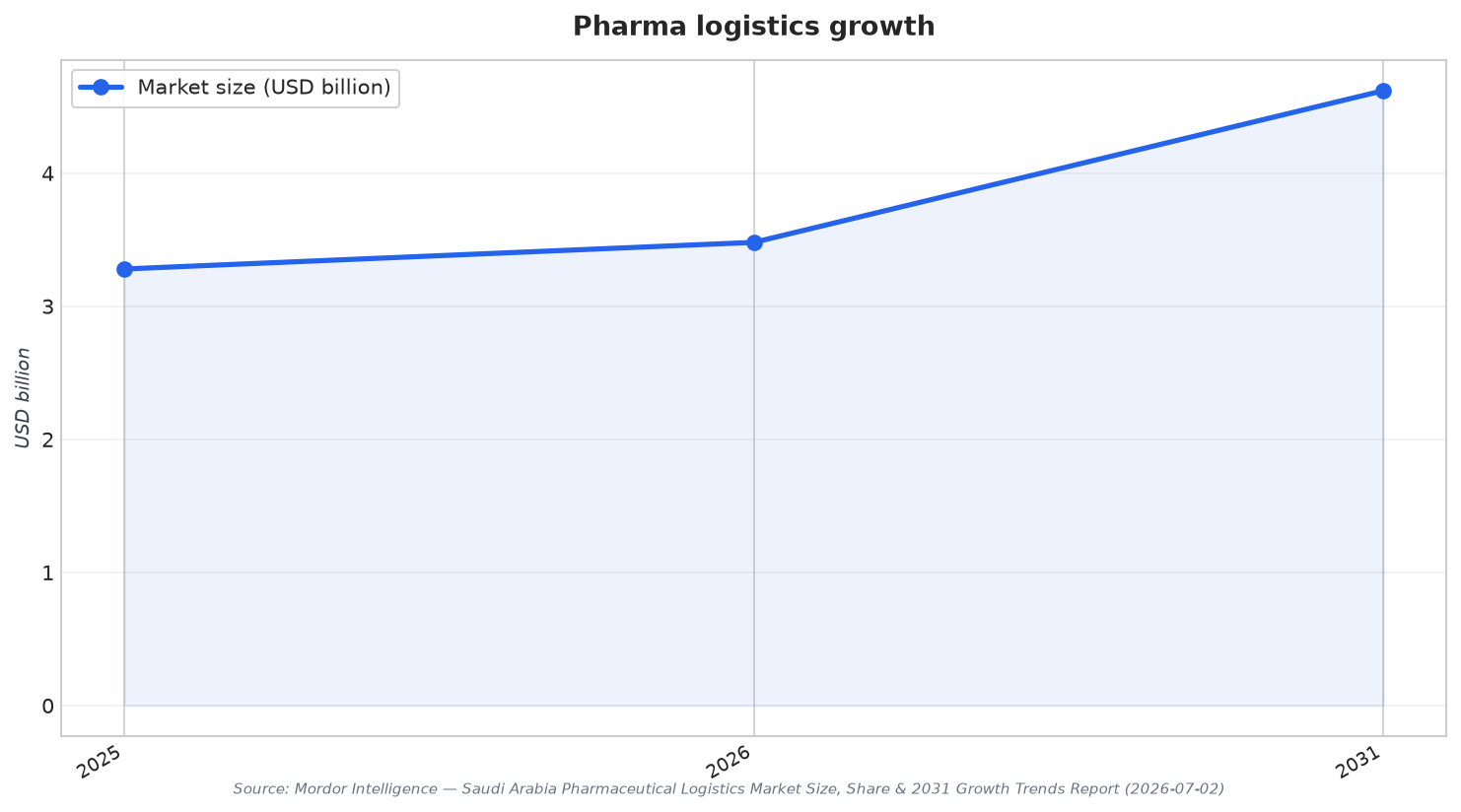
Logistics data shows how much of the work sits in the movement layer. Mordor Intelligence estimates the Saudi Arabia pharmaceutical logistics market at USD 3.28 billion in 2025, rising to USD 3.48 billion in 2026 and USD 4.62 billion by 2031, with a 5.84% CAGR from 2026 to 2031. Within that market, transportation held 62.78% of share in 2025, highlighting how exposed medicine flow can be to disruptions that hit ports, air routes, or domestic linehaul. The same report notes value-added services are projected to expand at an 8.67% CAGR through 2031, reflecting growing focus on services such as serialization support and temperature deviation reporting that can reduce avoidable losses during stressed trade conditions.
Where Shortage Risk Concentrates: Injectables, Cold Chain, and Capability Gaps
Shortage risk becomes most visible where products are harder to substitute, store, or manufacture locally. A survey-based study in the Saudi Pharmaceutical Journal describes sterile injectable products (SIPs) as a critical class of pharmaceuticals that frequently face shortages and can compromise patient care. The study links shortages to disruptions within the pharmaceutical supply chain and emphasizes that domestic manufacturing of sterile injectable products remains limited, creating dependence on international suppliers. It argues for a multilevel response that includes advanced demand forecasting, risk-based inventory management, promotion of local manufacturing capacity, and integration of emerging technologies such as AI to strengthen resilience. It also frames addressing drug shortages and promoting local production as integral components of Saudi Vision 2030, which emphasizes self-sufficiency and resilience in essential medicines.
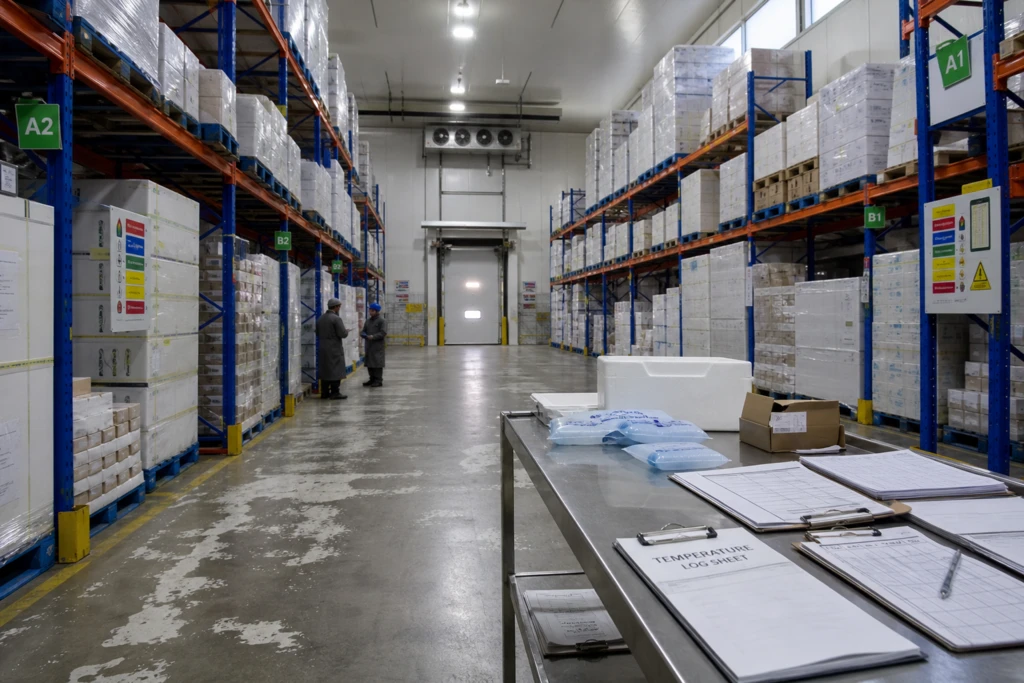
Cold chain execution is another pressure point when routes change and dwell times extend. Mordor Intelligence estimates the Saudi Arabia cold chain logistics market at USD 2.26 billion in 2026, reaching USD 2.76 billion by 2031, while noting pharmaceuticals and biologics will expand at a 5.22% CAGR through 2031. Yet the same source flags operational constraints: Saudization quotas can amplify an already tight supply of refrigeration technicians and GDP-compliant drivers, and skill gaps in data analytics, IoT troubleshooting, and hazardous-material protocols can elevate safety risks when handling biologics that may lose efficacy after minor temperature excursions. These constraints matter most during disruption, when rerouting and exception handling become the norm rather than the edge case.
Saudi Arabia is also investing in more compliant infrastructure and scaling broader logistics capacity, which can help buffer shocks. IMARC values the Saudi Arabia logistics market at USD 55.29 billion in 2025 and expects it to reach USD 83.41 billion by 2034, at a 4.67% CAGR from 2026 to 2034, while highlighting the Kingdom’s access to Red Sea, Arabian Gulf, and Indian Ocean shipping lanes. On the healthcare side, IMARC reports that in October 2025 AJEX Logistics Services launched Saudi Arabia’s first GMP-GxP compliant logistics facility in Riyadh, a purpose-built 3,000-square-meter site designed for temperature-controlled storage and distribution of pharmaceutical products. During the COVID-19 pandemic, a Cureus case study notes that the Kingdom achieved a rapid transition from initial scarcity to a surplus of essential supplies, underscoring that adaptive resilience is possible even when global systems strain.
Why do shipping disruptions increase medicine shortage risk in Saudi Arabia?
What does market data suggest about the biggest vulnerability inside pharmaceutical logistics?
Which product category is highlighted as frequently facing shortages in Saudi Arabia?
What cold-chain factors can worsen shortage risk for biologics?
How does the Saudi Arabia drug shortages supply chain discussion connect to new logistics investments?