Saudi Arabia is pushing to grow more food with less water, because water scarcity is a structural constraint on the sector. Arab News reports that more than 90 percent of the Kingdom’s water needs are supplied by non-renewable groundwater and desalination, while under 2 percent of the land is arable. Renewable freshwater resources are estimated at under 100 cubic meters per person annually, a level described as well below the threshold for absolute water scarcity. At the same time, demand is rising with population growth beyond 35 million and Vision 2030 goals to expand local food production, increasing pressure on limited water resources.
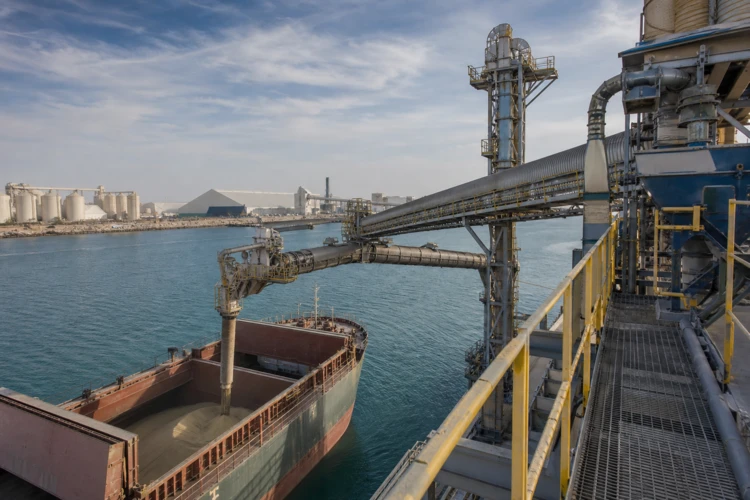
This is why desalination has become a core part of the water-agriculture nexus, even as policymakers recognize tradeoffs. Vision2030.ai’s water consumption profile says Saudi Arabia is the world’s largest producer of desalinated water, accounting for approximately 22 percent of global desalination capacity. It adds that the Saudi Water Authority operates a network of plants along both the Red Sea and Arabian Gulf coasts, with total production capacity exceeding 7.5 million cubic metres per day, and that desalinated water supplies the majority of municipal and industrial demand in major cities. Yet Vision2030.ai’s agriculture investment guide notes that SWCC produces desalinated water, though current costs limit its use for agriculture, making integration and efficiency improvements critical for scaling farm use.
Why Controlled-Environment Agriculture Is the Link Between Water and Food
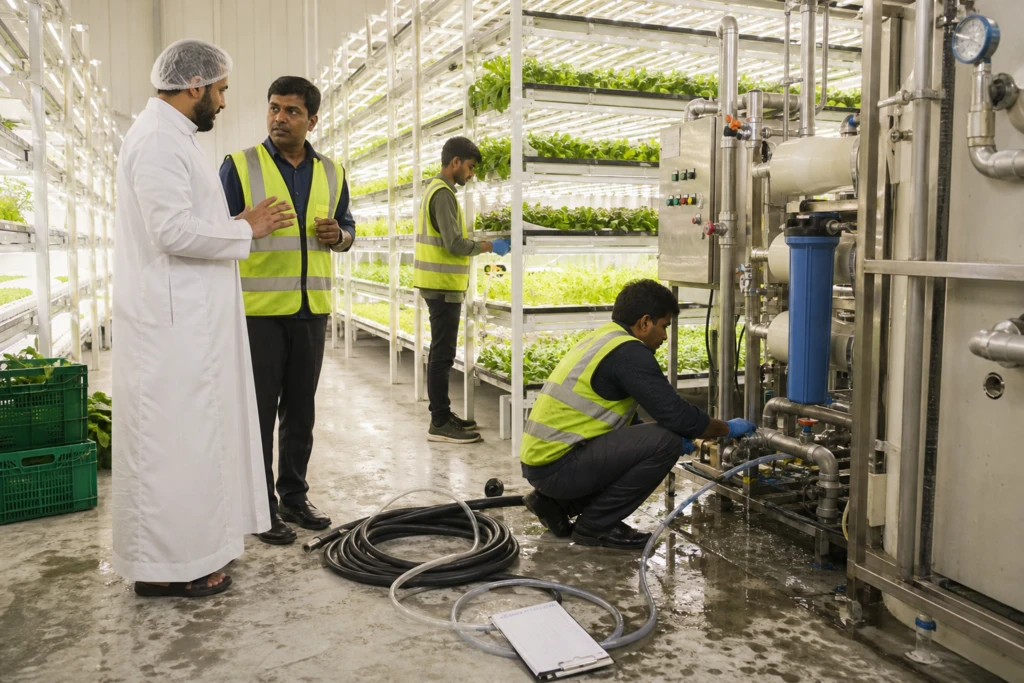
Controlled-environment agriculture is positioned as the efficiency bridge between constrained water supplies and the need for dependable local output. Arab News cites controlled systems such as hydroponics, greenhouses, and vertical farms delivering up to 95 percent water savings, enabling year-round production and decoupling output from land and water constraints. In parallel, precision irrigation is replacing flood irrigation across key crop sectors. Arab News says drip and smart sprinkler technologies supported by the Saudi Irrigation Organization in partnership with the Food and Agriculture Organization are reducing water use by 20 to 60 percent while lowering pumping energy requirements. Together, these upgrades are building a practical pathway for Saudi Arabia’s vertical farming and desalination integration to support domestic supply without relying on traditional, water-intensive methods.
Market signals show the shift is not only a policy narrative but also an investment theme. Mordor Intelligence estimates the Saudi Arabia Agriculture Market size at USD 15.20 billion in 2026 and anticipates it will reach USD 20.30 billion by 2031, at a CAGR of 5.96% during 2026-2031. The same report links ongoing investment to “desalination-fed irrigation” and controlled-environment agriculture, and describes investment momentum toward desert-adjacent greenhouse estates that pair solar power with desalination. It also states that vegetables had the largest market share at 38% in 2025, driven by controlled-environment agriculture that supports year-round output of tomatoes, cucumbers, and peppers despite extreme seasonal temperature variations.
Saudi water policy is also tightening around what is sustainable, reinforcing the pivot to controlled systems and alternative supplies. Vision2030.ai’s sector overview notes that decades of groundwater extraction depleted non-renewable aquifers, prompting a fundamental policy shift and progressively tighter agricultural water allocations, including the phase-out of wheat production from domestic irrigation. Vision2030.ai’s water consumption profile adds that agriculture has historically been the largest water consumer, accounting for over 80 percent of total water withdrawal, and it describes the shift toward greenhouse and hydroponic systems as part of reducing agricultural water intensity. In practice, the strategy is about combining desalination, efficiency mandates, and controlled environments so local production can expand while scarce water is managed more carefully.
Why is Saudi agriculture so dependent on irrigation and alternative water supplies?
How much water can controlled-environment agriculture save in Saudi Arabia?
What water efficiency gains come from replacing flood irrigation?
What is Saudi Arabia’s desalination capacity and global position?
How is Saudi Arabia integrating desalination with vertical farming to improve food security?