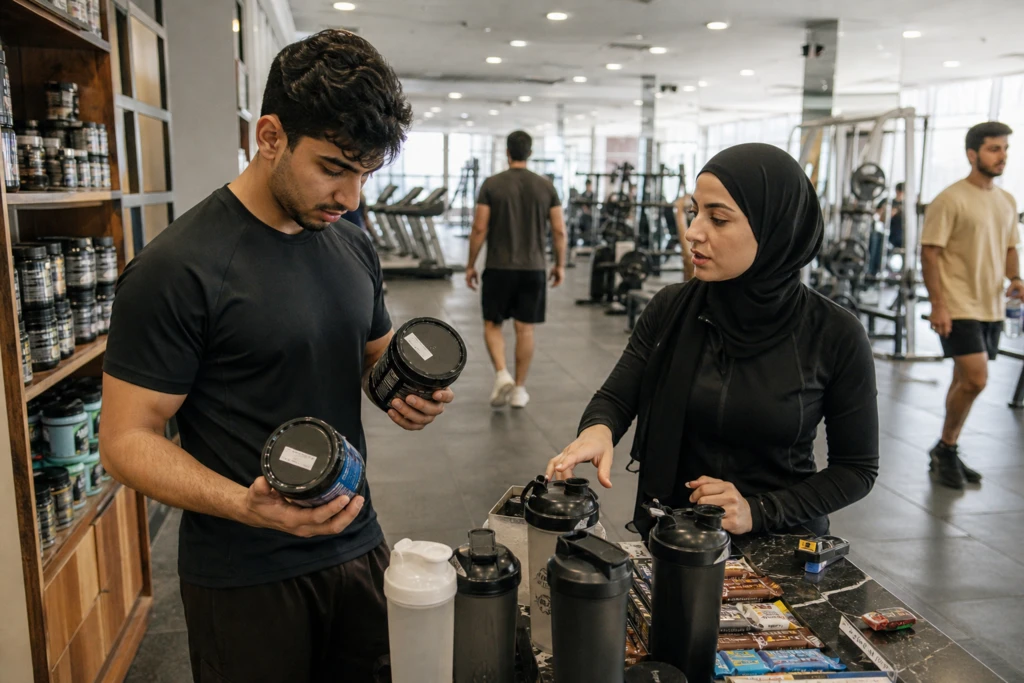
Sports nutrition and supplement brands are treating Saudi Arabia as a high-priority growth arena because consumer spending is increasingly tied to everyday wellness goals. Multiple reports point to a market that is large enough to justify aggressive product launches, while still fragmented enough for brands to win share with strong positioning. Grand View Research estimates the Saudi Arabia sports nutrition market generated USD 388.7 million in revenue in 2025 and could reach USD 716.6 million by 2033, implying an 8% CAGR from 2026 to 2033. IndexBox separately values the Saudi sports nutrition products market at about USD 450–550 million in 2026. These ranges help explain why brands are investing in distribution, influencer-led marketing, and new formats that feel more “lifestyle” than “bodybuilding.”
Demand fundamentals are strengthening. IndexBox links market momentum to a young, digitally connected population and says fitness participation exceeds 25% among adults. That participation translates into repeat purchasing, especially in proteins and amino acids, which IndexBox estimates make up roughly 45–50% of market value. Ken Research also highlights sports supplements such as protein powders, amino acids, and creatine as a primary driver, while noting sports drinks have been a leading revenue segment. Grand View Research adds specificity, stating sports drinks held the largest share in 2025 with a 40.7% revenue share in Saudi Arabia. For brands, the opportunity is not only “more users,” but users spreading purchases across hydration, performance, and recovery routines.
Where the Money Is Moving: Online, Clean Labels, and Personalization
The route to market is changing quickly. IndexBox estimates e-commerce and direct-to-consumer now account for about 35–40% of retail sales, supported by social media marketing, fitness influencer partnerships, and subscription models. In the broader supplements and functional foods landscape, Ken Research reports internet penetration at 99% as of 2023 and projects Saudi e-commerce could reach $12.3 billion in future, with 20% annual growth. These dynamics reward brands that can sell education and trust at the point of purchase. They also reward differentiated formulations: IndexBox estimates clean-label demand for non-GMO, stevia-sweetened, and naturally sourced products is growing around 15–18% annually, while targeted formulations (including gender-specific and condition-specific blends like recovery and gut health) are growing 20–25% annually.
Brands are also betting big because the competitive landscape includes both global leaders and local names, which raises the pace of innovation. Ken Research lists participants such as Herbalife Nutrition Ltd., Optimum Nutrition (Glanbia Performance Nutrition), BSN, MusclePharm, MyProtein, GNC, PepsiCo (Gatorade), The Coca-Cola Company (Powerade), Abbott Laboratories, Nestlé S.A., and Almarai Company. At the same time, supply realities shape strategies. IndexBox estimates Saudi Arabia remains 70–80% import dependent for total supply, with major sourcing from the United States, Europe, and Southeast Asia for specialized amino acids and performance ingredients. That import reliance makes pricing and availability sensitive to supply volatility and capacity constraints, including high-purity (>90%) protein isolates.
Regulation and trust are major reasons brands are investing in compliance, packaging, and authentication. IndexBox flags regulatory complexity around ingredient approvals and health claims, especially for novel ingredients and WADA-compliant formulations, as a barrier that can slow innovation cycles. It also warns that counterfeit and substandard products persist in certain channels, undermining consumer confidence and forcing brands to spend on brand protection. In parallel, Precedence Research describes a consumer base led by adults, who hold a 75% share of dietary supplement consumption, and notes powders account for 12% of forms, driven by sports nutrition and protein powders. Put together, the Saudi market rewards brands that can deliver verified quality, clear claims, and convenient formats across both retail and fast-growing online channels.
How big is Saudi Arabia’s sports nutrition market, based on the sources?
Which product segments are leading in Saudi Arabia sports nutrition?
How much of sports nutrition sales are happening online in Saudi Arabia?
What are the biggest obstacles brands face in Saudi Arabia?
What is driving brand interest in the Saudi Arabia sports nutrition supplements market?