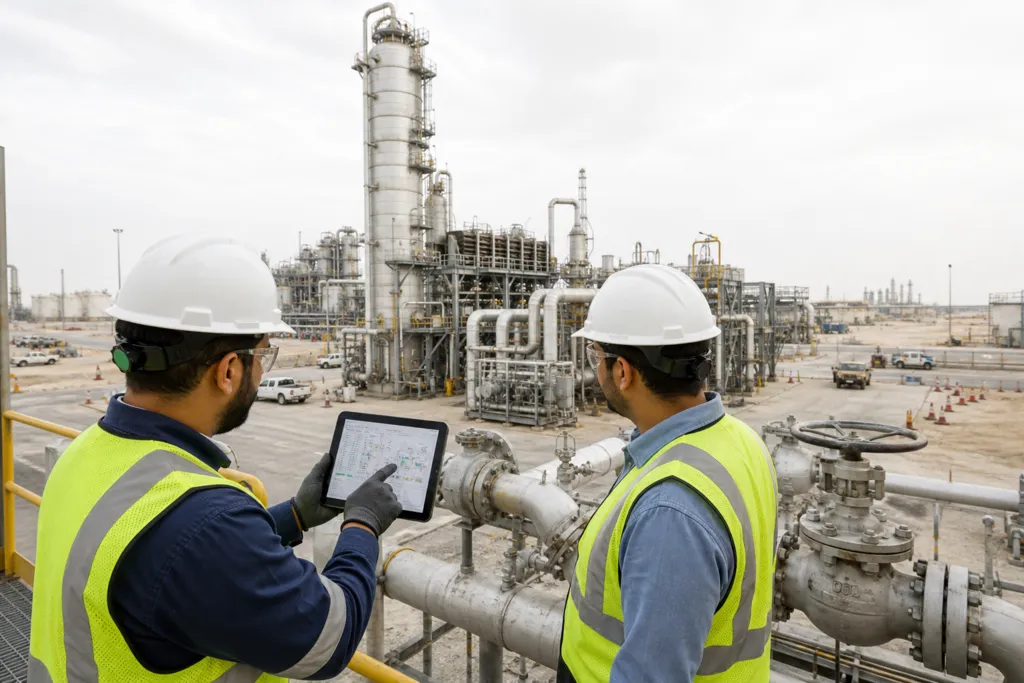
Carbon capture Saudi Arabia is increasingly framed as a practical route to cut emissions without dismantling existing industrial strengths. Vision 2030 sets the broader direction. It aims to diversify the economy, reduce the carbon intensity of the energy system, and position the Kingdom as a leader in sustainable development. In that context, Carbon Capture, Utilisation, and Storage (CCUS) is presented as an enabler for sectors that are hard to abate, while allowing continued use of established hydrocarbons infrastructure and industrial capabilities.
In Al Khobar, senior leaders and government officials highlighted CCUS as a key part of Saudi Arabia’s energy transition strategy, linked to broader renewable energy ambitions. The event was organised by the Energy Committee of AmCham Saudi Arabia, in partnership with the US Chamber of Commerce, and featured a new white paper developed by Mindsets. Mindsets’ research focused on the current state of CCUS in Saudi Arabia and its future potential, emphasizing emissions reduction, industrial competitiveness, and energy security.
A core message from the white paper is that CCUS has moved beyond early discussion. The concept phase is described as over, with the technology now in the execution phase. Saudi Arabia is said to be moving ahead with multiple initiatives, and the Eastern Province is positioned as a leader in building capacity. The discussion also links CCUS to critical sectors named in the findings, including oil and gas, petrochemicals, power generation, and heavy industry.
CCUS Investment Reality Check on the Net-Zero 2060 Path
Net-zero ambitions across the Middle East face an investment and delivery challenge. Wood Mackenzie’s Energy Transition Outlook says achieving net zero by 2060 would require cumulative investment of US$5.3 trillion for the region. The same outlook says the Middle East, under a base case, is tracking towards 2.6°C of warming. For Saudi Arabia specifically, the outlook describes a dual-track strategy: scaling renewables to displace domestic crude burn and free up volumes for export, while continuing upstream expansion.
Targets and projections also show a gap that matters for planning. Saudi Arabia is targeting 50% clean power by 2030, while Wood Mackenzie’s base case projects progress closer to 20%. That gap helps explain why CCUS is repeatedly positioned as complementary rather than optional, particularly for industries where emissions are hard to eliminate quickly. The Saudi discussion also sits alongside broader decarbonisation moves mentioned in sources, such as efforts to build a regional hydrogen value chain and drive industrial decarbonization under Vision 2030 partnerships.
Execution, however, must still address known operational and integrity questions around carbon capture. One analysis highlights issues such as mechanical downtime for complex capture solvent systems, energy penalties from running regeneration units and compressors, and the risk that captured CO2 is redirected to enhanced oil recovery rather than permanent storage. Separately, policy-focused commentary on scaling CCUS points to the need for shared infrastructure, public-private partnerships, and robust monitoring and verification frameworks to ensure environmental integrity.
What does “carbon capture Saudi Arabia” mean in practice?
Has CCUS in Saudi Arabia moved beyond planning?
Which region is highlighted as leading CCUS capacity building?
What investment scale is cited for a Middle East net-zero-by-2060 pathway?
What risks can weaken CCUS climate impact if not managed?