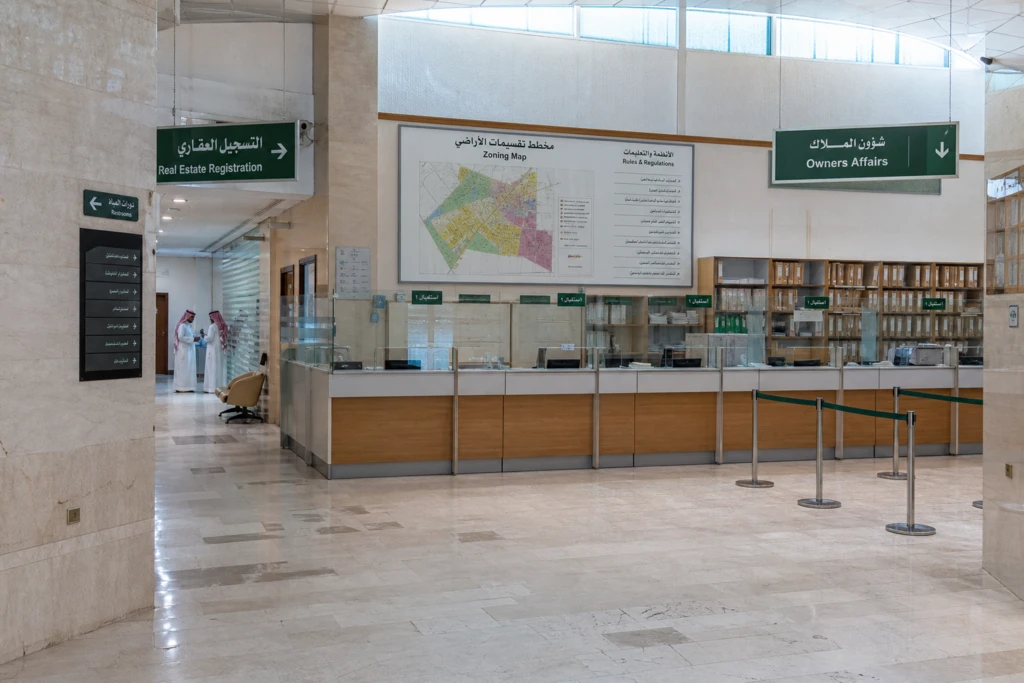
Saudi Arabia launched the Saudi Properties platform as a centralized digital gateway to prepare for the Non-Saudi Property Ownership Law taking effect in mid-January 2026. REGA positioned the platform to streamline eligibility checks, applications, and regulatory oversight, and to improve transparency for foreign investors while supporting controlled expansion of non-Saudi participation in real estate. The structure is designed to reduce administrative fragmentation by consolidating data and coordinating relevant government entities through one official channel. In parallel, recently approved measures include using a digital ID system for foreign buyers, reinforcing a more standardized process and clearer compliance trail.
The legal shift is anchored in a law approved in 2025 that enters into force in January 2026 and creates a formal basis for non-Saudi individuals and entities to acquire property in designated areas. The framework is not presented as an open-ended liberalisation. It is built around defined eligibility conditions, governance requirements, and regulatory oversight. Sources also describe that, under previous frameworks, ownership by non-Saudis was generally restricted and available only through narrower approval-based routes, or via corporate vehicles, long-term leases, or special investment licences. The 2026 regime changes the route to market, but keeps the emphasis on verification and controlled access.
How the 2026 Executive Regulations Turn the Law Into a Process
On 23 June 2026, Saudi Arabia’s Cabinet approved the Executive Regulation of the Law of Real Estate Ownership by Non-Saudis and endorsed the geographic areas designated for non-Saudi ownership. This is described as the key operational step after the regime entered into force in January 2026. The approach is a rules-based, designated-zone model, meaning each transaction still needs asset-level and vehicle-level analysis. That includes whether the asset falls within the approved geographic scope, whether the foreign buyer is eligible, what real estate right may be acquired, and whether the right can be registered. The law also permits eligible foreign investors to acquire ownership and other in-rem rights, including usufruct and easements.
Registration and oversight are explicitly built into the transaction flow. One source states that every acquisition must be registered through the REGA platform, and that transfer fees and taxes apply on registration, with applicable rates set under the implementing regulations and varying by transaction type. Another source describes Saudi Properties as a fully integrated government platform designed to regulate foreign ownership through a transparent legal framework that connects investors directly with government authorities. Taken together, the Saudi Properties platform foreign ownership pathway is framed as a single, official gateway that combines eligibility verification, designated-zone enforcement, and traceable registration steps rather than ad hoc approvals.
The policy package sits alongside broader sector reform signals captured in the sources. One report states that the percentage of Saudi families owning homes rose from 47% in 2016 to 65.5% by 2026, approaching a Vision target of 70%, while also flagging a need to expedite remaining executive regulations for certain laws, including non-Saudi ownership regulations. Separately, one source notes a five-year rent freeze in Riyadh limiting rent increases on residential and commercial properties until 2030. These points do not change the ownership rules, but they illustrate the wider regulatory environment in which the 2026 foreign ownership regime and its platform-based administration are being implemented.
What is the Saudi Properties platform and what does it do for non-Saudi buyers?
When did the non-Saudi real estate ownership law take effect in Saudi Arabia?
How did the 2026 executive regulations operationalise foreign ownership?
Do foreign buyers have to register purchases, and what costs apply?
How does the Saudi Properties platform foreign ownership process stay controlled rather than fully open?