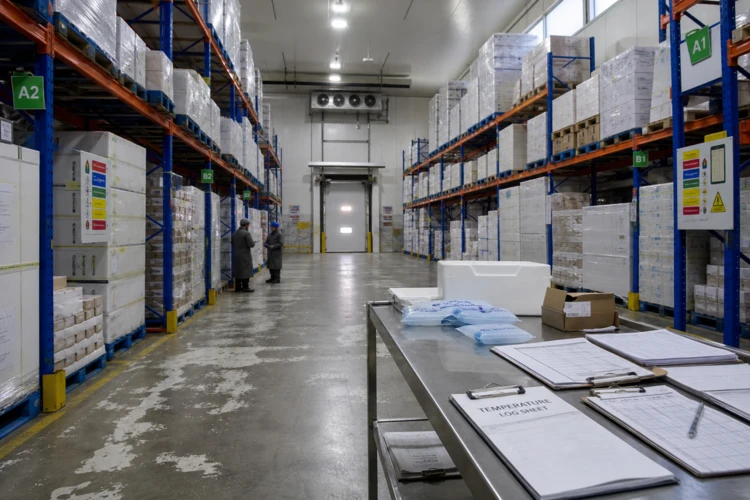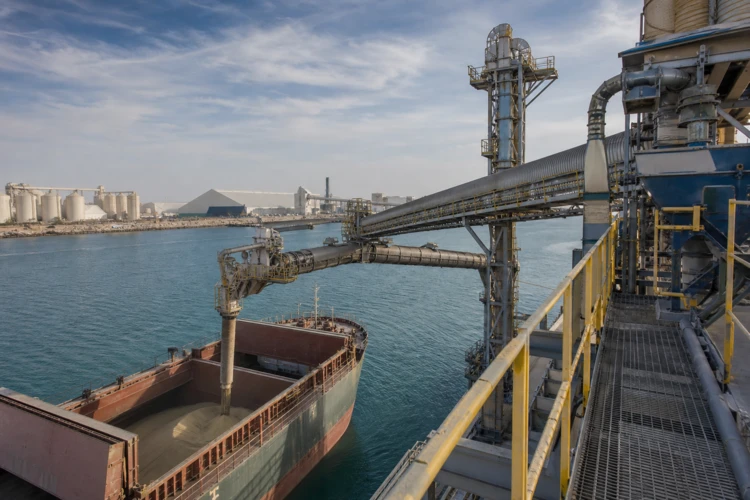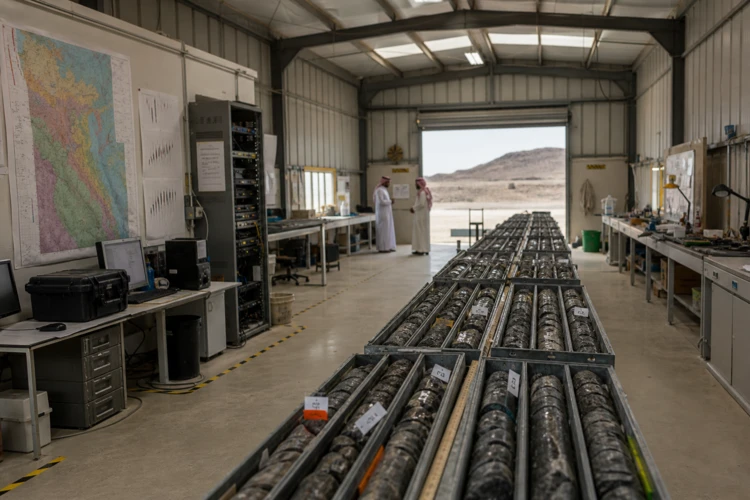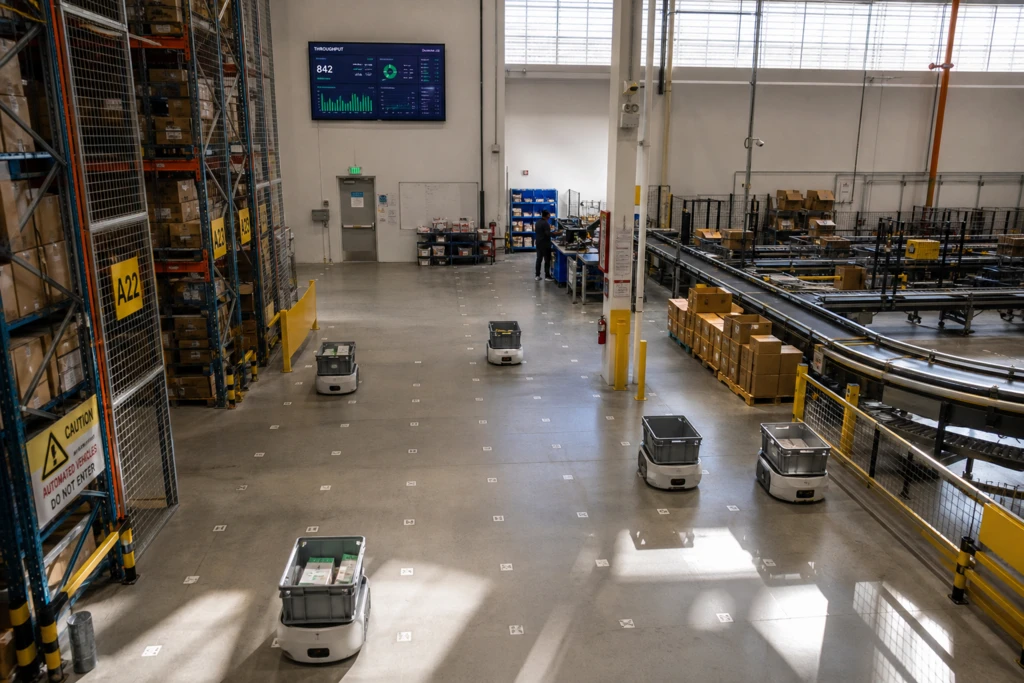
Robots are moving from pilots to economics in Saudi fulfilment. In Saudi Arabia’s 3PL warehousing market, manual warehousing still captured 63.83% share in 2025, but fully automated warehousing is forecast to expand at an 11.39% CAGR through 2031. That mix matters because 3PL operators price around space, labor, and service complexity. Storage led with 60.21% of market size in 2025, yet value-added services are projected to grow fastest at an 8.55% CAGR through 2031. As automation expands, it supports a shift from simple storage fees to operationally intensive fulfilment and inventory services that can change unit economics for both 3PLs and shippers.
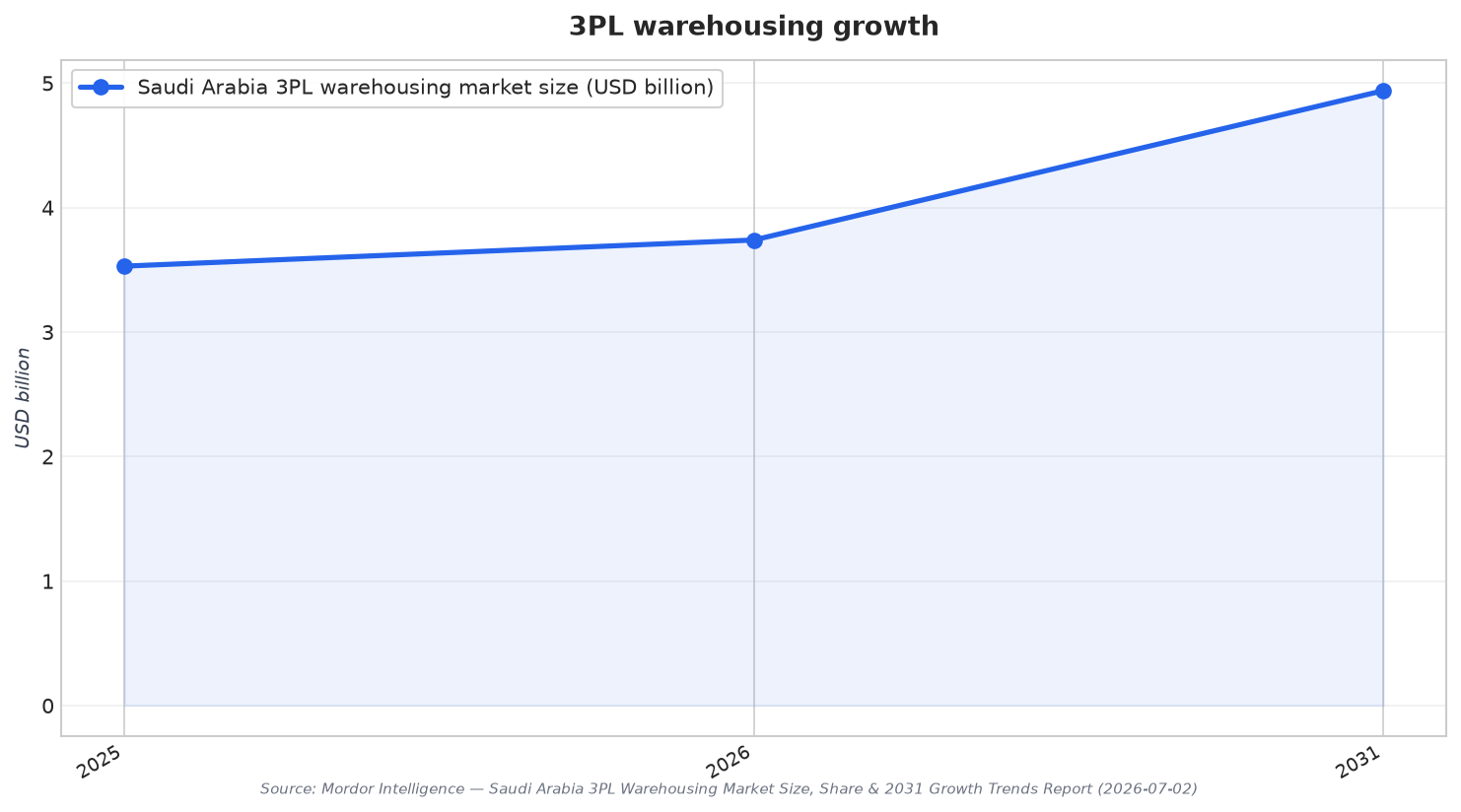
Macro logistics investment is also shaping the warehousing footprint that robots will serve. The National Industrial Development and Logistics Program activated 24 logistics centers by 2025 within a master plan of 60, adding infrastructure pull for outsourced operators. The logistics sector contributed SAR 82 billion (USD 21.84 billion) to GDP in 2025 and employed 421,000 professionals, while national targets point to SAR 115 billion (USD 30.64 billion) and 600,000 jobs by 2030. Demand is supported by SAR 280 billion (USD 74.60 billion) in transport and logistics investment contracts, with 80% of the logistics project pipeline open to private participation. Even the SAR 7 billion (USD 1.86 billion) Landbridge railway adds warehousing demand through bonded and transfer-oriented buffers between rail, road, and ports.
Where Warehouse Automation Hits the P&L for 3PLs
Automation is becoming its own spend category, with clearer market signals. Ken Research’s analysis cited a Saudi warehouse automation market valued at USD 211.0 million in 2025, projected to reach about USD 493.4 million by 2031 at a 15.2% CAGR. The same study links growth to e-commerce fulfilment volumes, logistics-zone development, higher throughput needs, stronger demand for inventory accuracy, and adoption of automated storage, robotic picking, machine vision, warehouse-control software, and integrated robotic and software-led systems. For 3PLs, these capabilities can reframe commercial models, because customers are not only buying racking space. They are buying service levels around speed, traceability, and error reduction, which strengthens the business case for charging for value-added workflows.
End-market mix is another reason the economics are shifting. Retail and e-commerce accounted for 32.67% of Saudi Arabia’s 3PL warehousing market size in 2025, and healthcare and pharma are the fastest-growing end users with an 8.85% projected CAGR through 2031. Temperature-controlled warehousing is forecast to advance at a 9.43% CAGR through 2031, even as non-temperature-controlled facilities held 69.4% share in 2025. Bonded warehousing is projected to grow at a 7.72% CAGR through 2031, while multi-client facilities held 53.09% share in 2025. Each of these segments can amplify the value of software-led visibility and robotics-enabled handling, especially when order profiles and compliance requirements become more demanding.
Robotics adoption is also tied to how Saudi Arabia’s broader logistics market is expanding. IMARC Group data cited in a 3PL market overview puts Saudi Arabia’s third-party logistics market size at USD 14.5 billion in 2025, with a forecast of USD 24.9 billion by 2034 at a 6.20% CAGR (2026–2034). The same overview notes a government allocation of USD 3 billion for logistics infrastructure in 2024 and describes a 73,000 km road network and a 4,500 km railway system as physical backbone for 3PL operations. Nexdigm adds that logistics providers are deploying automated material handling systems, robotic picking solutions, and autonomous mobile robots in large fulfilment centers, supported by technology partnerships with robotics manufacturers from Japan, Germany, and South Korea. In this environment, automation is less a gadget and more a strategic lever for service differentiation and scalable fulfilment capacity.
How fast is fully automated warehousing growing in Saudi Arabia’s 3PL sector?
What is the size outlook for the Saudi warehouse automation market?
How does Saudi Arabia warehouse automation connect to value-added 3PL revenue?
Which end-user industries are shaping fulfilment demand in Saudi 3PL warehousing?
What infrastructure signals are expanding the need for outsourced warehousing in Saudi Arabia?