Saudi Arabia medical tourism is developing inside a much larger tourism transformation. Vision 2030 sets a goal of 150 million visitors, split into 80 million domestic and 70 million international. Saudi Arabia reported visits topping 120 million in 2025, alongside a 5% gain in 2025 visits. Tourism currently accounts for 5% of GDP, with an ambition to reach 10% by 2030. That scale matters for healthcare travel because medical and wellness trips need reliable air links, transport, hotels, and a steady pipeline of demand across the calendar.
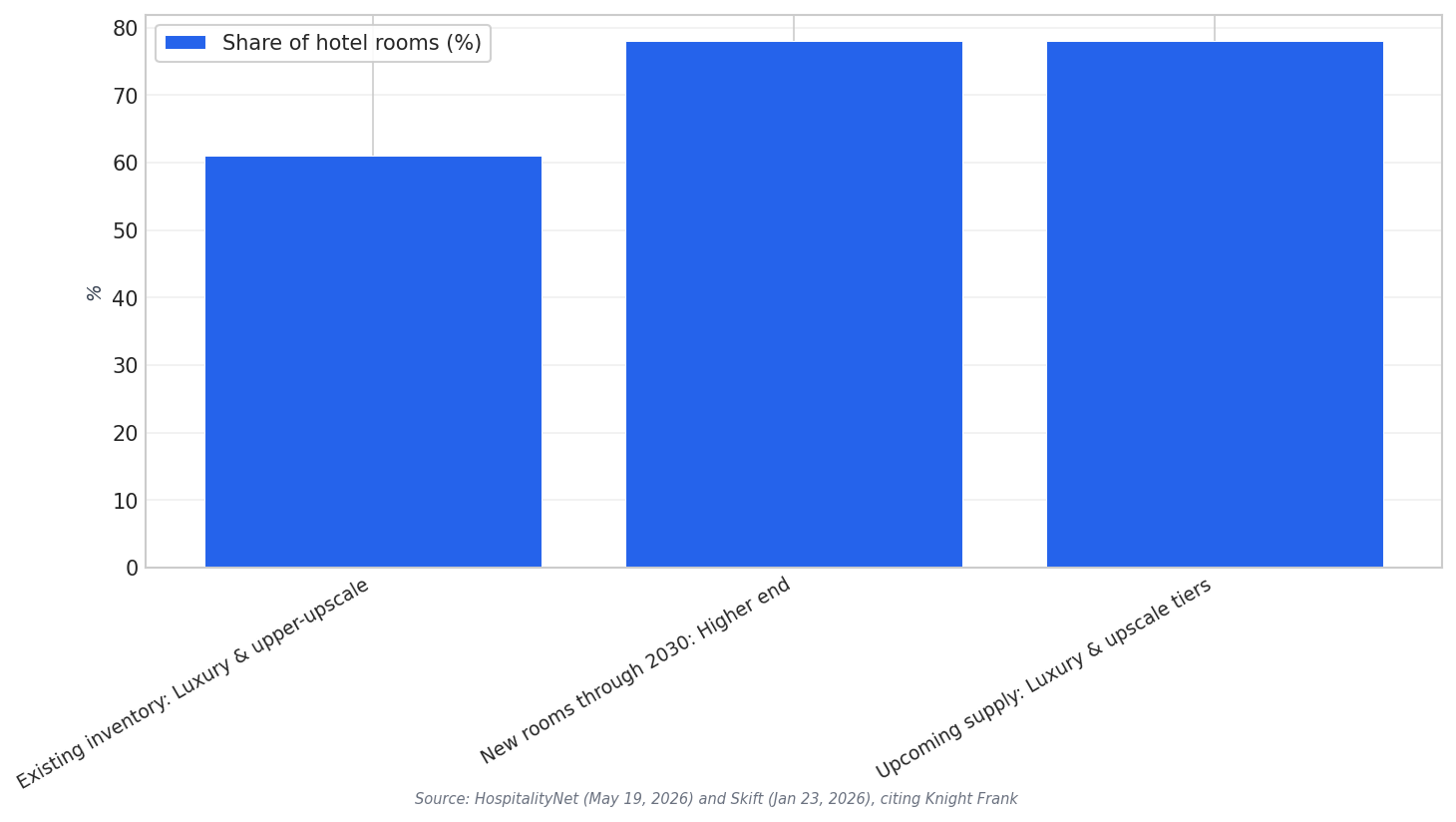
Hospitality capacity is being built fast, and it can support patient travel as well as families. Saudi Arabia is poised to deliver 362,000 new hotel rooms by 2030. A Knight Frank view in the same reporting highlights concentration and imbalance: around 61% of existing hotel inventory is still in luxury and upper-upscale segments, and nearly 78% of new rooms through 2030 are planned at the higher end. At the same time, the market sees rising demand for mid-market accommodation, creating a clear opportunity to rebalance supply for value-focused travelers.
How Vision 2030 Tourism Systems Support Healthcare Travel
Saudi Arabia’s revised Vision 2030 tourism approach emphasizes conversion, yield, and infrastructure utilization rather than only headline visitor numbers. Skift reports a shift away from speculative mega-projects aimed at Western tourists toward inherent strengths like religious pilgrimage, regional proximity, and cultural familiarity. The strategy points to a network of destinations, leveraging cities such as Makkah, Madinah, Jeddah, and Riyadh for specific strengths. For Saudi Arabia medical tourism, this “network” approach can help distribute services and simplify planning for visitors who combine treatment with short stays and family travel.
Year-round demand drivers can also lift destination visibility and airline connectivity, both relevant to medical and wellness segments. Saudi Arabia is hosting mega events including the 2027 Asian Cup, World Expo 2030, and the 2034 FIFA World Cup. Religious tourism remains central, with a target to host 30 million Umrah pilgrims annually by 2030, up from roughly 19 million pre-pandemic. These flows can sustain hotels, transport, and services beyond peak seasons. They also increase the incentive to create more accessible, mid-market accommodation, which benefits medical travelers and companions.
Innovation in healthcare is being cultivated in parallel, which can strengthen the “care” side of the medical travel equation. Redesign Health partnered with Sanabil Investments, a wholly owned company by the Public Investment Fund, to open the Sanabil Venture Studio by Redesign Health in Saudi Arabia. The partnership aims to jointly develop and launch at least 20 healthcare companies in the kingdom. The venture studio has built partnerships with leading public and private healthcare institutions, including the Saudi Ministry of Health, Tawuniya, and Fakeeh Care Group. This kind of ecosystem building supports long-term capability, which is critical if Saudi Arabia medical tourism is to compete as a regional healthcare destination by 2030.
What is the Vision 2030 visitor target linked to Saudi Arabia medical tourism?
How many hotel rooms are planned in Saudi Arabia by 2030?
What supply imbalance could affect medical travelers and families?
Which events are part of Saudi Arabia’s year-round demand strategy?
What healthcare-company building initiative was announced in Saudi Arabia?