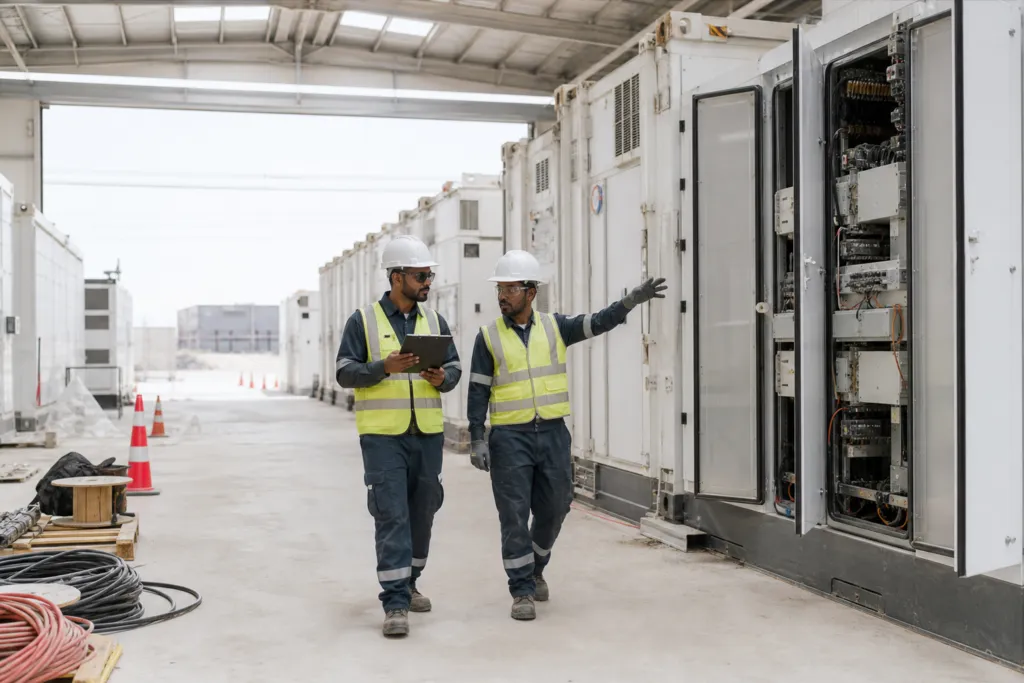
The Saudi battery energy storage market is moving from “nice to have” to “grid essential” as renewables scale fast. Saudi Arabia already has 2 gigawatts of battery storage in place, positioned to store wind and solar energy for when wind dies down or for night time use. The same source reports another 5.5 gigawatts of battery storage in the pipeline, and a stated ambition to double that by 2030. This combination of installed capacity and near-term buildout helps address a simple operational reality: as more inverter-based generation connects, flexibility must grow alongside it.
Renewables growth is creating a bigger balancing task for the grid. UNDP officials cited in one report say Saudi Arabia has connected over 10 gigawatts of renewable energy to its grid and has another 33 gigawatts in the pipeline. Separately, GlobalData estimates cumulative solar capacity rose from 4,665 MW at end-2024 to 12,465 MW by end-2025, with total renewables capacity at around 13 GW, making solar the dominant form of renewables in the country. In this context, batteries are not only about storing midday solar. They are about managing ramps, maintaining reliability, and reducing the operational friction of fast capacity additions.
Why Storage Is Becoming a Grid Reliability Priority
Industry commentary is increasingly explicit that grid integration and flexibility are becoming the key constraint. PV Magazine reports that in the coming years, the main drivers of Saudi Arabia’s solar market are likely to shift toward grid integration and flexibility, with a focus on large-scale solar-plus-storage. The same reporting highlights the need for major grid and flexibility investments to absorb much more solar, including faster interconnection and PV-plus-storage procurement to cover evening peaks and limit curtailment. In parallel, Saudi Power Procurement Company activity signals scale: five solar PPAs totaling 12 GW and two wind PPAs totaling 3 GW were signed, with projects scheduled to be operational across 2027 and 2028.
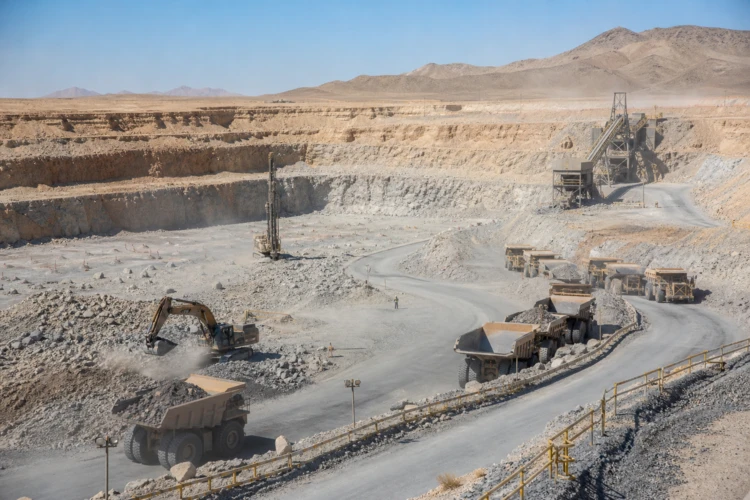
Battery storage also shows its value beyond the main grid, particularly in industrial reliability. Ma’aden’s Al Baitha Bauxite Mine is set to run almost entirely on renewable energy under a 30-year PPA with Emerge Energy. The system pairs an 8 MWp solar PV array with a 30 MWh battery storage system, described as ensuring 24/7 electricity supply in harsh desert conditions. The project is also reported to slash carbon emissions by 13,800 tonnes annually, an example of how storage can translate intermittency management into predictable, around-the-clock operations. This kind of hybrid design offers a practical template for other energy-intensive sites.
For the Saudi battery energy storage market, the near-term story is momentum and fit-for-purpose deployment. Utility-scale storage supports the shift toward solar-plus-storage procurement aimed at evening peaks and limiting curtailment. At the same time, site-level solar-plus-storage can deliver 24/7 power for industrial users under long-term PPAs. With 2 GW installed and 5.5 GW in the pipeline, storage is positioned as an enabling layer for a system where renewables additions are accelerating, and where reliability hinges on flexibility as much as on new generation.
How large is the Saudi battery energy storage market today?
Why is battery storage important for grid reliability in Saudi Arabia?
What is driving the shift toward solar-plus-storage in Saudi Arabia?
Is battery storage being used for 24/7 industrial power in Saudi Arabia?