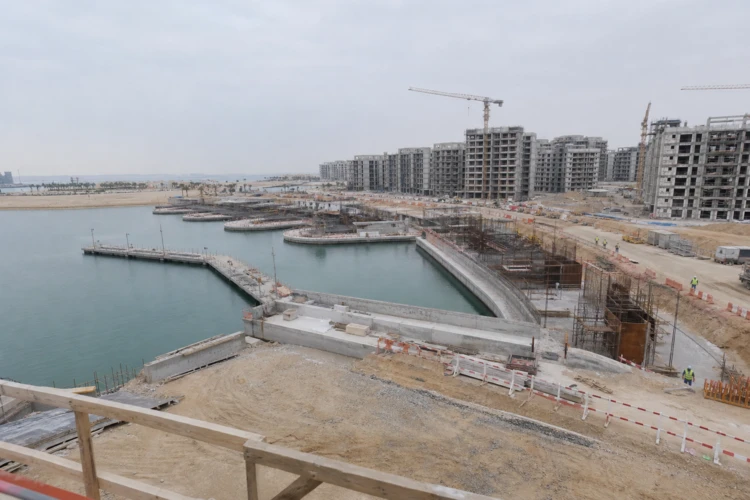
Saudi Aramco has brought its Jafurah unconventional gas development onstream, marking a step change in how the company positions gas alongside crude. The Saudi Finance Ministry said Phase 1 production began in 2025, and Argus reported the start-up rate at 450mn ft³/d, which the ministry described as two and a half times the level Aramco had long projected. Jafurah is described by Argus as the largest unconventional gas field in the Mideast Gulf region, and Aramco has framed it as a cornerstone of plans to expand Saudi gas production by 60pc by 2030. The field’s scale is underpinned by in-place reserves cited across sources of 229 trillion ft³ (6.87 trillion m³) of raw gas and 75bn bl of condensate.
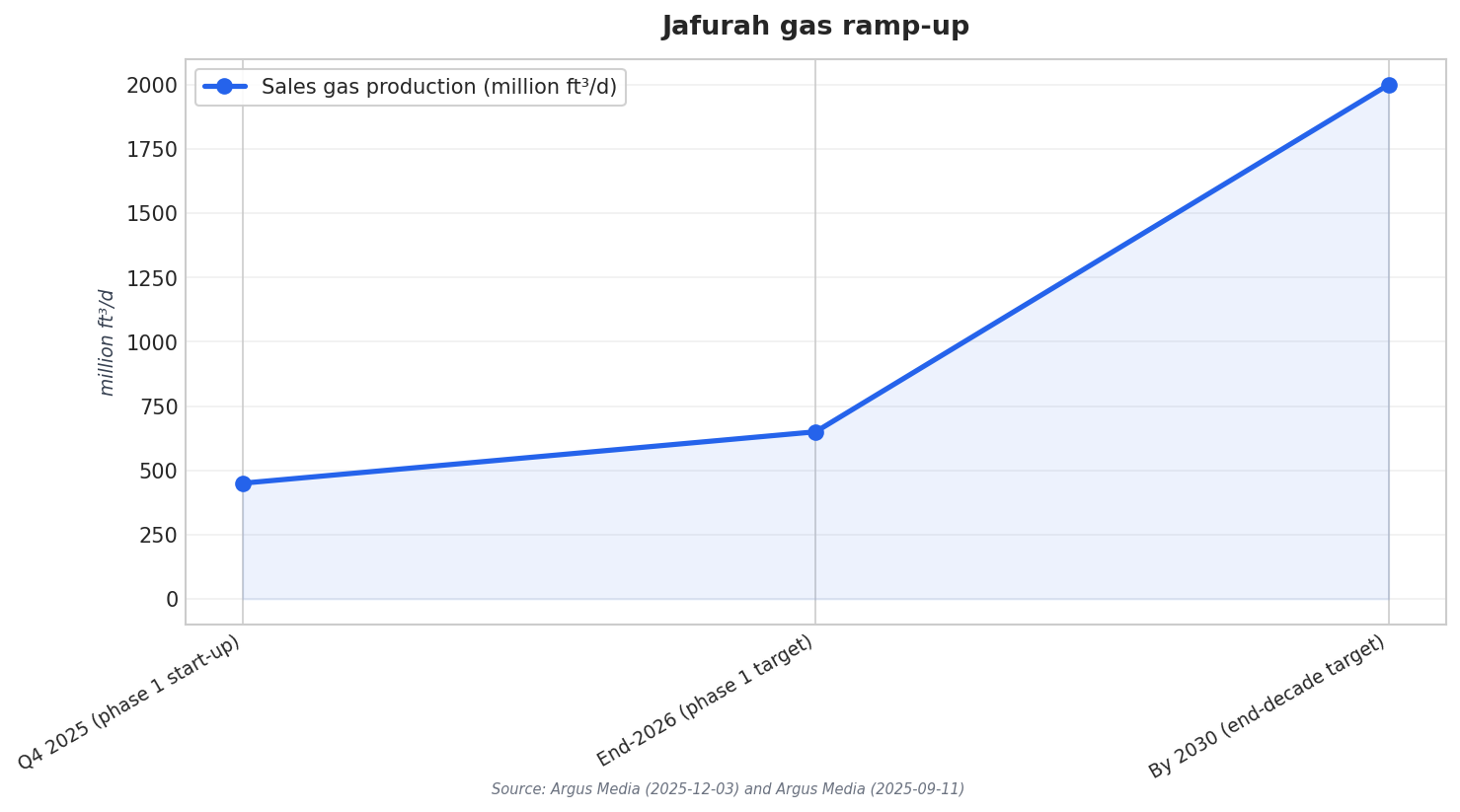
The near-term ramp matters as much as the start-up. Before first gas, Aramco said Phase 1 sales gas production would begin at 200mn ft³/d and rise to around 650mn ft³/d by the end of 2026, according to Argus. After the 450mn ft³/d start-up, Argus noted it is unclear whether this stronger-than-anticipated rate will translate into a higher end-2026 target, but the original guidance remains the key marker for planning. This is why the “Jafurah gas field Saudi Arabia 2026” storyline is less about a single date and more about the pace at which Phase 1 approaches the 650mn ft³/d level, and how that supports domestic energy objectives such as displacing liquid fuels in power generation and enhancing energy security, as described by World Oil.
Midstream Monetisation and the Infrastructure Behind the Ramp
Jafurah is also driving a new template for funding and infrastructure ownership. Argus and JPT both reported an $11bn lease-and-lease-back deal led by BlackRock’s Global Infrastructure Partners unit, covering midstream assets tied to Jafurah. The transaction involved Aramco selling a 49pc stake in the Jafurah Midstream Gas Company (JMGC), while retaining 51% ownership, with JMGC holding development and usage rights for the Jafurah gas plant and the Riyas NGL fractionation facility for a 20-year lease-back period. Argus said JMGC will receive a tariff payment from Aramco in exchange for exclusive rights to receive, process, and treat raw gas from Jafurah, and JPT added that the agreement does not restrict Aramco’s production volumes.
Beyond the field facilities, Aramco is expanding the wider network that moves and processes gas across the Kingdom. Argus reported the company is working on the third phase expansion of its Master Gas System (MGS), which would raise capacity by 3.15bn ft³/d to 12.5bn ft³/d by 2028. That plan includes the installation of 4,000km of pipelines and 17 new gas compression trains. The timing aligns with Jafurah’s multi-phase trajectory: Argus and the Saudi Finance Ministry both pointed to a second phase scheduled to come on stream in 2027, supporting a steady lift toward 2bn ft³/d by the end of the decade. This sequencing links upstream delivery, midstream monetisation, and national system capacity into one integrated build-out.
Strategically, Jafurah sits inside a broader goal to expand gas production capacity by the end of the decade, measured against a 2021 baseline of 9.2bn ft³/d cited by Argus. Argus said growth of “more than 60pc” implies output of at least about 14.72bn ft³/d by 2030, while a separate Argus update described an “more than 80pc” ambition, similarly implying at least 14.7bn ft³/d by 2030, with Jafurah delivering more than one-third of the increase. By 2030, Jafurah is expected to deliver up to 2 Bscfd of sales gas, 420 MMscfd of ethane, and approximately 630,000 bpd of high-value liquids, according to Reuters and World Oil. World Oil also reported Aramco’s estimate that incremental gas volumes could generate $12bn-$15bn in additional operating cash flow by 2030, subject to market conditions.
When did Aramco start producing from Jafurah Phase 1?
What production level did Phase 1 start at, according to Saudi Arabia’s Finance Ministry?
What is Aramco’s end-2026 sales gas target for Jafurah Phase 1?
How does the Jafurah gas field in Saudi Arabia shape the 2026 outlook?
What volumes are expected from Jafurah by 2030?