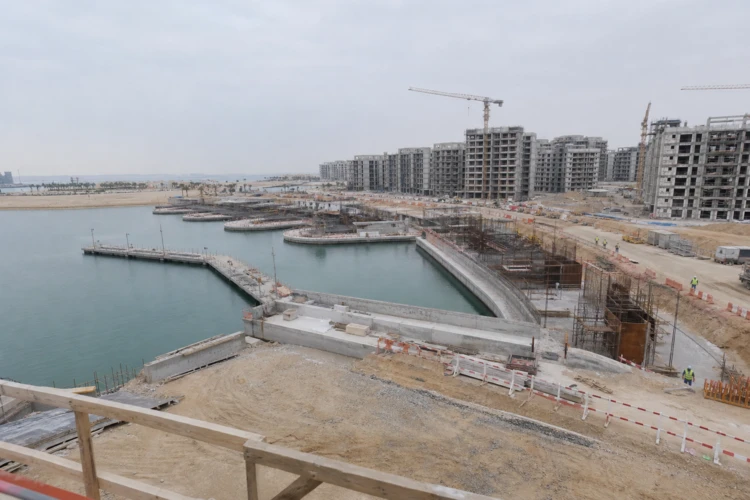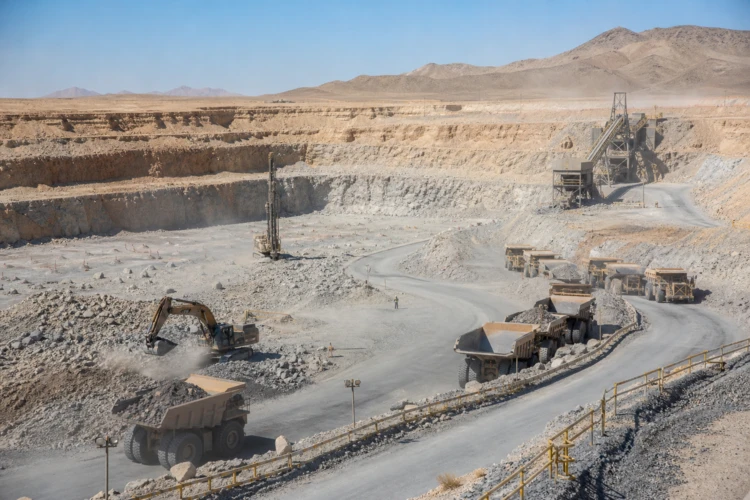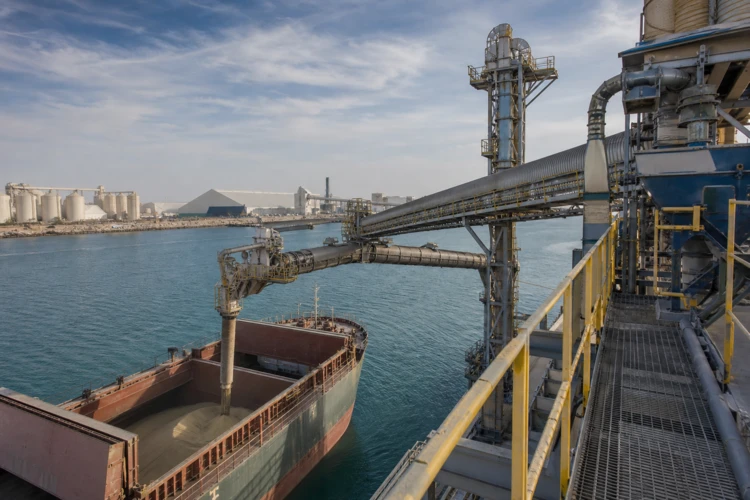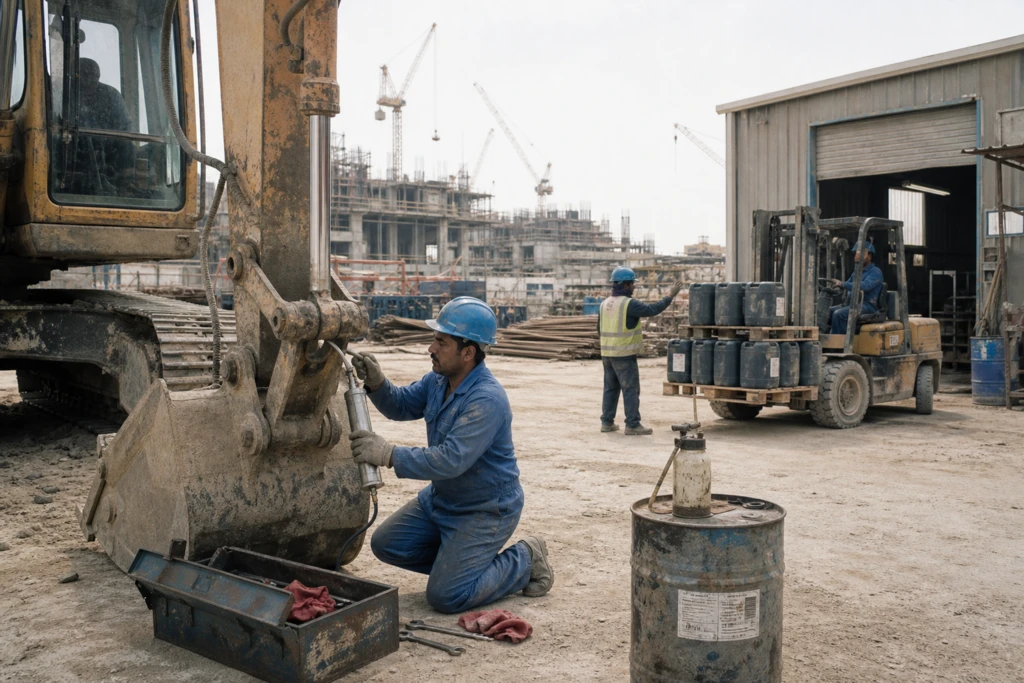
Saudi Arabia’s lubricants story is often told through cars, but industrial use is moving to the foreground as large projects multiply. One source puts the Saudi Arabia lubricants market at USD 1,352.4 million in 2025, with an expectation of USD 1,717.4 million by 2034 and a 2.69% CAGR during 2026–2034. The same source says national consumption already exceeds 515 million litres annually, the highest in the GCC. Yet it also notes that demand is no longer “just about engine oil,” pointing to mega-construction projects such as NEOM and Qiddiya that pull in hydraulic fluids, gear oils, and industrial greases for continuous heavy machinery operation.
Automotive still matters and sets the baseline for volumes, which is why industrial shifts stand out more clearly. A market view states the automotive segment accounts for roughly 60% of total lubricant demand, supported by vehicle sales that crossed 616,000 units in 2022, up nearly 11% year-on-year. Another report sizes the Saudi Arabia automotive lubricants market at 402.79 million liters in 2025, rising to 420.56 million liters in 2026 and reaching 521.83 million liters by 2031. But heavy equipment demand rides alongside this vehicle growth, because the same forces expanding roads and cities also expand earthmoving, lifting, and on-site power needs.
Mining, Megaproject Construction, and the Industrial Fluids Mix
Vision 2030 industrial expansion is repeatedly cited as a direct inflator of infrastructure and industrial lubricant demand. One source links giga-projects including NEOM, the Red Sea Development, and Qiddiya to “vast quantities” of hydraulic fluids, gear oils, and industrial greases required for heavy machinery. It also reports Saudi Arabia’s Manufacturing Value Added at USD 162.7 billion in 2022, up from USD 117.6 billion a year prior, and notes a government commitment of USD 293 billion to energy projects by 2030. These are the types of build-outs that increase operating hours for fleets of industrial assets, where lubricant consumption is tied to uptime and maintenance schedules rather than miles driven.
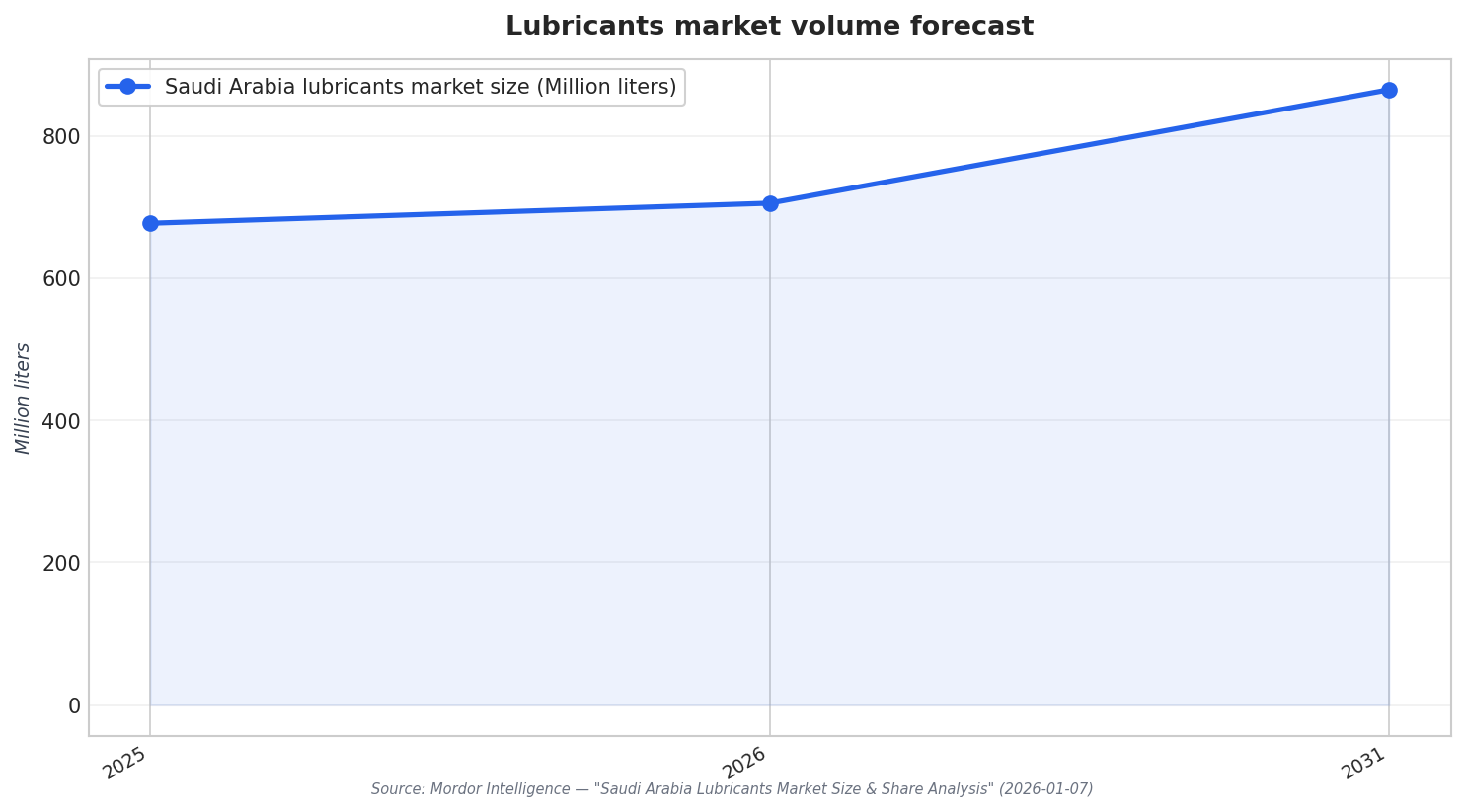
On the volume side, another dataset values the overall Saudi Arabia lubricants market at 677.67 million liters in 2025 and estimates growth from 705.86 million liters in 2026 to 865.41 million liters by 2031 (4.16% CAGR). It highlights how product mix shifts with industrial activity: greases are forecast to post the fastest 4.55% CAGR to 2031, supported by industrial machinery and construction equipment needs; hydraulic-fluid demand “tracks infrastructure roll-outs”; and metalworking fluids benefit from factories added under NIDLP. The same report says NIDLP incentives are reshaping demand, with over USD 130 billion invested in new factories since 2016, reinforcing ongoing needs for hydraulic fluids, metalworking fluids, and specialty greases for precision equipment.
This is why Saudi Arabia industrial lubricants mining construction demand is increasingly about more than just adding liters—it is about the blend of fluids required by round-the-clock industrial operations. As industrial zones, petrochemical complexes, and mega-sites expand, buyers need products that stand up to pressure, load, and friction, especially in hydraulics and bearings. At the same time, the market does not pivot away from mobility; mixed fleets mean conventional lubricant demand remains steady for years, while the market also expands into specialized fluids such as battery coolants and thermal management fluids. The near-term picture is diversification: a broader set of end-uses drawing from the same national lubricants supply base.
How are megaprojects changing Saudi Arabia’s industrial lubricant demand?
What do the latest sources say about the size of Saudi Arabia’s lubricants market?
Which lubricant products are tied most directly to construction and industrial equipment?
How does mining and construction relate to the broader lubricant mix compared with automotive?