For brands assessing the Saudi Arabia modest fashion market, the first signal is scale. One market analysis values the Kingdom’s fashion market at approximately USD 32 billion, growing at 8–12% annually, and describes Saudi Arabia as the fastest-growing fashion market in the Middle East. Another industry perspective puts the Saudi fashion industry at USD 34 billion in 2025, calling it the largest and fastest-growing in the GCC. On the apparel side, separate reports value the Saudi Arabia apparel market at USD 18.3 billion in 2024, and at USD 18,000 million in 2025, with forecasts reaching USD 27.5 billion by 2032 and USD 25,500 million by 2031, respectively.
Demand fundamentals are equally structural. Saudi Arabia is described as the largest single consumer market in the Gulf, with 36 million people and 70% under 35 in one analysis, while another report cites a national population of 35.3 million in 2024. Youth influence is reinforced by digital reach: 98% smartphone penetration and 79% social media penetration are cited as key discovery channels, with Instagram, TikTok, and Snapchat highlighted. These inputs matter for modestwear because styling, fabric, and fit choices are often validated socially, then purchased quickly. The same dynamics also help local labels scale faster when product and storytelling are culturally fluent.
What’s Powering Modestwear Demand: Occasions, Premiumization, and Policy
Vision 2030 is repeatedly positioned as a catalyst for fashion, including modest apparel. One analysis says Saudi Arabia has invested over USD 60 billion in entertainment since 2019, pointing to Riyadh Season (annual, 5+ months) and MDLBeast Soundstorm (400,000+ attendees) as new consumer occasions that did not exist five years ago. Tourism is also quantified: Saudi Arabia issued 27.4 million tourist visas in 2024 and is targeting 100 million visits per year by 2030. Together, these levers increase demand for event-ready looks, travel wardrobes, and gifting, which can elevate abayas, hijabs, thobes, kaftans, and coordinated modest sets across everyday and occasion use.
Premiumization is explicit in the sources. An Islamic clothing report states Saudi Arabia represents the largest market within the Middle East & Africa region in 2025, citing increasing spending on premium abayas, luxury modest fashion, and customized Islamic clothing driven by rising disposable incomes and evolving preferences. Another apparel report notes rising interest in luxury goods in cities including Jeddah and Riyadh, where premium apparel is associated with status and accomplishment. For product strategy, this supports tiered assortments: high-frequency essentials for repeat purchase, plus premium capsules for cultural occasions, tailoring, and personalization—especially in categories where modest styling accessories can complete the look.
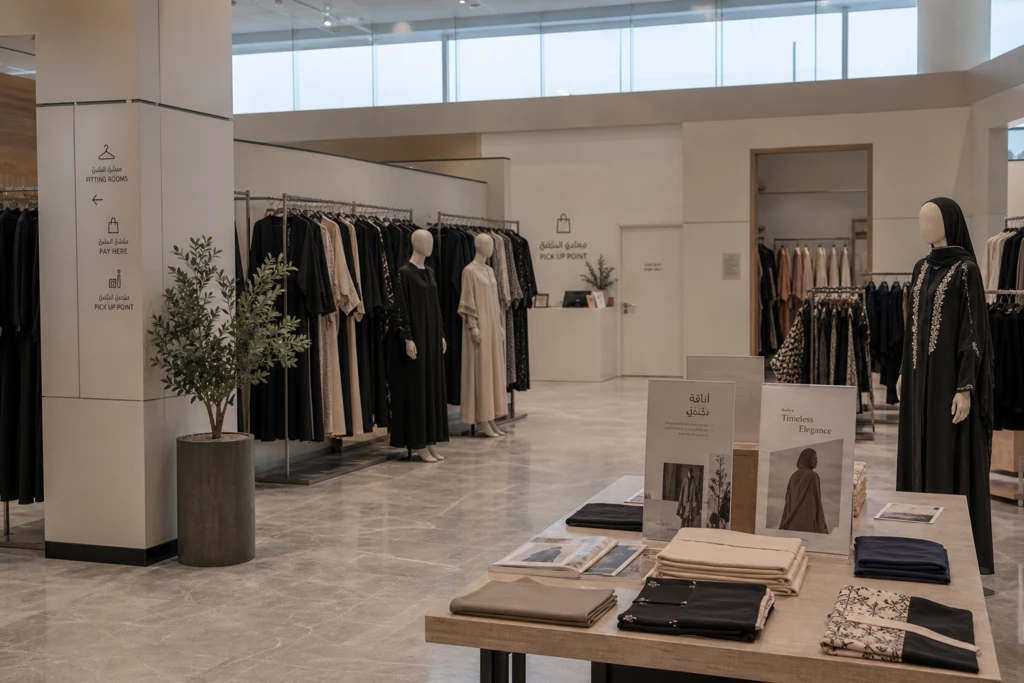
Winning at scale in Saudi Arabia depends on channel and operating model choices. Retail stores captured the largest market share in 2024 in one apparel report, while another study models online share rising from 24% in 2025 to 39% by 2031, alongside an average selling price increase from USD 50.0 to USD 57.6 per item. The same report highlights Riyadh and the Central Region as the dominant hub, linking scale to malls, logistics, and high-frequency digital fulfilment. It also flags the shift from franchise entry to direct ownership and Saudi-specific collections and campaigns. Local ecosystem support is tangible too: the Fashion Commission’s “100 Saudi Brands” program funds and mentors startups, and the Saudi 100 Brands initiative is described as building a platform for designers, including in accessories.
How big is Saudi Arabia’s apparel market in the recent data?
What share of sales is expected to move online in Saudi apparel?
What is driving demand in the Saudi Arabia modest fashion market?
Which region is highlighted as the key commercial hub for fashion retail execution?
What local programs support Saudi designers and brand building?