Saudi online retail is expanding, but the bigger shift is where the sale happens. Verified Market Research values the Saudi Arabia e-commerce market at USD 21.3 billion in 2024, projecting USD 56.6 billion by 2032, with a 13% CAGR from 2026 to 2032. Within that broader growth, social-led buying compresses discovery and checkout into entertainment-first journeys, especially on smartphones. Ken Research notes internet penetration reached 99.0% in 2024 and that mobile phones represented 99.4% of internet browsing. That mobile-first baseline creates the conditions for selling directly in feeds, chats, and video.
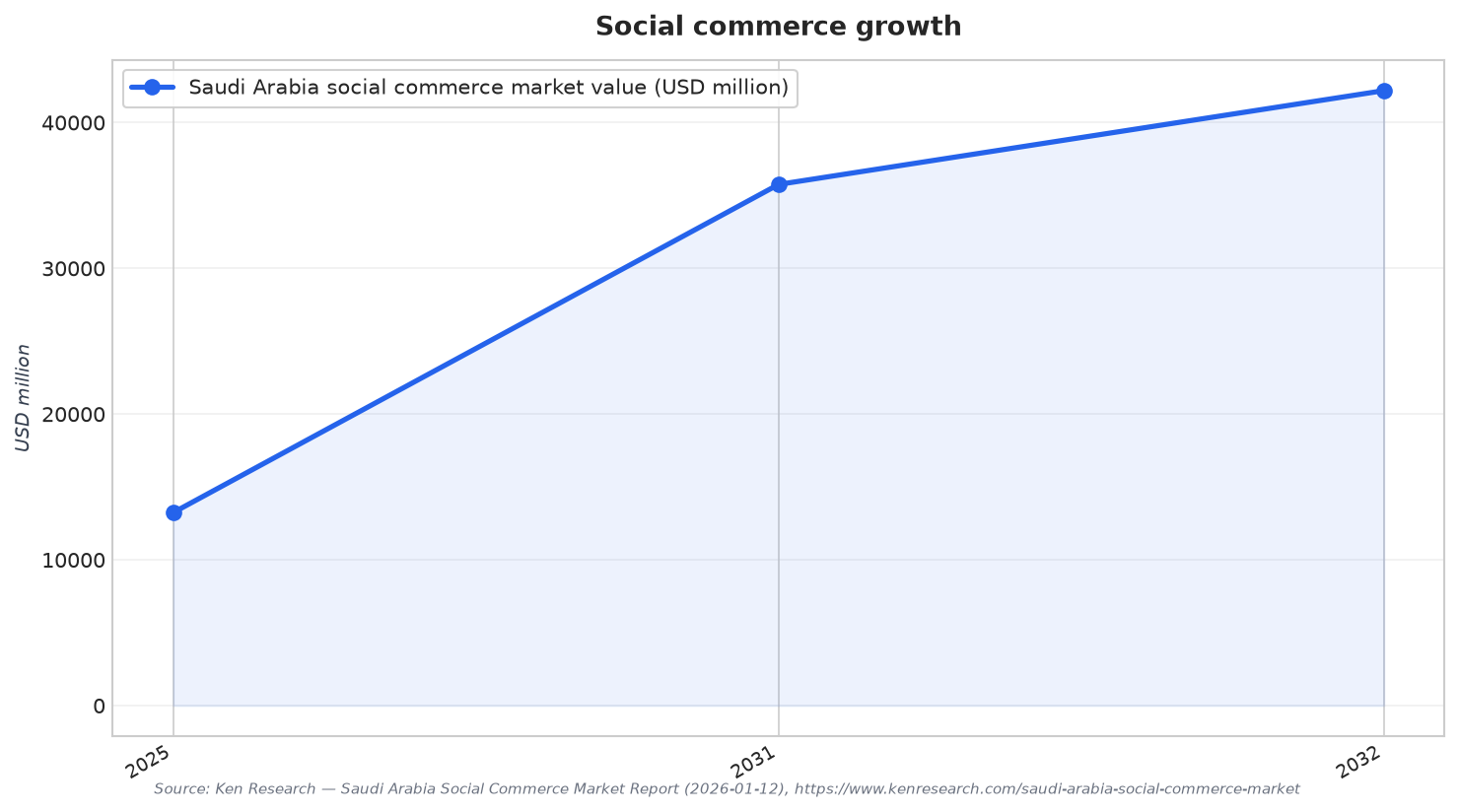
Market sizing varies by methodology, but multiple sources describe rapid scaling for Saudi Arabia’s social commerce layer. Ken Research values the Saudi social commerce market at USD 13,246 million in 2025, forecasting USD 35,758 million in 2031 and USD 42,195 million in 2032, with a 17.82% historical CAGR (2020–2025) and 18.00% forecast CAGR (2025–2032). Mordor Intelligence estimates a different baseline: USD 44.06 billion in 2025, rising from USD 55.87 billion in 2026 to USD 134.02 billion by 2031, at a 19.12% CAGR (2026–2031). Read together, the direction is consistent: social discovery and in-app checkout are becoming core retail plumbing, not a side channel.
Why Video, Mobile Checkout, and Local Stores Are Winning
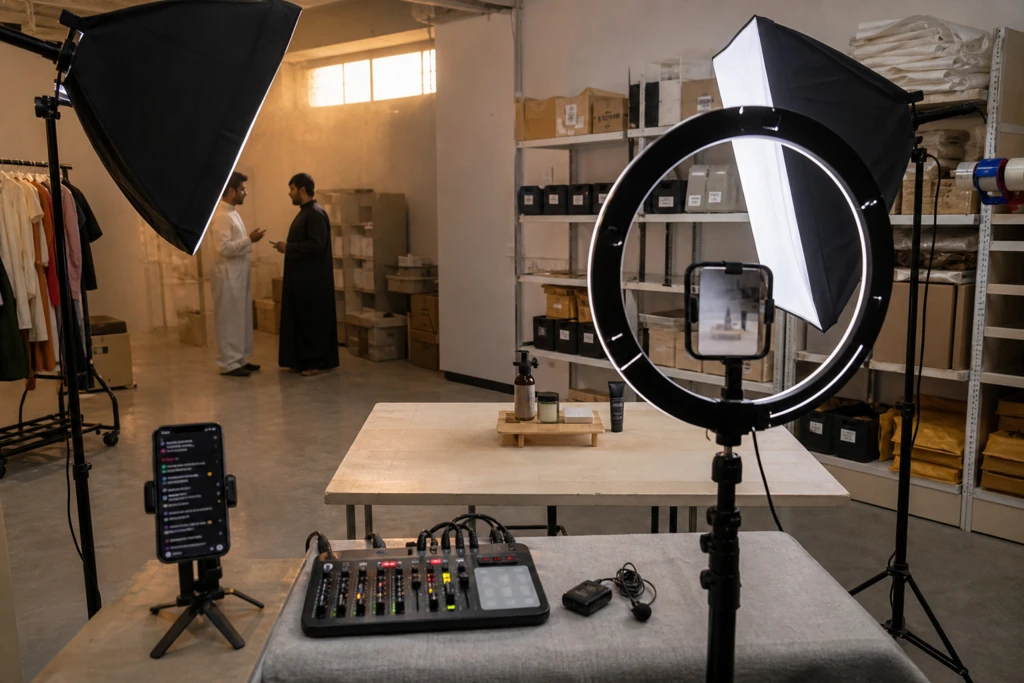
Video is increasingly central to conversion. Ken Research calls video commerce the dominant segment and the fastest growing segment for 2025–2032. Mordor Intelligence quantifies that lead, with video commerce holding 35.36% of the Saudi social commerce market in 2025. Product mix also signals where creators can drive urgency: apparel held 27.81% share in 2025, while personal and beauty care is projected to grow at a 20.19% CAGR through 2031. The device story is similarly clear. Smartphones accounted for 77.23% of the market in 2025, and Mordor projects this device segment growing at a 19.78% CAGR through 2031.
Payments and trust mechanics are making in-feed selling more viable. Mordor Intelligence reports electronic payments accounted for 85% of retail transactions in 2025, up from 79% in 2024, reducing friction at checkout. In the wider e-commerce market, Mordor reports credit and debit cards held a 42.62% share in 2025, while mobile wallets post a 14.71% CAGR; it also cites STC Pay having 8 million users. Meanwhile, local infrastructure is consolidating advantage in key hubs: Mordor reports Riyadh leads Saudi e-commerce with a 35.01% share, and Ken Research describes Riyadh, Jeddah, and Dammam as the key city clusters for demand and delivery networks.
Execution now depends on merchant enablement and local operations, not just audience reach. Ken Research says local websites captured 93.1% of online shopping activity in 2024, reinforcing Arabic storefront economics and domestic fulfillment partnerships. It also projects average order value rising from USD 54.6 in 2025 to USD 69.5 in 2032 as beauty, electronics, and premium fashion gain mix. On the enablement side, Mordor notes Salla serves over 80,000 merchants, backed by a USD 130 million pre-IPO funding round. The same report cites BinDawood Holding channeling close to USD 390 million into automation and delivery facilities, and references case studies from qeen.ai suggesting AI-generated product content can increase add-to-cart rates by roughly 30%.
What is changing most in Saudi Arabia’s social commerce journey?
How big is the social commerce market in Saudi Arabia, according to the sources?
Which formats lead sales in social-led shopping?
What products and devices stand out in Saudi social commerce data?
How do payments support in-feed selling in Saudi Arabia?