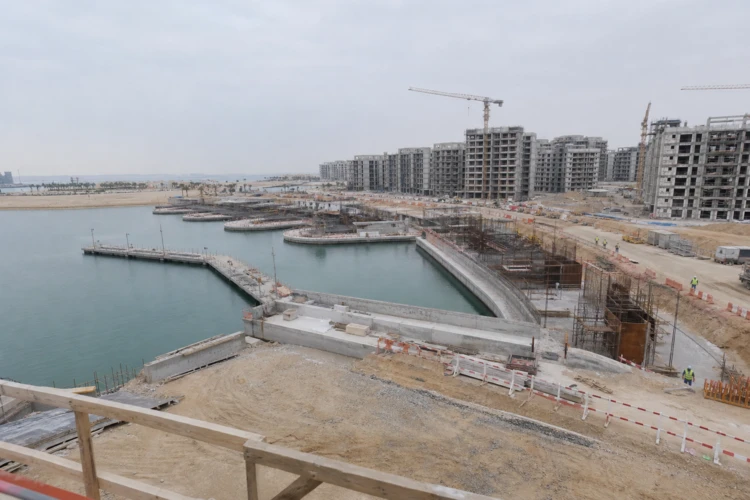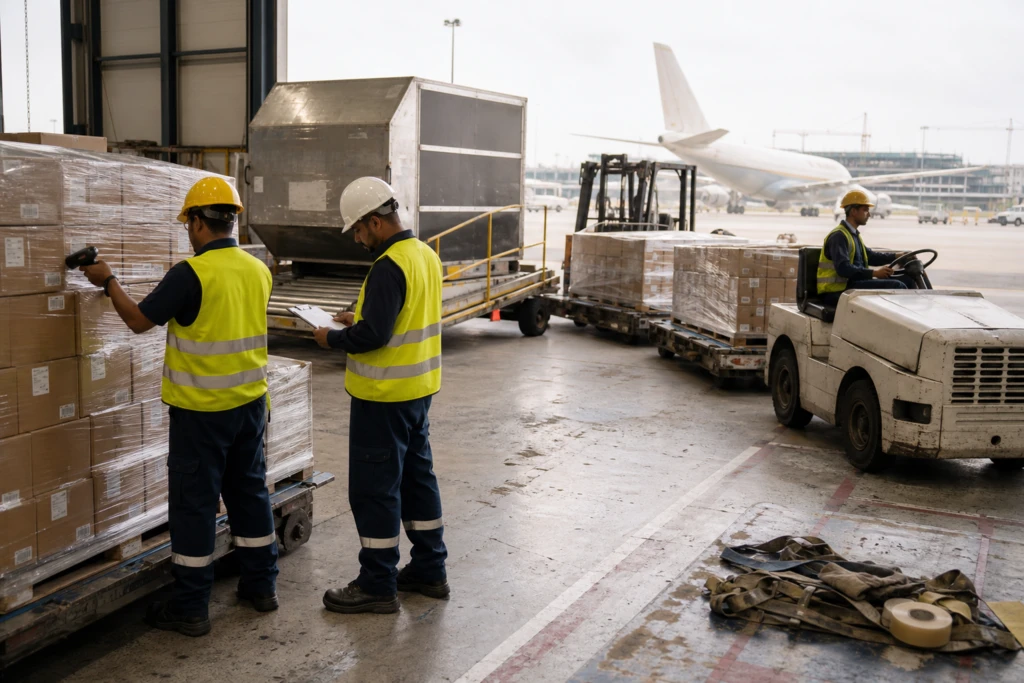
FedEx is placing a major bet on Saudi Arabia by establishing a $1.5 billion regional hub at King Salman International Airport in Riyadh. The hub is positioned as a central node for customs clearance, pickup, and delivery operations, aimed at easing trade bottlenecks and strengthening connectivity across the Gulf region. In the FedEx Saudi Arabia King Salman Airport hub strategy, the location matters because it is framed as a bridge linking the GCC to markets in South Asia and Africa, and also connecting to wider routes across Asia, Europe, and the Americas. Alongside the hub plan, FedEx has launched a dedicated all-cargo flight to Saudi Arabia from the United States and Europe, described as a nonstop connection from the West to Riyadh.
The timing ties directly into a broader national logistics buildout. Multiple sources describe a $1 trillion Saudi logistics strategy that includes modernizing ports, expanding logistics zones, and digitizing customs processes. The National Industrial Development and Logistics Program (NIDLP), launched in 2019, is cited as cutting customs clearance times from 288 hours to 9 hours, while attracting over SAR 300 billion in investments. On the physical infrastructure side, the number of logistics zones is planned to expand from 22 to 59 by 2030, backed by SR10 billion ($2.7 billion) in investments. This backdrop provides the enabling conditions for a large international express carrier to centralize flows and scale service levels.
Why the Riyadh Hub Matters for Air Cargo and Cross-Border Trade
Saudi Arabia’s air cargo sector is described as growing rapidly, with volumes reaching 920,000 tons in 2024 and projected to nearly triple to 2.45 million tons by 2033. Those volumes form the demand-side case for more capacity, better sorting, and more reliable linehaul links. At the same time, trade indicators are moving in parallel: in Q1 2025, Saudi Arabia recorded a trade surplus of $16.8 billion, a 52% increase from the previous quarter. Sources attribute the moment to streamlined logistics and cross-border e-commerce dynamics. For shippers, the combination of rising volumes and faster clearance is exactly what turns an airport hub from a facility into a network advantage.
The hub narrative also sits inside the Kingdom’s broader market trajectory and investment story. One source projects Saudi Arabia’s logistics market at $38.8 billion by 2026, growing at a 5.85% compound annual rate, while another frames the sector as valued at USD 136.3 billion in 2024 and growing at a 6.5% CAGR to USD 198.9 billion by 2030. Foreign investment is also highlighted: net foreign direct investment inflows rose 44% year-on-year in Q1 2025 to $5.9 billion. For FedEx, the proposition is not only aircraft and a hub, but also service layers such as FedEx International Connect Plus with day-definite delivery and digital tracking, and multimodal logistics spanning air, road, and ocean freight.
Operational timelines and network design are part of what makes this a long-horizon play. Sources describe the King Salman International Airport hub as set to operationalize by 2025, while other reporting notes the airport is under development and scheduled for completion in 2030, with the hub intended to serve Saudi Arabia, Bahrain, Kuwait, and Qatar. Regardless of the specific milestone framing, the strategic direction is consistent: FedEx is building a regional anchor that aligns with Vision 2030’s aim to position Saudi Arabia as a logistics and trade hub. For local SMEs and e-commerce sellers, the practical outcome is access to tracked, time-defined international delivery and a customs environment cited as dramatically faster than prior baselines.
How much is FedEx investing in the Riyadh hub at King Salman International Airport?
What air cargo growth figures are cited for Saudi Arabia?
How does the hub relate to Saudi Arabia’s wider logistics zone expansion?
What customs clearance improvement is attributed to NIDLP?
What does the FedEx Saudi Arabia King Salman Airport hub aim to connect?