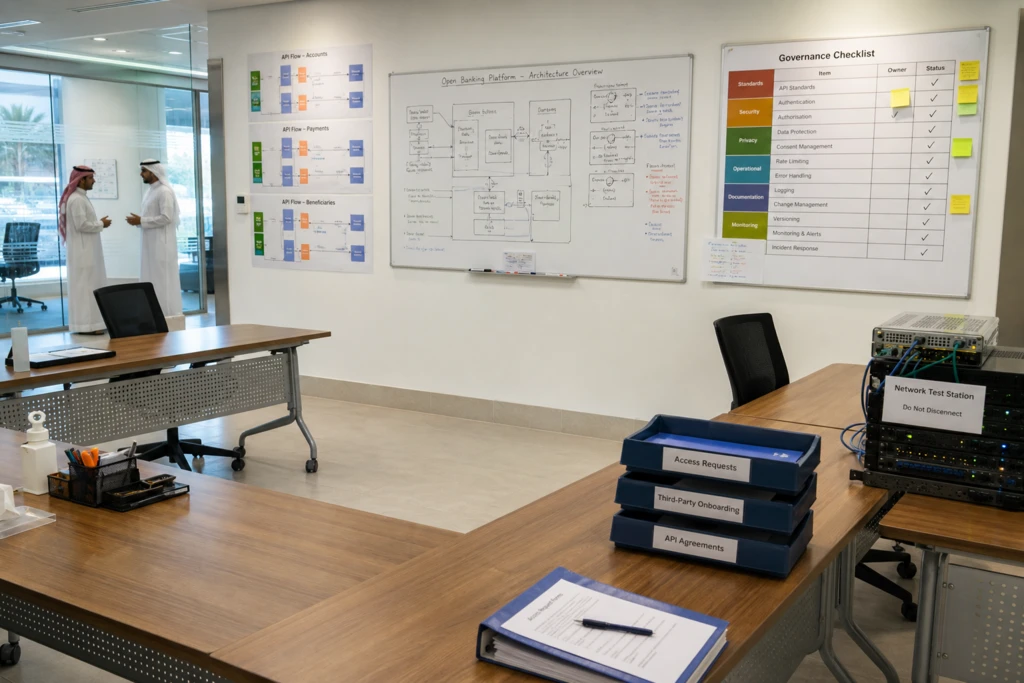
Saudi Arabia open banking is entering a new phase. On 26 March 2026, the Saudi Central Bank (SAMA) moved open banking out of a controlled testing environment and into a formal licensing regime, following the completion of the sandbox phase where selected firms trialled use cases under SAMA supervision. Legal and compliance commentary frames this as a maturity milestone that supports broader market adoption, and as a step aligned with Vision 2030 and the National Fintech Strategy. For market participants, the big change is clarity: a defined path to operate, clearer supervisory expectations, and a stronger basis for scaling services beyond pilots.
At the technical level, the SAMA Open Banking Framework is designed around standardized Application Programming Interfaces (APIs). These APIs enable banks, fintechs, and third-party providers to share financial data securely with customer consent, and are paired with operational guidelines and regulatory oversight. In practice, this structure supports common workflows such as a fintech securely pulling transaction history to generate spending insights, while the bank aligns implementation with SAMA standards. The shift to licensing raises the bar from “can it work in a supervised trial” to “can it operate safely and consistently at market scale,” which affects product design, onboarding, and risk management processes.
What the 2026 Licensing Shift Changes for Banks and Fintechs
For banks, licensing turns open banking into an operating reality rather than a sandbox experiment. Globally, fintech competition is pushing banks toward API strategies: in developed markets, 81% of banks say open banking is now “critical to survival,” according to a 2026 roundup of adoption statistics. That same global view estimates API call volumes at over 6.7 billion per month, and notes that the Middle East has started national-level adoption campaigns, with SAMA’s initiative rolling out nationwide APIs. For fintechs, the Saudi licensing model can reduce uncertainty and help focus investment on readiness: strengthening technical systems, internal controls, and alignment to SAMA requirements.
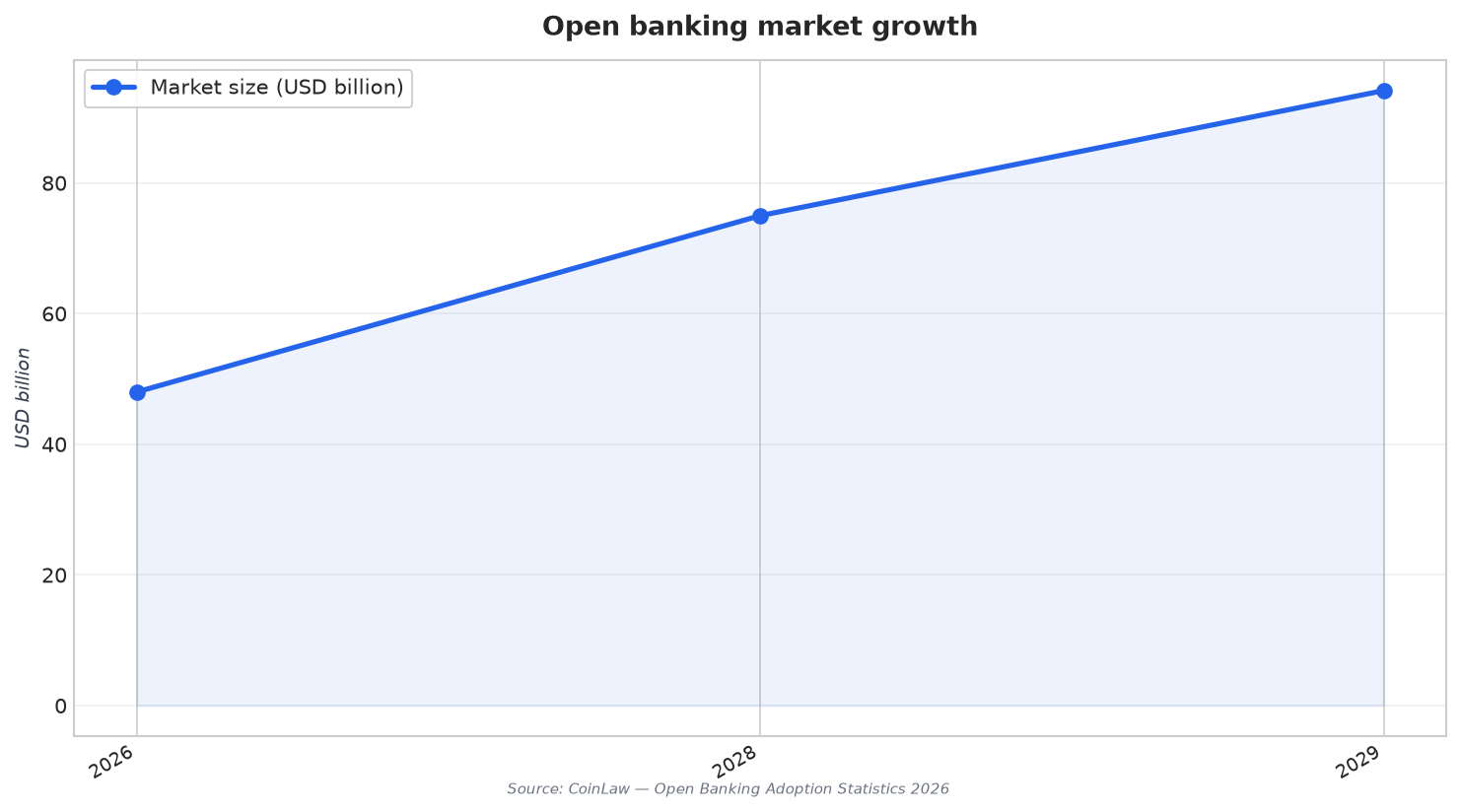
The commercial impact is likely to show up quickly in lending decisioning and customer acquisition models, especially where cashflow data can improve underwriting. Lending platforms that leverage open banking data report 22% lower default rates due to improved risk profiling, based on the same 2026 global statistics compilation. This is not Saudi-specific performance, but it signals why lenders and fintechs pursue data-sharing rails. It also helps explain why SAMA positions open banking as a foundation for “data driven products for both individuals and SMEs,” linking the framework to wider access, competition, and modernized financial infrastructure goals.
For SME lending, international benchmarks show how fast an ecosystem can normalize once APIs and governance are stable. In the UK, 16.5 million users were connected to open banking in December 2025, equivalent to nearly one in three adults, and active connections rose 36% year-on-year. The UK ecosystem processed 351 million open banking payments in 2025, up 57% on 2024, and logged 24 billion API calls. Those figures are UK-only, but they illustrate the scale that standardized APIs can reach. In Saudi Arabia, SAMA’s move to licensing signals a similar ambition: accelerate adoption by providing a secure, standardized, innovation-ready framework where banks and licensed providers can build and distribute new services.
What did SAMA change in 2026 for open banking in Saudi Arabia?
How does the SAMA Open Banking Framework enable data sharing?
Why does open banking matter for SME lending decisions?
What does global adoption suggest about where open banking is heading?
How should banks and fintechs prepare for Saudi Arabia’s open banking licensing phase?