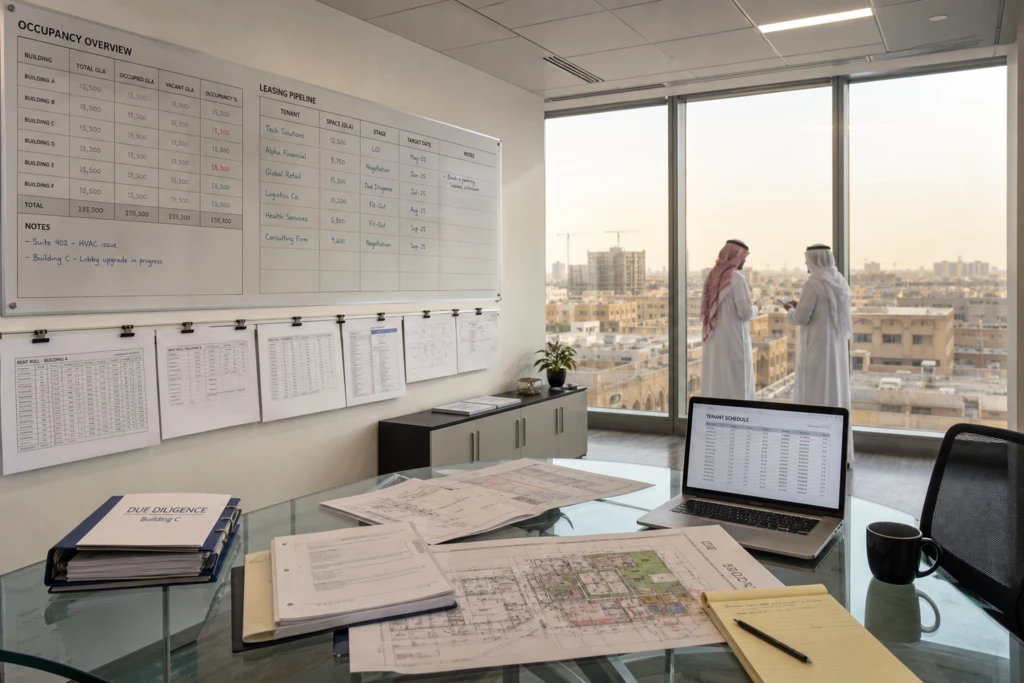
Saudi REITs sit at the intersection of capital-market reforms and a fast-moving property cycle. The Kingdom’s public, exchange-traded REIT route has operated under Capital Market Authority (CMA) listed real-estate fund rules since 2016, and nearly twenty REIT funds have listed on Tadawul. These structures provide regulated exposure to income-producing assets across malls, offices, hotels, logistics, healthcare properties, and residential portfolios. International participation has increased after Tadawul’s inclusion in major emerging-market equity indices and the broader opening of Saudi capital markets to qualified foreign investors, supporting liquidity and price discovery in the listed REIT segment.
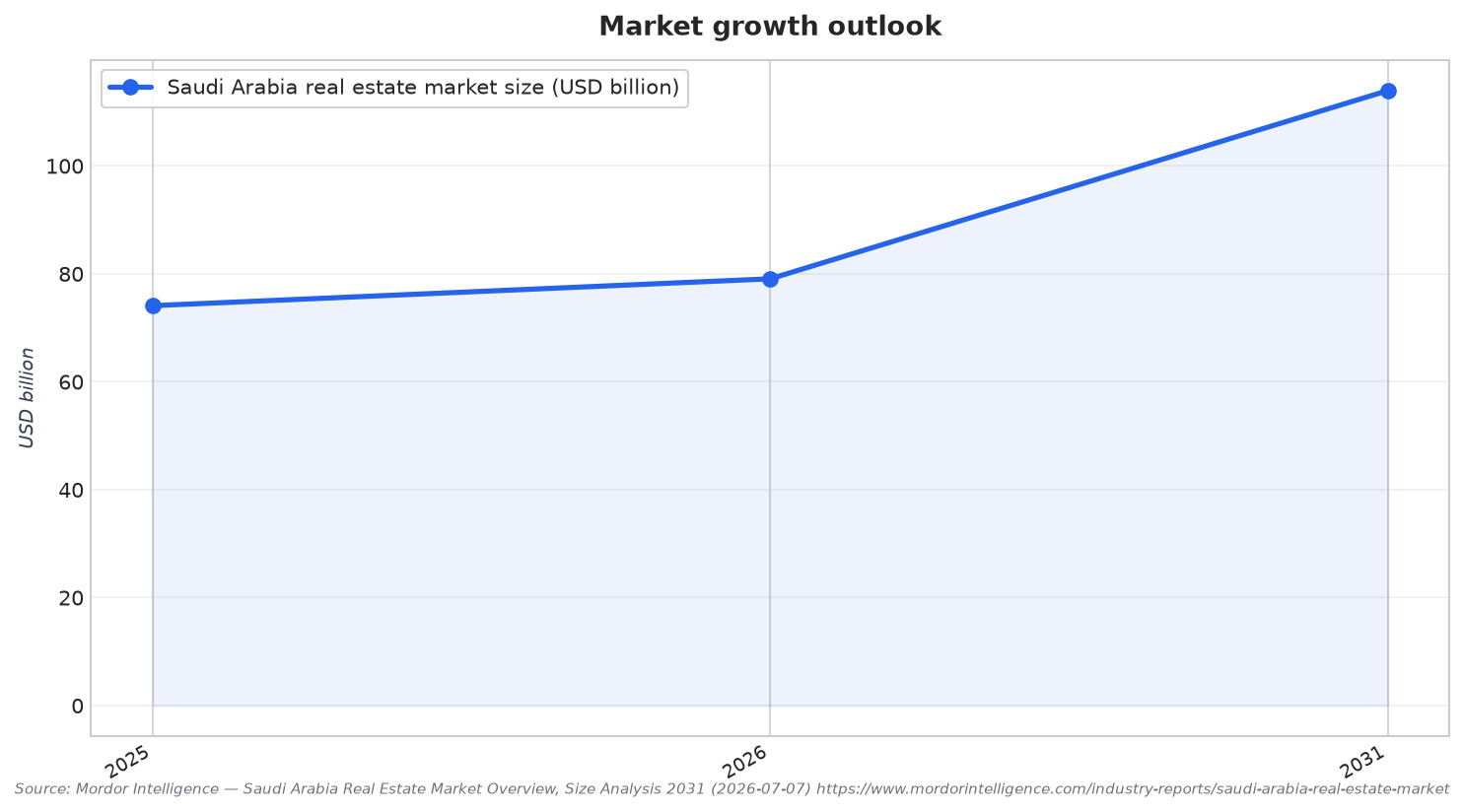
The wider property backdrop helps explain why listed vehicles matter now. IMARC reports the Saudi Arabia real estate market size increased from USD 77.2 billion in 2025 to USD 84.1 billion in 2026 and is projected to reach USD 141.6 billion by 2034, growing at a CAGR of 6.73% from 2026-2034. Mordor Intelligence separately projects the broader Saudi Arabia real estate market expanding from USD 74.11 billion in 2025 and USD 79.09 billion in 2026 to USD 113.96 billion by 2031 at a 7.58% CAGR (2026-2031). In price signals, General Authority for Statistics data cited by IMARC shows a 1.7% year-on-year rise in Q2 2024 real estate prices, driven by a 2.8% increase in residential property values.
What’s Changed After the Opening: Why REITs Look Like an On-Ramp
Multiple policy and market changes are widening the investable universe that REIT managers can target. IMARC notes a new property law effective January 2026 enabling foreign ownership in major cities and reducing transaction taxes, and says a Destination Saudi Report 2024 found 84% of global high-net-worth individuals expressed interest in Makkah and Madinah assets. On the capital-markets side, a Bayut analysis points to a February 2026 CMA reform alongside the January 2026 foreign ownership reform as part of the catalyst set investors are watching. Together, these shifts strengthen the case for listed REITs as a practical entry route when direct acquisition processes and ongoing management can be heavier for cross-border investors.
Demand drivers feeding the underlying property stock are also becoming more legible in data. IMARC reports Saudi Arabia’s population reached 35.3 million in 2024, rising 4.7% year-on-year, with urban population concentration at 85% by 2024 and projected to reach 86.3% by 2030. In residential specifics, Mordor estimates the Saudi Arabia residential real estate market rising from USD 44.85 billion in 2025 to USD 47.58 billion in 2026 and reaching USD 65.58 billion by 2031 (6.63% CAGR, 2026-2031). It also finds sales represented 63.95% of residential market share in 2025, apartments and condominiums captured 52.05% of revenue in 2025, and Riyadh led with 39.85% of national residential revenue in 2025, outlining where future stabilized, rent-producing assets may concentrate.
On the supply and execution side, institutional-scale pipelines and digitization are shaping what can be packaged into REIT portfolios over time. Mordor reports total construction spending reached USD 49.3 billion and contract awards for real-estate projects rose 8% year-over-year in H1 2024, underscoring pipeline momentum. IMARC adds that in October 2025, NEOM secured contracts worth USD 24 billion, and that in December 2023, Ejar recorded 8 million digital leases, improving transaction transparency for institutional investors. For a macro liquidity anchor, Mordor notes PIF financing of at least USD 40 billion a year, while IMARC states PIF reported USD 913 billion in assets under management in 2024. In this context, the Saudi Arabia REIT market becomes a bridge between expanding, trackable property cash flows and investors who prefer listed governance, disclosures, and tradable access.
How has foreign access changed the investment case for Saudi listed REITs?
How large is Saudi Arabia’s real estate market in the latest forecasts?
What property types do Saudi REITs typically invest in?
What data points suggest improving market transparency and transaction flow?
What is happening in the Saudi Arabia REIT market as more international investors participate?