Saudi Arabia’s care-delivery talent gap sits at the center of Vision 2030 and the Health Sector Transformation Program. The challenge is not only headcount. It is also uneven regional distribution, heavy reliance on expatriate clinicians, and working conditions that can drive turnover. National data based on the Ministry of Health’s 2023 Statistical Yearbook shows the nursing workforce increased by 9% from 2019 to 2023, reaching 213,110 nurses. But ratios still varied widely across regions, from 3.13 to 9.89 nurses per 1,000 population. For leaders working on Saudi Arabia healthcare workforce localization, those differences matter because access, staffing models, and patient experience can diverge sharply by region.
Distribution is not just “uneven.” It is measurable inequality. The same regional analysis reported an overall Gini coefficient of 0.48 for nurse distribution, indicating a significant mismatch between where nurses work and where people live. The gaps were even more pronounced in the private sector, where the Gini coefficient reached 0.69, and among non-Saudi nurses, where it reached 0.59. Localization progress is also real but not complete. Saudi nationals comprised 44.22% of the nursing workforce in 2023. That mix creates a dual task: increase the pipeline of Saudi nurses while keeping current services stable in a system that still depends on internationally recruited staff.
Recruitment Speed, Retention Stability, and Training Capacity Must Connect
Employers feel the hiring challenge daily. One hiring guide cited industry sources stating that 85% of healthcare facilities in KSA struggle to hire licensed nurses, pointing to complex licensing requirements, niche specialty demand, and multi-step background checks that can slow onboarding. At the same time, retention cannot be treated as optional, because the workforce remains internationally sourced in key roles. A 2025 qualitative study argued for proactive recruitment and retention strategies for expatriate staff, especially with changing immigration policies. A narrative review based on 36 studies also warned that shortages can trigger overtime, inflexible shifts, and burnout, which then feeds turnover.
Work conditions shape whether localization efforts hold. The Frontiers narrative review highlighted inadequate housing, labor market fragmentation, and discrimination risks affecting nurses from low and middle-income countries, including gender, pay, religious, language, and racial discrimination. Another study on expatriate lived experience emphasized better recruitment processes, education to build knowledge and skills, and organizational changes that improve job satisfaction. It also found that most expatriate nurses (86.1%, n = 31) intended to remain in Saudi Arabia, showing retention is achievable when the work environment supports it. For public systems, institutional pressures can complicate talent management; one study on Saudi public healthcare described multilayered institutional challenges and noted critical shortages, particularly in rural areas.
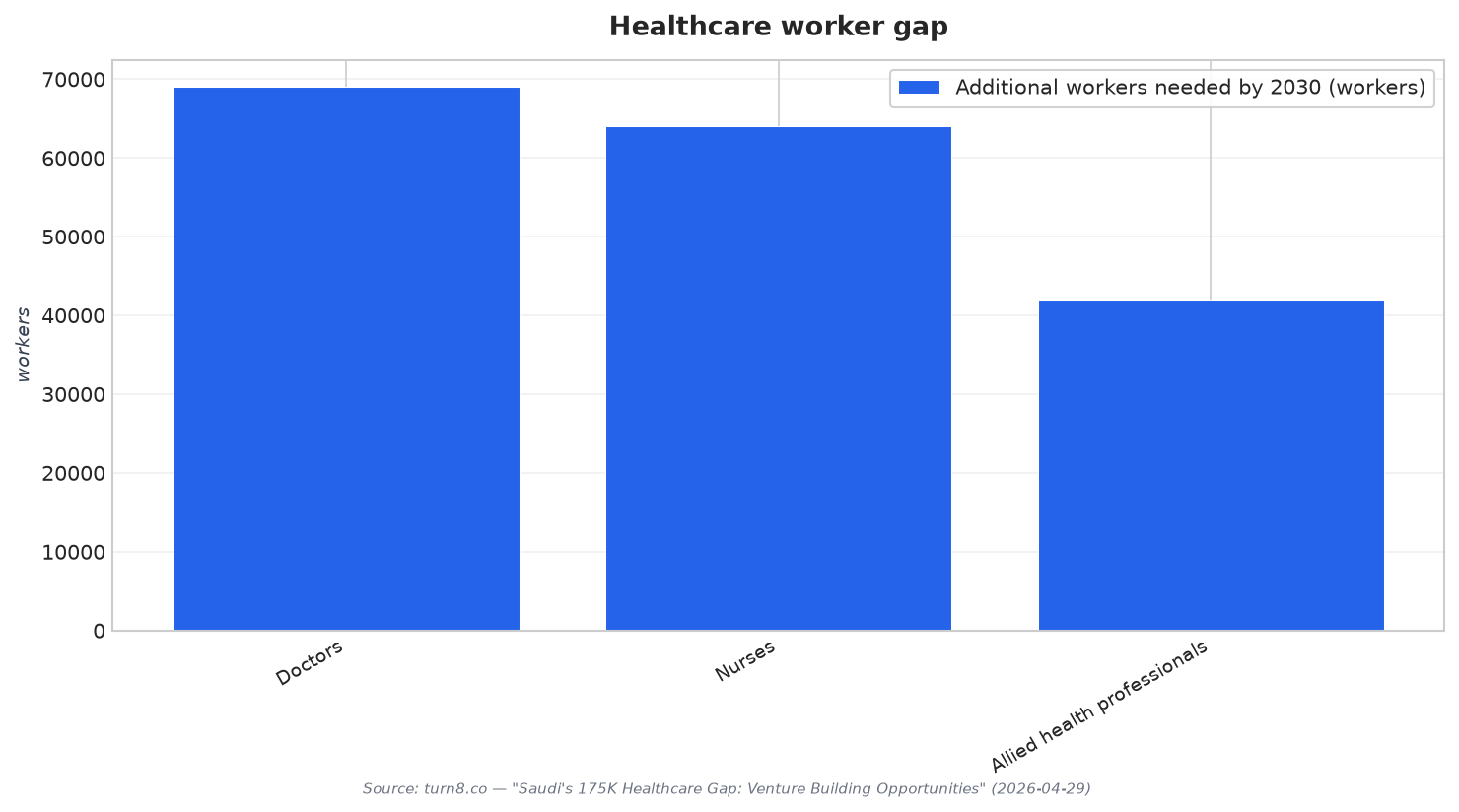
Localization also depends on training scale and modernization. One case study described a healthcare sector staffed by 232,000 expatriates, including about 60% of doctors and 57% of nurses, while Vision 2030 aimed to train 175,000 new Saudi health professionals. The same case study argued domestic programs were not producing enough graduates and that curricula were outdated and lacked hands-on training, driving continued reliance on foreign workers. The recommended response blended new medical and nursing colleges in shortage regions, expanded enrollment, modernized curricula focused on practical skills and technology, and a blueprint for a medical simulation center with simulation labs, virtual reality tools, and standardized patient programs. In parallel, a separate workforce planning discussion tied to Vision 2030 described a need for roughly 175,000 additional healthcare workers by 2030, including 69,000 doctors, 64,000 nurses, and 42,000 allied health professionals, stressing that recruitment alone will not close the gap.
How large is Saudi Arabia’s nursing workforce based on recent national data?
What does the data say about inequality in nurse distribution across Saudi Arabia?
How far has localization progressed in nursing?
Why is retention still a priority while localization targets increase?
What is a practical approach to Saudi Arabia healthcare workforce localization beyond recruitment?