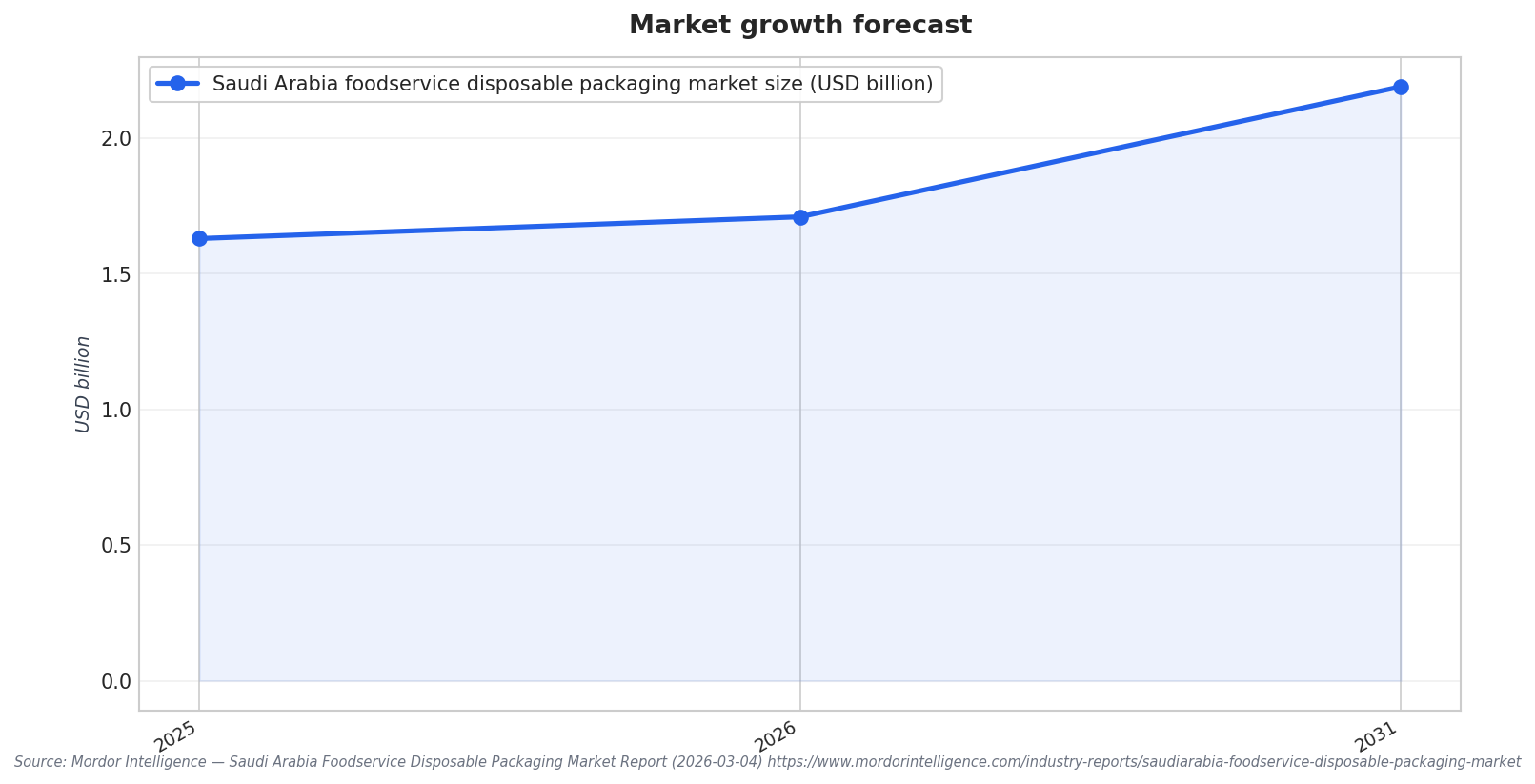
Saudi Arabia’s quick-service and delivery-first food culture is pushing a clear packaging boom. The Saudi Arabia foodservice disposable packaging market is projected to reach USD 1.71 billion in 2026, up from USD 1.63 billion in 2025, and is forecast to reach USD 2.19 billion by 2031, reflecting a 5.08% CAGR from 2026 to 2031. ResearchAndMarkets.com links this trajectory to Vision 2030 reforms that are strengthening tourism, hospitality, and broader foodservice activity. In parallel, the market is shifting from basic, cost-led packs toward packaging that supports transport performance, tamper evidence, and sustainability credentials.
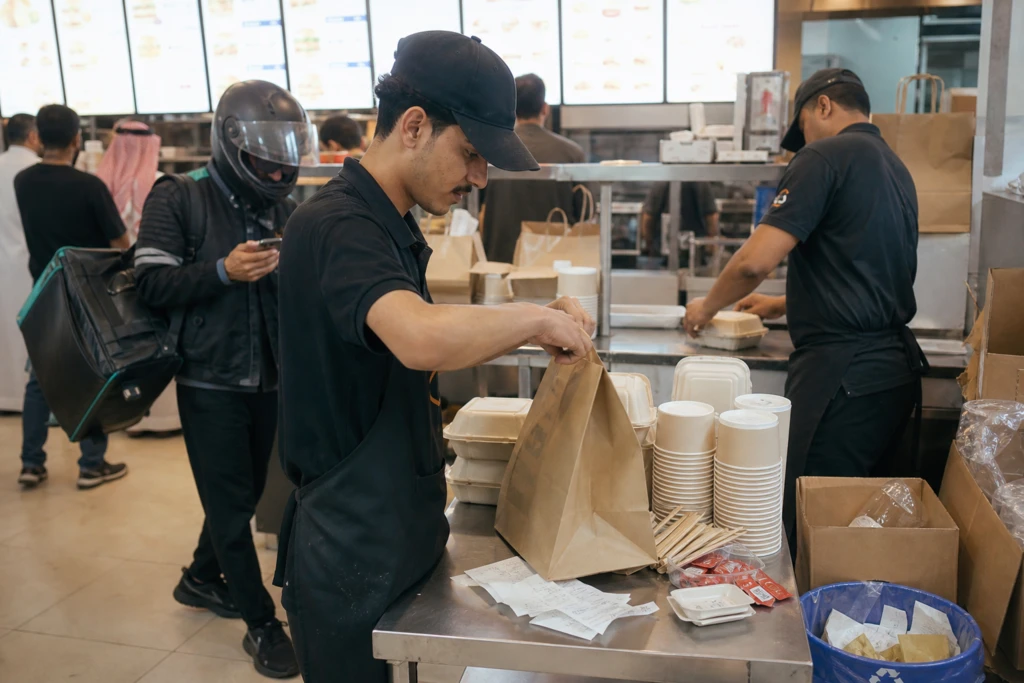
QSR and delivery mechanics explain much of the demand intensity. ResearchAndMarkets.com describes Saudi Arabia’s USD 16.62 billion QSR sector as a core tailwind, as chains diversify menus and expand outlets, lifting packaging volumes and the need for customized branding. Mordor Intelligence adds that delivery accounted for 48.12% of volume in 2025 and is advancing at a 5.61% CAGR through 2031, reinforcing the need for packs that travel well. It also reports that quick-service restaurants led with 36.21% revenue share in 2025, tying growth directly to standardized, high-throughput operating models that rely on consistent single-use formats.
Delivery-Optimized Design Becomes the New Baseline
As ordering shifts to apps and off-premise consumption, packaging is being engineered for transit and presentation. Mordor Intelligence notes that quick-service outlets and delivery-only brands processed more than 200 million digital orders in 2024, and it frames packaging needs around 30–45 minute transit windows. It also reports that household takeaway frequency rose to 3.2 meals per week in 2024, almost doubling the 2020 level, which increases repeat demand for single-use items. ResearchAndMarkets.com highlights delivery-first models that are prompting rigid-wall bowls, micro-vented lids, and heat-seal films to maintain food quality, while digital ordering increases the value of logo-forward outer packaging as a visible brand cue.
Material choices are changing under cost pressure and compliance requirements. Mordor Intelligence reports that plastic resins captured 43.21% of market share in 2025, reflecting ongoing cost advantages, while bioplastics and plant-fiber alternatives are set to expand at a 6.21% CAGR to 2031. Product demand is also concentrated in beverage-led formats, with cups at a 32.12% share in 2025, and growth shifting toward transport-friendly meal packs, as clamshells are projected to grow at a 6.94% CAGR over 2026–2031. Ken Research similarly points to rising demand for eco-friendly options such as bagasse and molded fiber, reinforcing why converters are investing in new substrates.
Regulation and enforcement are accelerating the move toward certified solutions and more traceable supply chains. ResearchAndMarkets.com states that SASO’s oxo-biodegradable certification began in December 2017 and requires importers and manufacturers to undergo compliance checks to avoid import barriers. It adds that meeting these requirements can increase raw material costs by 15–20%, while also stabilizing pricing for compliant converters, and it notes the role of electronic certification in batch traceability. The same source also points to SFDA and SASO expanding compliance expectations, including halal certification for imports, alongside landfill-diversion goals. Together, these factors are pushing Saudi Arabia’s disposable packaging demand toward tamper-evident formats, compostable materials, and higher-spec packs built for modern QSR and delivery systems.
How fast is Saudi Arabia’s foodservice disposable packaging market expected to grow?
Why are QSR and delivery formats increasing disposable packaging demand in Saudi Arabia?
Which packaging materials are most used, and which are growing faster?
What products are most important in the market right now?
What compliance requirement is shaping packaging choices in Saudi Arabia?