Saudi Arabia’s 2026 deal environment sits inside a Middle East and North Africa market that accelerated in 2025. EY-Parthenon research cited by Consultancy-me.com put total MENA M&A value at $106 billion in 2025, up 15% year-on-year, with cross-border deals surging. For practitioners tracking Saudi Arabia mergers and acquisitions, this matters because regional buyers and sellers increasingly treat the Gulf as an interconnected arena. PitchBook also framed the Gulf markets as “complementary and interdependent,” and highlighted the practical constraint that “you cannot do buy-and-build in one geography,” pushing investors toward regional platforms.
Exit optionality and liquidity signals are another 2026 driver. In Saudi Arabia’s startup and venture ecosystem, Arab News reported a record number of deals in 2024 (178), representing 31% of MENA’s total deal number. The same source also noted M&A transactions were up 17.4% year on year, suggesting a phase of consolidation and liquidity. Public markets are part of the backdrop too, with “more than 50 IPO applications” under review by the regulator and the exchange. PitchBook added that 2025 was record-breaking for private equity investments across the region, with around $19 billion invested across 158 deals.
Legal and regulatory capacity can decide whether cross-border deals close quickly or stall. A GTR review piece described Saudi Arabia’s extensive legal reform programme as an enabler for international trade and investment, aimed at a more reliable and transparent legal framework. It also flagged a friction point: disproportionately high legal costs in frontier markets, where legal spend can make small to mid-sized transactions commercially unfeasible. In 2026, these two realities coexist. Reforms can reduce uncertainty, but cost, localisation effort, and due diligence demands still shape deal structure and target selection.
Deal Drivers in 2026: Industry, Mining, and Platform Plays
Sector transformation provides tangible reasons to transact. Consultancy-me.com, citing Strategic Gears, described Saudi Arabia’s shift toward advanced manufacturing and knowledge-intensive exports, with non-oil business activity rising 48% year-on-year by Q3 2025. It also noted firms integrating into complex global value chains can see sustained productivity gains of up to 9%. Manufacturing breadth expanded to 612 goods in 2024, and complex products rose from 100 in 2020 to 123 in 2024. These shifts can support bolt-on acquisitions for capability, technology, and export access, rather than pure scale buying.
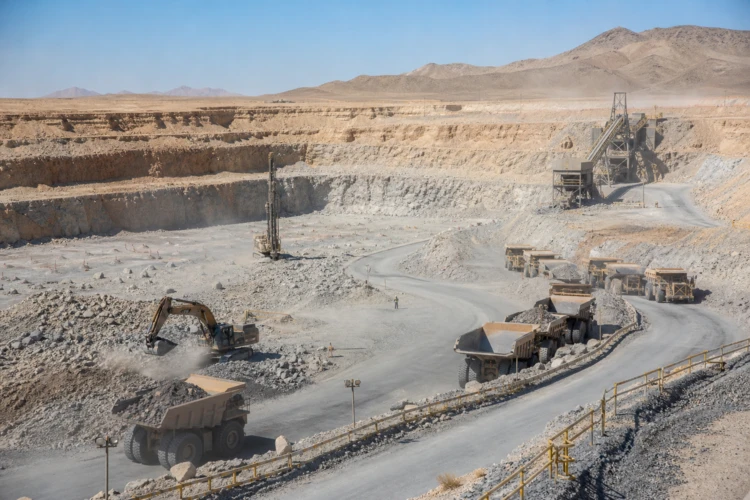
Mining is another 2026 theme where international partnerships can translate into cross-border deal flow. Mining.com.au wrote that in 2026 the Kingdom is “moving from planning to execution,” expanding exploration, reforming regulations, and courting international partners. A separate Mining.com.au analysis said Ma’aden alone has committed approximately US$110 billion of investment over the coming decade across upstream, processing, and downstream manufacturing. This kind of execution agenda can stimulate joint ventures, services acquisitions, and supply-chain integrations, especially when investors want exposure to an “integrated mining economy” rather than single-asset risk.
Macro conditions are also part of boardroom calculus in 2026. Oilandgas360 reported the IMF upgraded Saudi Arabia’s 2025 GDP growth forecast to 4% and revised 2026 growth slightly higher to 4% as well. At the same time, project cycles can reshape which sectors lead M&A. Hotel News Resource noted Saudi contract values fell from $125 billion in 2023 to a projected $77 billion in 2025, while hospitality investment fell from $34.6 billion in 2023 to an estimated $11 billion in 2025. For Saudi Arabia mergers and acquisitions, that combination can encourage selectivity: prioritising defensible cash flows, consolidation where liquidity is improving, and cross-border expansion where regional platforms create multiple exit routes.
What is shaping Saudi Arabia mergers and acquisitions in 2026?
How strong was MENA M&A heading into 2026?
Why do cross-border platforms matter for Gulf dealmaking?
Which Saudi sectors look most connected to 2026 deal drivers?
What risks can complicate smaller cross-border transactions?