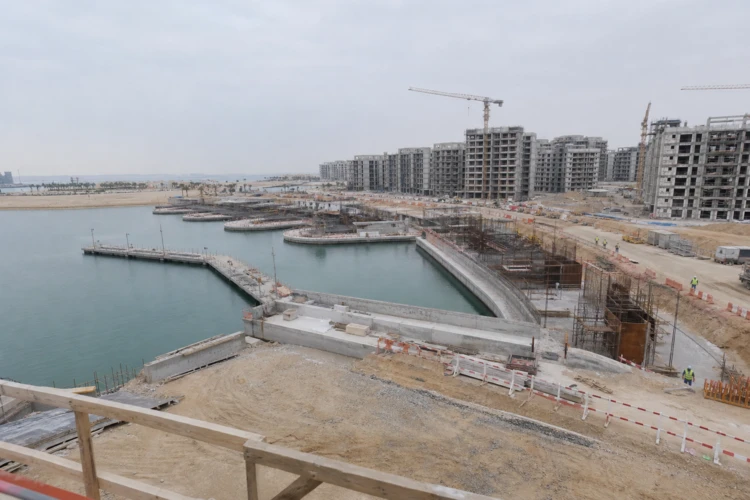
The Saudi construction market outlook for 2026 is shaped by a mix of cost pressure and a more cautious project environment. Rising construction costs are explicitly cited as a driver of financial recalibration and longer payment waits for consultants and contractors on projects in the Kingdom. A senior source quoted in industry commentary links liquidity pressure to the oil price being under pressure, noting that projects controlled by the Public Investment Fund rely on hydrocarbon-sale funding and can respond by slowing projects or reducing waste and overspending to stay on track. That dynamic matters because it changes how quickly work packages move from planning to contract.
Input costs are also a direct risk to construction demand through the materials supply chain. Following 2026 energy-related price adjustments, the cement sector is described as being under significant pressure, with a 35% spike in diesel and HFO costs expected to push companies to raise retail prices and potentially cool demand in the construction sector. At the same time, broader 2026 construction commentary highlights elevated or rising costs for steel, concrete, lumber, and key mechanical and electrical components, driven by tariffs and supply volatility. The same coverage warns that higher bids and change orders can increase contract disputes, adding legal expenses and higher insurance premiums.
Navigating a Leaner Mega-Project Pipeline
A leaner feel to parts of the giga-project pipeline is becoming more visible in market signals. Reporting points to a slowdown in the rollout of giga-projects, with several developments being reevaluated or extended, and Neom described as undergoing revisions to its blueprint due to escalating costs and economic considerations. Another industry view frames the shift as “less Neom, more AI,” noting that the project did not feature in a pre-budget government statement for 2026 after being a headliner for three years. Even where projects are not canceled, extended timelines can reshape contractor backlogs, staffing plans, and cashflow expectations.
In parallel, demand may become more uneven across segments, requiring portfolio adjustments. Forecast commentary for 2026 says some commercial and manufacturing segments could see sluggish or declining spend even as data centers, energy, and infrastructure expand, which can intensify competition for megaproject work and skilled labor. That same outlook emphasizes digital tools such as BIM, drones, data analytics, and artificial intelligence to help control costs and mitigate disputes. For the Saudi construction market, this frames technology not as a branding exercise, but as a practical response to tighter margins, documentation needs, and greater scrutiny across project delivery.
Outside pure construction, industrial evolution can still translate into site demand, utilities work, and enabling infrastructure. By the third quarter of 2025, non-oil business activity rose 48% year-on-year, signaling a broadening private sector. Over the past five years, the range of manufactured goods expanded to 612 in 2024, including 123 complex, knowledge-intensive products. Defense localization is also cited as rising from 4% in 2018 to nearly 20% by the end of 2023. These shifts are paired with an “unrealized export potential” estimate of $1.85 billion for the existing complex basket, implying ongoing pressure to invest in skills, innovation, and infrastructure.
Macro expectations add another layer to 2026 planning. The IMF upgraded Saudi Arabia’s 2025 GDP growth forecast to 4% and revised 2026 growth slightly higher to 4% as well, tied to faster unwinding of oil production cuts. But the transition period described around energy-cost normalization is expected to be characterized by tighter margins and rigorous corporate restructuring through the end of the decade. For project leaders, the practical takeaway is to price volatility realistically, document scope tightly, and plan for a pipeline where some landmark programs take longer, while industrial and high-tech priorities reshape where the next set of opportunities appear.
What is the Saudi construction market outlook for 2026?
Which cost factor could cool construction demand in 2026?
Are Saudi giga-projects being canceled or delayed?
How can contractors manage disputes and cost overruns in 2026?
What signals suggest Saudi Arabia’s industrial shift may influence construction demand?