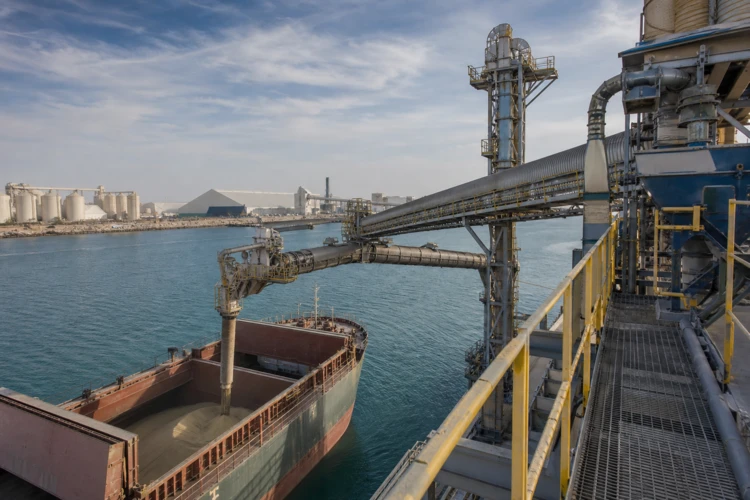
Saudi logistics corridors are being redesigned around resilience and faster inland access, not just maritime throughput. One emerging approach is building integrated sea-land corridors that link western Red Sea gateways to domestic and GCC markets. A critical success factor is creating robust logistics ecosystems around key gateways such as Neom and Yanbu. The goal is a competitive end-to-end alternative to traditional maritime routes, which depends on balancing port costs, inland transport efficiency, and border processes. In practice, that means treating ports, roads, rail, and processing zones as one system that can absorb disruption and still keep trade moving.
A concrete example is the dedicated logistics corridor connecting Jeddah Islamic Port to the Al-Khumrah Logistics Park. According to the Saudi Ports Authority, the project is valued at more than SAR 689 million and stretches 17 kilometers. It includes two lanes in each direction and will build 12 bridges to move trucks between the port and the logistics park without using the city’s internal road network. The minister stated it will increase the handling capacity of Jeddah Islamic Port by 10%. The same corridor is also designed to ease truck flow, improve traffic efficiency, and improve road safety by separating heavy truck traffic from general traffic routes.
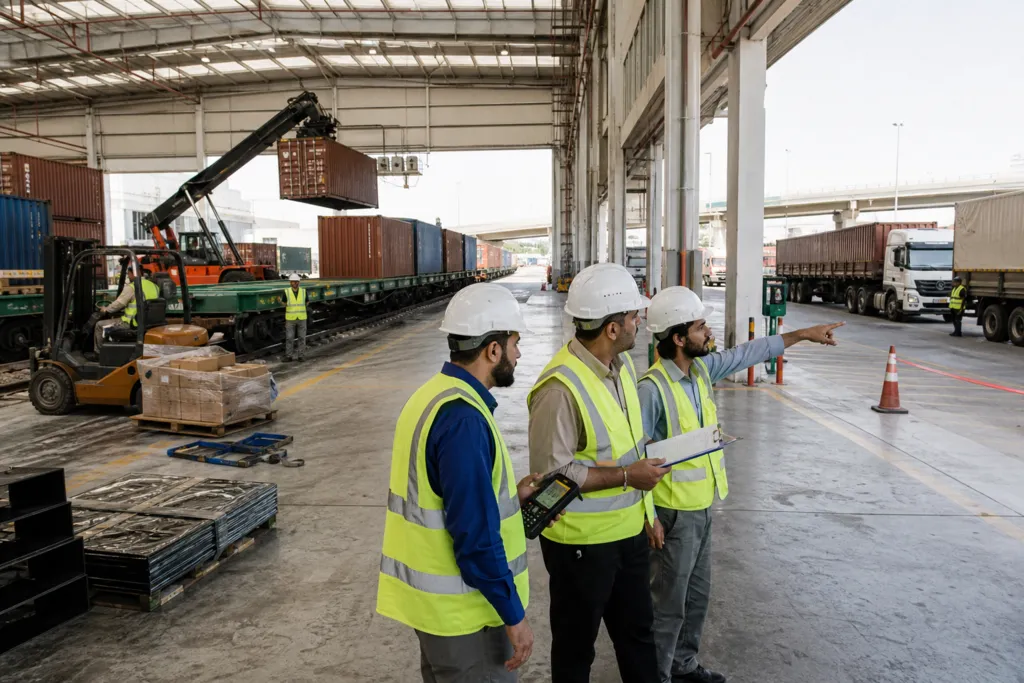
Rail-Linked Trade Routes and the New Sea–Rail–Land Playbook
Rail connectivity is also part of how hinterlands are being integrated across the Gulf, with implications for Saudi logistics corridors that connect to neighboring systems. Strengthening hinterland integration through Etihad Rail, Hafeet Rail, and bonded corridor systems is cited as a way to support efficient sea-rail-land flows linking ports to inland demand centers across the UAE and into Saudi Arabia. At the same time, a more integrated “transshipment-plus” offering is highlighted as a path to deeper global supply chain integration. That package combines sea–air connectivity, value-added logistics, and free-zone processing to support more stable, long-term demand rather than one-off diversions.
Road-linked corridors are accelerating too, as operators work around congestion and border friction. One example is Highway 95, running from the Saudi-Qatari border crossing at Salwa through to Oman at the Ramlet Khelah border crossing point, opened in January 2023, and then linking via Ibri to Omani ports including Sohar and Muscat, or Duqm and Salalah. The value of goods crossing through Ramlet Khelah nearly trebled to $830m in March from $300m in February. The route’s appeal is described as being shorter and cutting out often 24-hour delays at UAE-Saudi border crossings that no longer need to be traversed.
Resilience planning is also shaping where Saudi-linked networks reach. Saudi Arabia is described as uniquely positioned to de-risk its logistics system by increasing use of alternative maritime corridors, particularly in East Africa. Investments in nodes on the East African coast such as Djibouti are presented as a way to gain greater control over routing options and reduce reliance on vulnerable choke points. Within the GCC, the same push for continuity includes expanding cross-border trucking capacity and establishing streamlined border processes to ensure reliable inland flows. Regional staging hubs, particularly in Oman or Saudi Arabia, are also framed as practical buffers that add routing flexibility.
These corridors matter more as Saudi trade becomes more complex and more time-sensitive. Complex manufactured exports are reported to average $3.3 billion annually, around 7% of all non-oil exports, and their reach expanded to 126 global destinations within the past five years. Three sectors account for about 90% of the value: plastics, organic chemicals, and nuclear reactors or boilers. As more destinations and product types are served, reliability becomes a competitive feature, not just a cost line. The combined effect of dedicated port-to-park links, rail-enabled hinterland integration, and faster cross-border road corridors is a supply chain map that is increasingly corridor-led rather than route-by-route.
What are “Saudi logistics corridors” in practical terms?
How does the Jeddah Islamic Port corridor change freight movement?
Why do rail-linked routes matter for regional supply chains?
What evidence shows cross-border corridors are gaining traction?
How are alternative maritime corridors linked to Saudi resilience planning?