Drone strikes on Saudi Arabia’s East-West Pipeline prompted a precautionary shutdown, putting fresh focus on the kingdom’s main overland alternative to the Strait of Hormuz. Al Jazeera described the 1,200 km line as temporarily closed after drones hit two areas around Riyadh and Medina, with injuries and damage to infrastructure reported by Saudi authorities. The pipeline matters beyond Saudi Arabia because it can carry roughly 4 to 5 million barrels per day (bpd), and Al Jazeera said the closure could affect up to 5% of global oil supply. CNN also framed the line as a key contingency plan during more than six months of war, noting it has proved critical in re-routing millions of barrels of Saudi crude from the Persian Gulf during the conflict.
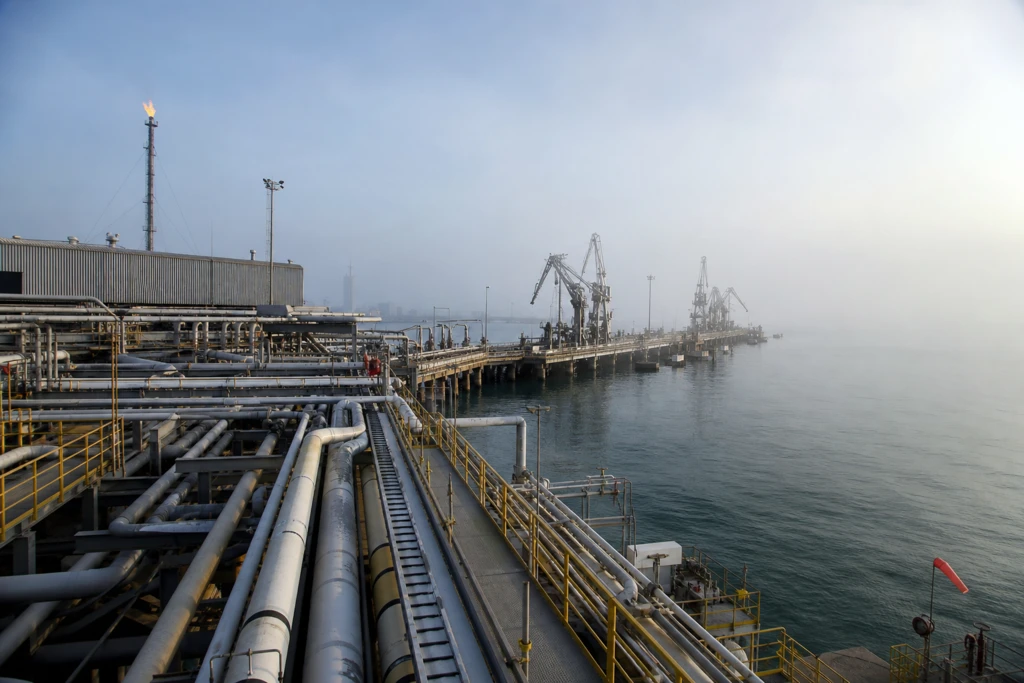
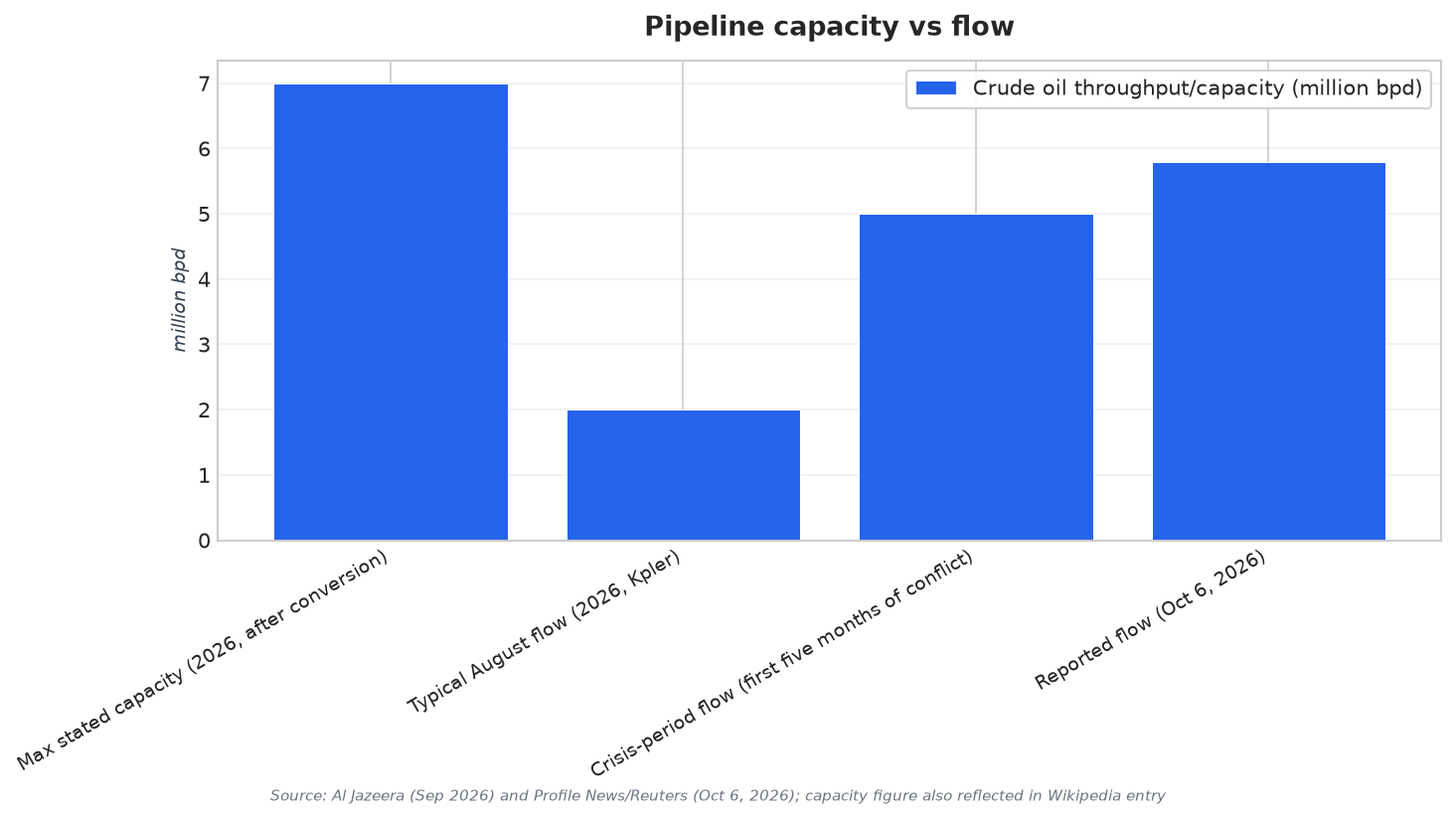
Structurally, the route is designed for bypassing chokepoints. Al Jazeera said the Petroline links major producing fields in the east with the Red Sea port of Yanbu, allowing exports to avoid the Strait of Hormuz, which it said has largely been closed since the outbreak of the US-Israel war on Iran in February. Wikipedia describes the system as running from the Abqaiq oil field across the peninsula to Yanbu, and notes the project was built in 1981 as a bypass option during the Iran–Iraq War era. In 2026, Wikipedia reports, the second pipeline was converted from natural gas liquids to crude oil, lifting the system’s stated capacity to 7 million bpd.
Yanbu’s Strategic Role: More Than a Port, a System Constraint
Yanbu is not only an export outlet; it is also where pipeline barrels must compete with local demand and operational limits. Wikipedia says that at Yanbu the pipeline supplies crude to three refineries as well as export facilities, with up to 1 million bpd supplied to refineries. It adds that Yanbu’s two oil-loading terminals, Yanbu North and Yanbu South, have a nominal combined loading capacity of about 4.5 million bpd and a tested capacity of about 4 million bpd, while Vortexa estimated capacity could fall to about 3 million bpd under wartime conditions. A separate Yanbu analysis also argues exports likely will not consistently reach 4.5 million bpd, citing additional draws such as power plants and other infrastructure along the Red Sea coast.
The figures moving through the line have shifted with the conflict environment, showing both flexibility and vulnerability. Al Jazeera reported that Saudi Arabia increased the amount of crude sent west during the first five months of the conflict, taking flows to roughly 4 to 5 million bpd, while also noting that actual flows were lower in recent months, with about two million bpd in August according to Kpler as Houthi attacks made the Red Sea route difficult to use. On October 6, Profile News reported comments from Saudi Energy Minister Prince Abdulaziz bin Salman that flows through the East-West Pipeline reached about 5.8 million bpd that morning, underscoring how much crude can be shifted overland when Gulf shipping risks persist.
Attacks have also made clear that redundancy is not immunity. Al Jazeera noted a March strike near the Saudi-Aramco-ExxonMobil refinery in Yanbu that temporarily disrupted crude loadings but saw shipments recover within days, demonstrating that western infrastructure can be targeted. CNN reported that one analyst expected stockpiles at Yanbu to deplete within five to seven days if flows stayed offline, while another expected Saudi Arabia could resume some flows during repairs. Together, these developments show why the Saudi East-West pipeline Yanbu route is watched so closely: it can bypass one chokepoint, but it still depends on repair speed, terminal performance, and the security environment across multiple regions.
What is Saudi Arabia’s East-West Pipeline, and why does Yanbu matter?
How much oil can the East-West Pipeline carry, based on reported figures?
How much crude has recently flowed through the pipeline toward Yanbu?
What limits how much oil Yanbu can export during wartime conditions?
How quickly could disruption at Yanbu show up in available stocks?