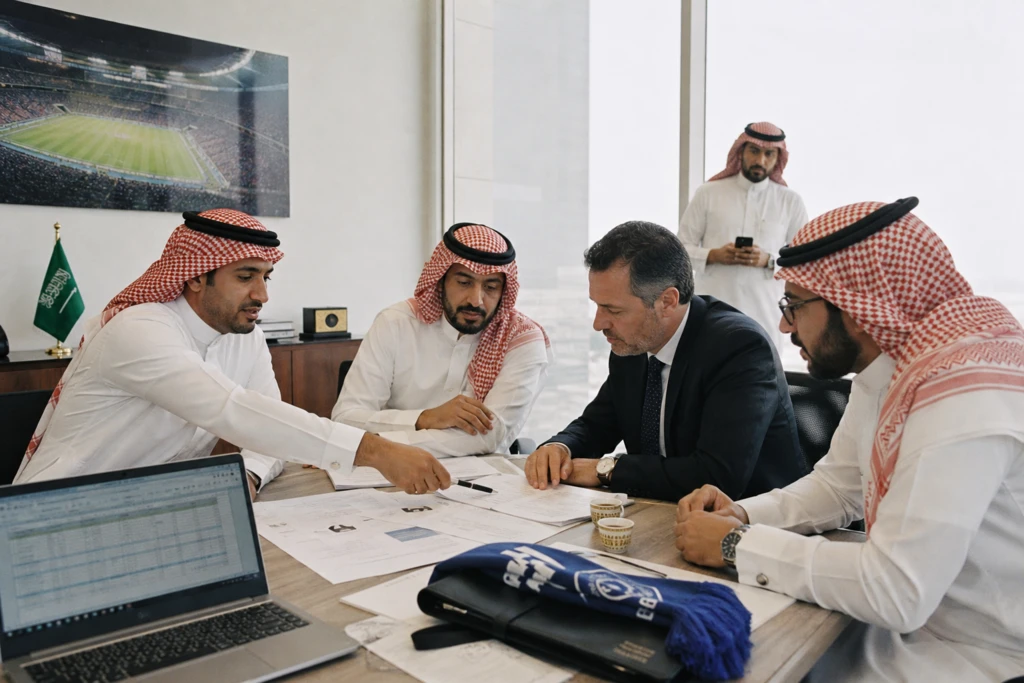
Al-Hilal’s ownership is changing in a way that reframes how Saudi Arabia may want its top clubs to operate. Saudi Arabia’s Public Investment Fund (PIF) has agreed to sell a 70% stake in Al-Hilal Club Company to Kingdom Holding Company (KHC), chaired by Prince Alwaleed bin Talal. The agreement is based on an enterprise value of SAR 1.4 billion for the total share capital of Al-Hilal, with PIF retaining a minority shareholding. In PIF’s framing, the sale aligns with a strategy to maximize returns and redeploy capital within the domestic economy, while still supporting the club as a remaining shareholder.
The context matters because PIF only became Al-Hilal’s major shareholder in July 2023 as part of the Saudi Sports Clubs investments and privatization project. Al-Hilal was also one of four Saudi Pro League clubs owned by PIF after it became majority shareholder in 2023, alongside Al Nassr, Al Ahli, and Al Ittihad. Multiple sources describe that period as a transformation phase, with reported improvements in governance structures, operational performance, and commercial outputs linked to sponsorships, merchandise sales, and matchday revenue. The Saudi Pro League itself is also described as moving away from a single funding source toward several, including a record TV deal with a private broadcaster and commercial partnerships with brands such as EA and Pepsi.
What the Al-Hilal Sale Signals About PIF’s Evolving Role
The Al-Hilal transaction is being read as a signal that PIF wants to shift from running clubs to shaping a market that can attract private capital. Commentary described the Saudi Pro League as operating on a fully state-funded model for 50 years, before the 2023 consolidation of leading clubs under PIF. The same analysis argues that state funding has limits and that private ownership introduces return expectations, operational discipline, and longer-term financial accountability. In that view, selling a majority stake in Al-Hilal turns a PIF-controlled sports asset into a privatization case that can demonstrate market valuation, investor appetite, and a governance transition while keeping the club inside Saudi Arabia’s domestic sports ecosystem.
For Kingdom Holding, the deal is also positioned as part of a broader investment approach, with KHC describing a strategy to diversify into high-growth sectors with economic and social value aligned with Vision 2030. Prince Alwaleed bin Talal called Al-Hilal “a national symbol” and said the acquisition reflects a belief in sport as a unifying force and a catalyst for national development, while promising global investment standards and strategic partnerships. PIF, through deputy governor Yazeed A. Al-Humied, said it has set ambitious goals for clubs to become commercially and professionally successful and achieve long-term financial sustainability, while using the sale to recycle capital inside the domestic economy.
On the pitch, Al-Hilal remains one of Saudi Arabia’s most decorated clubs, having won 19 league titles, including six since 2017, and it has been characterized as one of the country’s biggest spenders. Recent squad details cited include the signing of Karim Benzema, the 2022 Ballon d’Or winner, from Al Ittihad in the January transfer window, and the presence of Darwin Nunez, Ruben Neves, and Kalidou Koulibaly, with Simone Inzaghi as head coach. As a keyword lens, the Al-Hilal Club Kingdom Holding acquisition in Saudi Arabia is less about a single club sale and more about a visible step in a privatization pathway that aims to make elite football assets operate on clearer commercial footing.
What stake in Al-Hilal is PIF selling to Kingdom Holding?
How was Al-Hilal valued in the agreement?
How does the Al-Hilal Club Kingdom Holding acquisition relate to Saudi Arabia’s sports business model?
When did PIF become Al-Hilal’s major shareholder?
Which other Saudi Pro League clubs were owned by PIF after 2023?