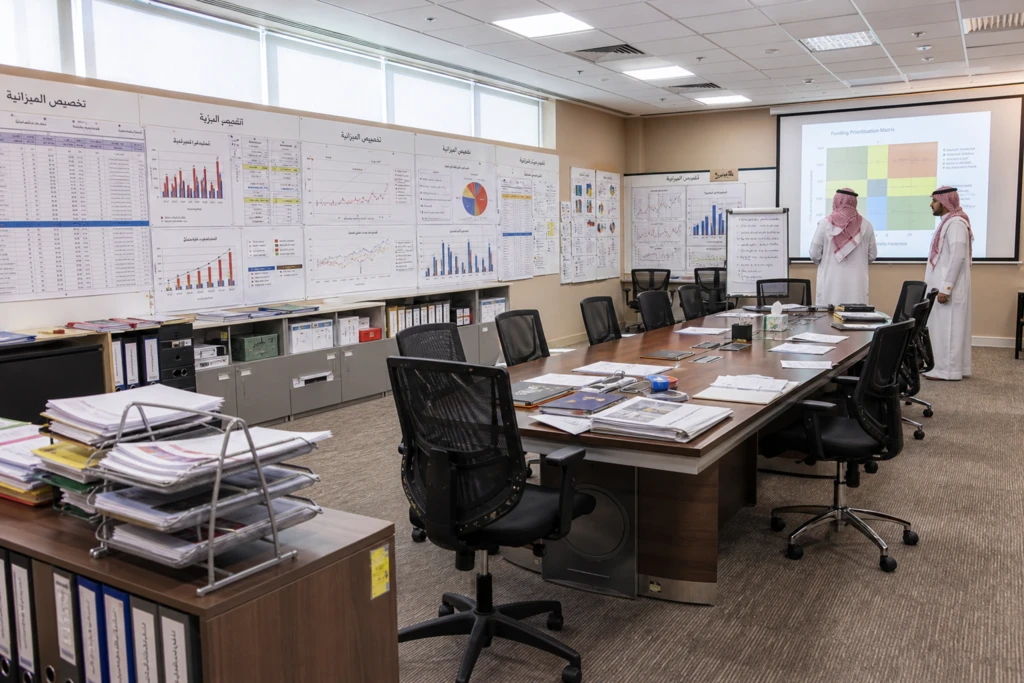
Saudi Arabia’s Ministry of Finance has set out early signals for the Saudi Arabia 2027 budget through its FY2027 Pre-Budget Statement. The headline estimates point to total expenditures of approximately SAR 1,392 billion against total revenues of approximately SAR 1,202 billion. That gap implies a deficit, estimated at around 3.6% of GDP, within what the ministry described as a fiscal approach designed to balance support for economic growth, continued implementation of development priorities, and fiscal sustainability. Several reports also quantify the gap between forecast revenue and expenditure at about SAR 190 billion, with another estimate placing the deficit at 191 billion riyals.
The medium-term path in the statement matters almost as much as the 2027 snapshot. Revenues are projected at about SAR 1,202 billion in 2027 and are expected to rise to around SAR 1,351 billion by 2029. Expenditures are estimated at SAR 1,392 billion in 2027 and forecast to reach around SAR 1,544 billion by 2029, reflecting what the ministry described as continued spending on development as well as strategic priorities and projects with economic and social returns. The same narrative links the fiscal stance to long-term financial planning, giving the government room to manage economic cycles while continuing priority projects tied to Saudi Vision 2030.
What the Statement Signals About Growth, Inflation, and Jobs
The pre-budget update is also anchored in a mixed 2026 backdrop. Preliminary estimates indicate real GDP declined by 3.6% in 2026, primarily due to oil activities that are expected to decline by approximately 21.8%. At the same time, the ministry expects positive growth in non-oil activities to continue at around 3.2%, helping reduce the impact of weaker oil-sector performance. In the first half of 2026, non-oil activities grew 1.8%, increasing their contribution to GDP to 57.3%, described as a historic level. Inflation is estimated at approximately 2.1% for 2026, while unemployment among Saudi nationals declined to 6.5% in Q2 2026.
Looking ahead, the statement’s macro assumptions point to a steadier inflation profile and a stronger growth outlook. The ministry projects real GDP growth of 12.8% in 2027. Inflation is expected to ease from 2.1% in 2026 to 1.9% annually between 2027 and 2029. Alongside the economic projections, the financing plan is clear in direction even if not fully detailed: Saudi Arabia intends to continue borrowing in domestic and international markets in 2027 in line with a medium-term debt strategy. Reported financing channels include bonds, sukuk, and loans, plus alternative funding channels such as project and infrastructure financing and export credit agencies.
For readers trying to decode which sectors stay in line for funding, the statement does not publish a sector-by-sector allocation in the cited material. Still, it repeatedly emphasizes continued spending on “development priorities,” “strategic priorities,” and projects with “economic and social returns,” signaling that the funding focus remains on the broader Vision 2030 agenda rather than short-term cuts. The ministry also links revenue resilience to diversification reforms, noting that non-oil revenues increased from approximately SAR 166 billion in 2015 to SAR 505 billion in 2025. In practice, that framing suggests 2027 spending plans are designed to keep development momentum while the government manages a deficit estimated at 3.6% of GDP.
What are the main numbers in Saudi Arabia’s 2027 budget pre-statement?
How large is the projected deficit in riyals for 2027?
What does the statement say about non-oil activity heading into 2027?
How will Saudi Arabia fund the 2027 deficit?
What should readers take away about the Saudi Arabia 2027 budget priorities?