Three months after the United States and Israel attacked Iran on February 28, 2026, the conflict sat in stalemate. A ceasefire began on April 8, 2026, but it did not deliver a political settlement or an agreement to reopen the Strait of Hormuz to shipping. This “limbo” disrupted global supply chains and raised economic strain, including higher insurance costs for shipping amid attacks that damaged critical infrastructure. For Saudi companies, the practical lesson is that planning must assume prolonged disruption. The goal is not perfect forecasting, but decision-ready scenarios tied to measurable triggers and clear owner-led actions.
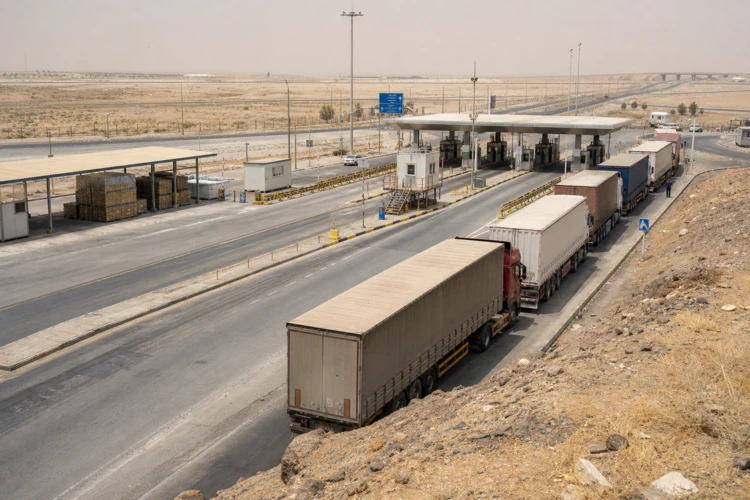
Start your scenario set with what the 2026 data already proved can move fast: trade, production, and confidence. In March relative to February, Saudi export value increased 16% while import value fell 28%, even as the volume of both exports and imports dropped amid disruption through Hormuz. Oil export value jumped 36% in March, while crude export volumes fell to 5 million barrels per day, a 32% decline from February; exports of oil products fell to 1.1 mb/d, down 30% from February. Non-oil exports declined 27% as petrochemical and metal exports fell, with large drops in cargos transiting through Jubail and Dammam ports. Use these as planning variables: port routing, lead times, and which input categories (such as machinery/electrical and transport equipment) face the largest downside if imports tighten again.
A Scenario-Planning Playbook Built on Triggers and Buffers
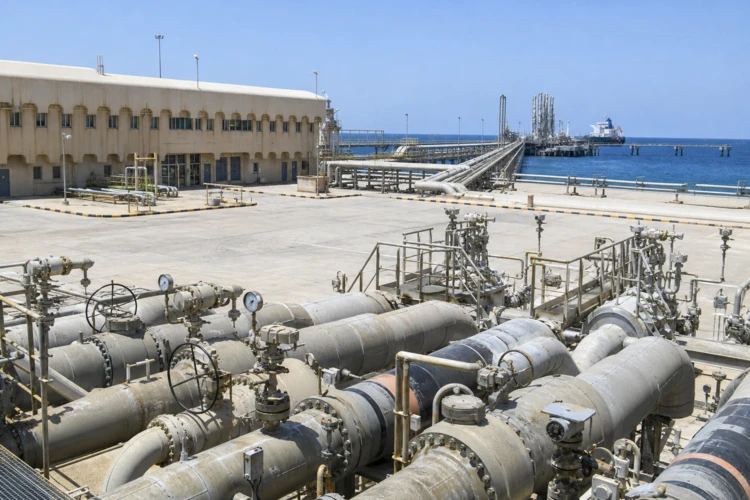
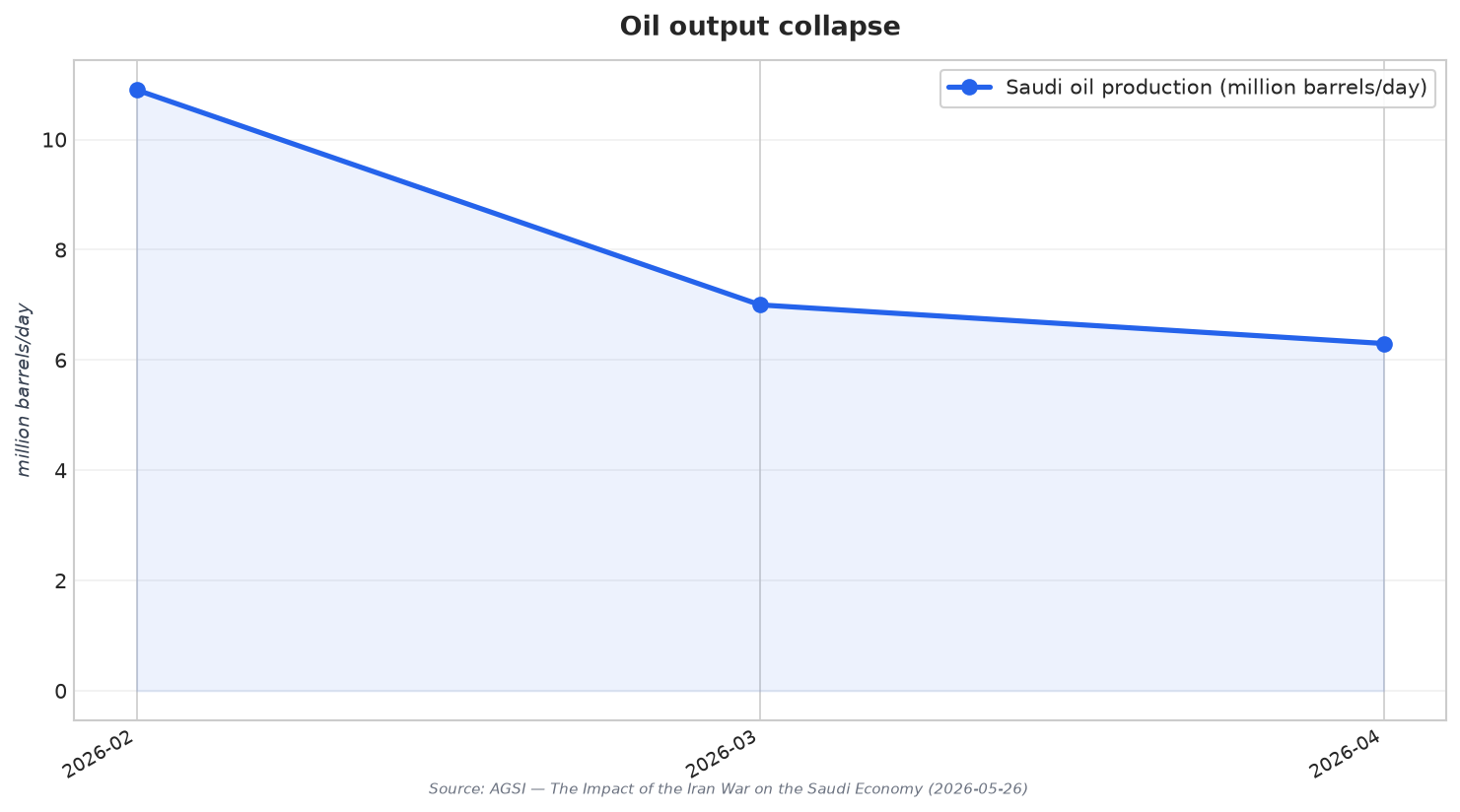
Build three scenarios and attach triggers. Scenario 1 is “ceasefire holds, Hormuz stays constrained.” Under that condition, redundancy matters: the East-West oil pipeline to Yanbu enabled continued exports, with Aramco exporting about 4 mb/d to 5 mb/d from the Red Sea coast, though it still did not fully cover the loss of Hormuz access. Scenario 2 is “energy output stays below preconflict levels.” OPEC data showed oil production falling from 10.9 mb/d in February to 7 mb/d in March and 6.3 mb/d in April; if production sits at 7 mb/d to 7.5 mb/d in April–June, that implies a contraction in real oil GDP in the second quarter of 2026 of between 19% and 25% relative to the first quarter. Scenario 3 is “risk sentiment returns unevenly.” A Saudi statistics authority business confidence index fell in March to its lowest since it was first published in 2023, even though in April both the Riyadh Bank PMI and the official business confidence index were above 50, signaling more firms reported improving conditions than deteriorating.
Then map buffers you can control. At the national level, the mitigation story included relatively prudent fiscal policy and a large stock of foreign financial assets of $1.6 trillion. In the first quarter of 2026, the current account moved into a surplus of $4.1 billion from a deficit of $8.2 billion in the fourth quarter of 2025, aided by higher oil prices offsetting lower export volumes and by imports falling due to disruption. Company-level planning should mirror that logic: protect liquidity, diversify logistics routes where feasible, and stress-test working capital against delayed inbound shipments. If your exposure is industrial or petrochemical, incorporate the observed downside: industrial output growth slowed to near zero year on year in March from 6% as recently as January, and petrochemical production declined 4.5% year on year.
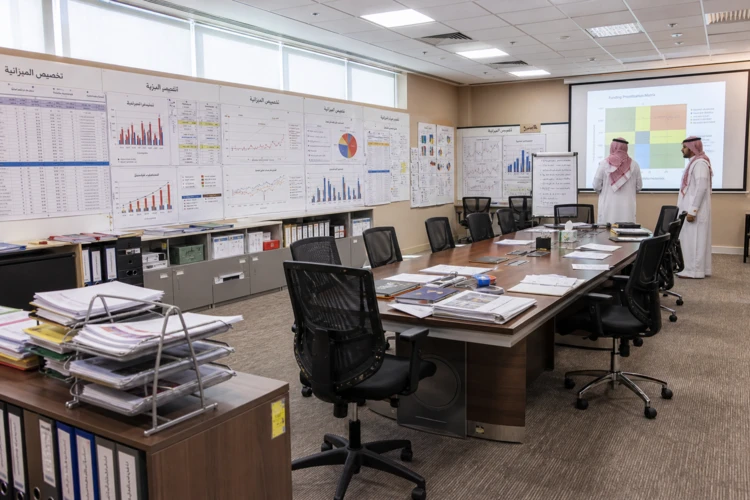
Finally, convert scenarios into operating rules and governance. For Saudi Arabia scenario planning, define “red lines” that automatically shift behavior: a renewed closure signal for Hormuz, a sharp fall in business confidence, or a new constraint on staffing availability. Keep an additional layer for security, because disruptions can create opportunities for physical and cyberattacks, and plans must work when some people are not available to execute them. When your playbook is in place, schedule monthly reviews that re-check the same indicators cited above—trade flows, port mix (Dammam/Jubail versus Jeddah), production levels, and confidence readings—so the business can pivot without waiting for certainty.
What should Saudi businesses assume about the Strait of Hormuz after the 2026 Iran war?
Which trade signals mattered most for planning during the disruption?
How can companies turn Saudi Arabia scenario planning into practical triggers?
What operational buffers supported resilience in Saudi Arabia during the war period?