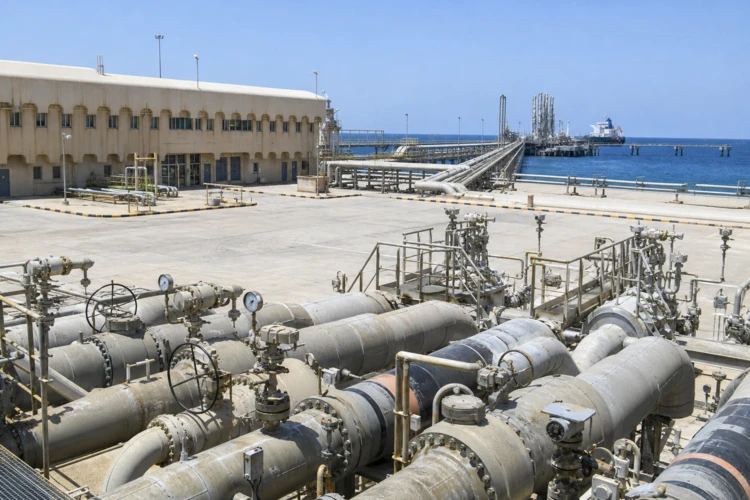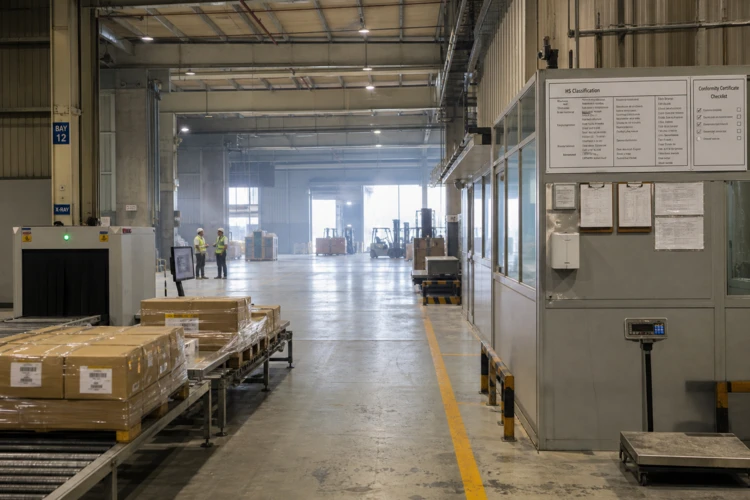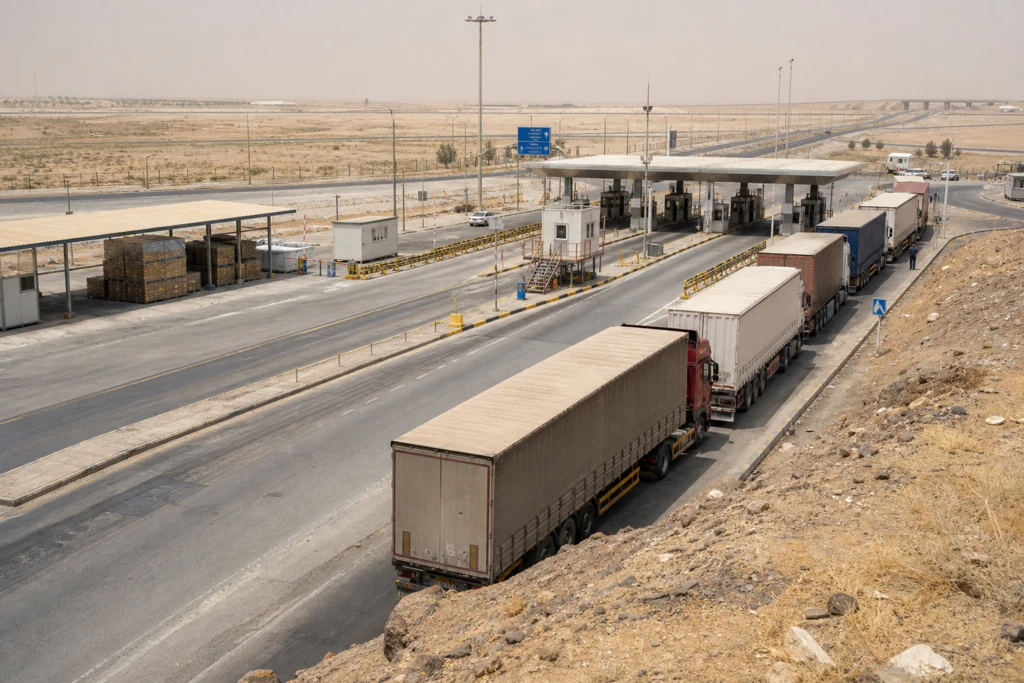
When risk spiked around the Strait of Hormuz and Red Sea routes, the region did not “replace ships with trucks.” It diversified. A Logistics report described a shift from one optimal route to a “portfolio of corridors,” spreading exposure across ports outside chokepoints and multimodal links that include road. A Strategy International assessment put it plainly: road freight is the backbone of inland logistics across the Middle East, and it carries food, medicine, and goods when maritime options are disrupted. In practice, this meant containers discharged at Red Sea or east-coast ports moving across the GCC by truck under bonded-transit regimes, creating partial redundancy when Hormuz, Bab al-Mandeb, the Red Sea, the Suez Canal, or the Eastern Mediterranean face threats.
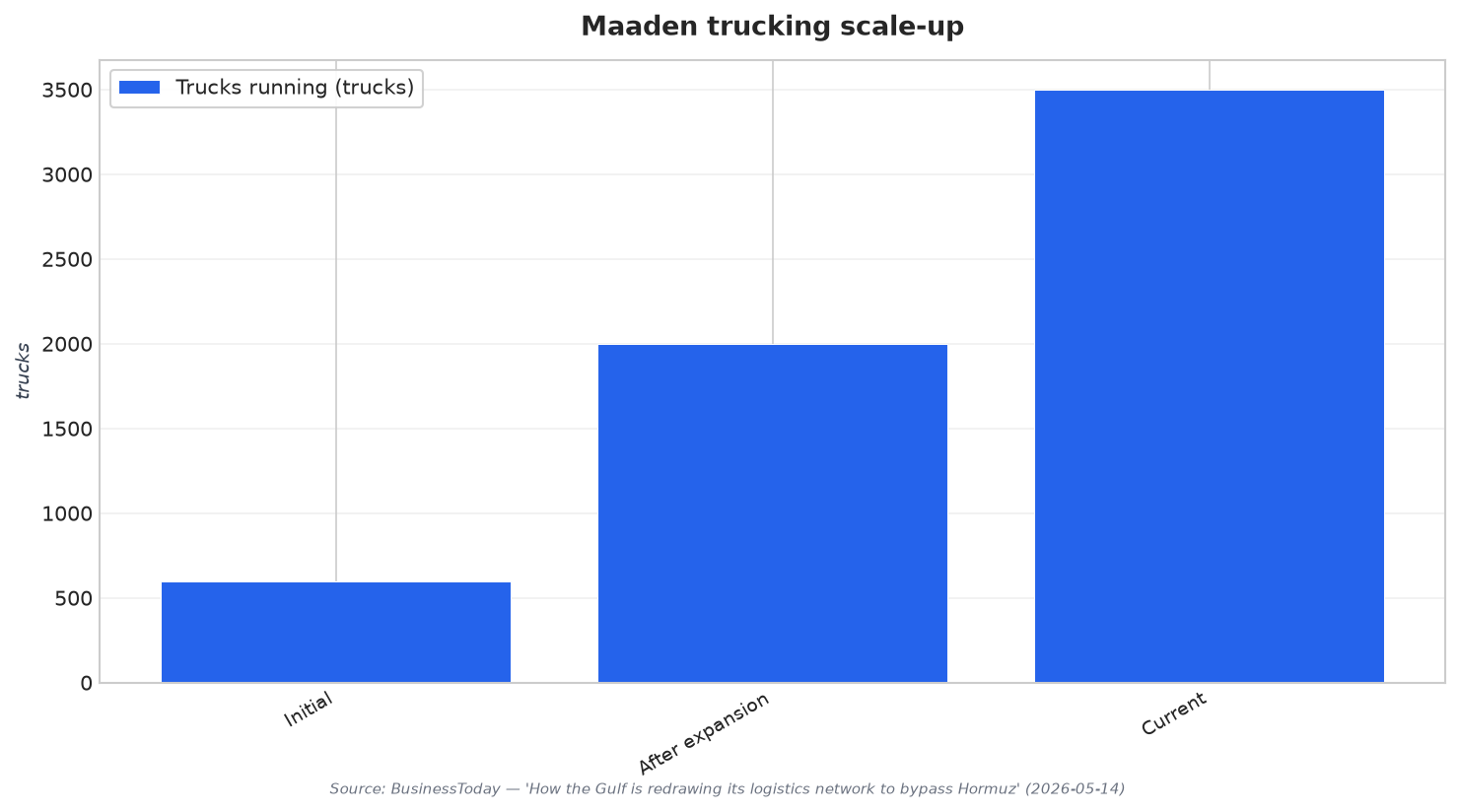
Saudi Arabia’s overland trucking capacity mattered because it could absorb cargo flows redirected away from Gulf hubs. AGBI reported that Saudi Arabia has more than 600,000 trucks, even though the largest single fleet is 3,000, highlighting a fragmented market that can still surge when demand spikes. That surge was visible in corporate logistics decisions. BusinessToday reported that Maaden arranged rail and truck operations to move fertilisers across the kingdom within two weeks, scaling up to “3,500 trucks running from the Gulf to the Red Sea,” with vehicles operating almost round the clock and using two drivers each. These shifts also aligned with a broader map change reported by EnterpriseAM: as Hormuz access tightened, ports like Jeddah on Saudi Arabia’s Red Sea coast, and Oman’s Sohar and Salalah increasingly absorbed flows previously routed through hubs such as Jebel Ali.
Why the Egypt-to-NEOM Sea-Road Bridge Became the Breakthrough
The standout bypass was not only intra-GCC trucking, but a working Europe–Egypt–GCC chain anchored by a ferry hop into Saudi Arabia’s northwest. EnterpriseAM described trailers arriving at Damietta, moving overland to Safaga, then crossing by ferry to NEOM before continuing by road into Gulf markets. Strategy International detailed the operating scale since 2023: the Safaga–Duba sea-road bridge moves around 500 refrigerated containers and roughly 12,500 tons of cargo per day, turning Egypt into a key transit bridge during Hormuz and Red Sea disruption. EnterpriseAM also quoted Pan Marine’s commercial director saying multiple shipments from different European origins, across both dry and reefer cargo, increased customer confidence, with customers increasingly relying on the model to reduce safety stock and manage cashflow more efficiently.
Overland connectivity also became a regional service offer, not just an emergency improvisation. EnterpriseAM reported that shipping lines began acting more like overland logistics operators, with Hapag-Lloyd establishing trucking corridors across Saudi Arabia, Oman, and the UAE to connect Bahrain, Kuwait, and Qatar, while Maersk and MSC rolled out similar land-based cargo solutions. AGBI added that TruKKer opened land bridges from the UAE’s east coast to Fujairah as well as Sohar, Duqm, and Salalah in Oman, and to Jeddah, Yanbu, and even NEOM in Saudi Arabia, positioning road as the connector for cargo meant for GCC markets, including Qatar, Bahrain, and Kuwait. In this context, Saudi Arabia overland trucking GCC flows became less about a single route and more about stitching together ports, borders, and logistics operators into a workable inland alternative.
Still, these corridors were described as partial relief, not a full substitute for the Strait. The National, citing Xeneta data, said trade was “vastly reduced,” with only 20 to 30 per cent transiting through land bridges from the UAE, Jeddah in Saudi Arabia, Turkey, and Oman. It also noted that the new overland routes play a crucial role in transporting essential cargo such as food, pharmaceuticals, industrial components, retail inventories, and critical manufacturing inputs, but they do not have capacity for the volumes previously shipped through Hormuz. Middle East Briefing echoed the same constraints: alternative routes are more expensive, slower, and limited in capacity, while overland transport creates new bottlenecks in trucking capacity, customs processing, and cross-border logistics—even as these links keep trade moving when maritime flows become unreliable.
How did Saudi Arabia’s overland trucking across the GCC become an emergency backbone?
What is the Safaga–Duba sea-road bridge, and what scale did it reach?
How many trucks did Maaden deploy to shift fertiliser flows across Saudi Arabia?
How much trade was moving via land bridges during the Strait of Hormuz closure?
Why did shipping lines start offering trucking corridors across Saudi Arabia, Oman, and the UAE?