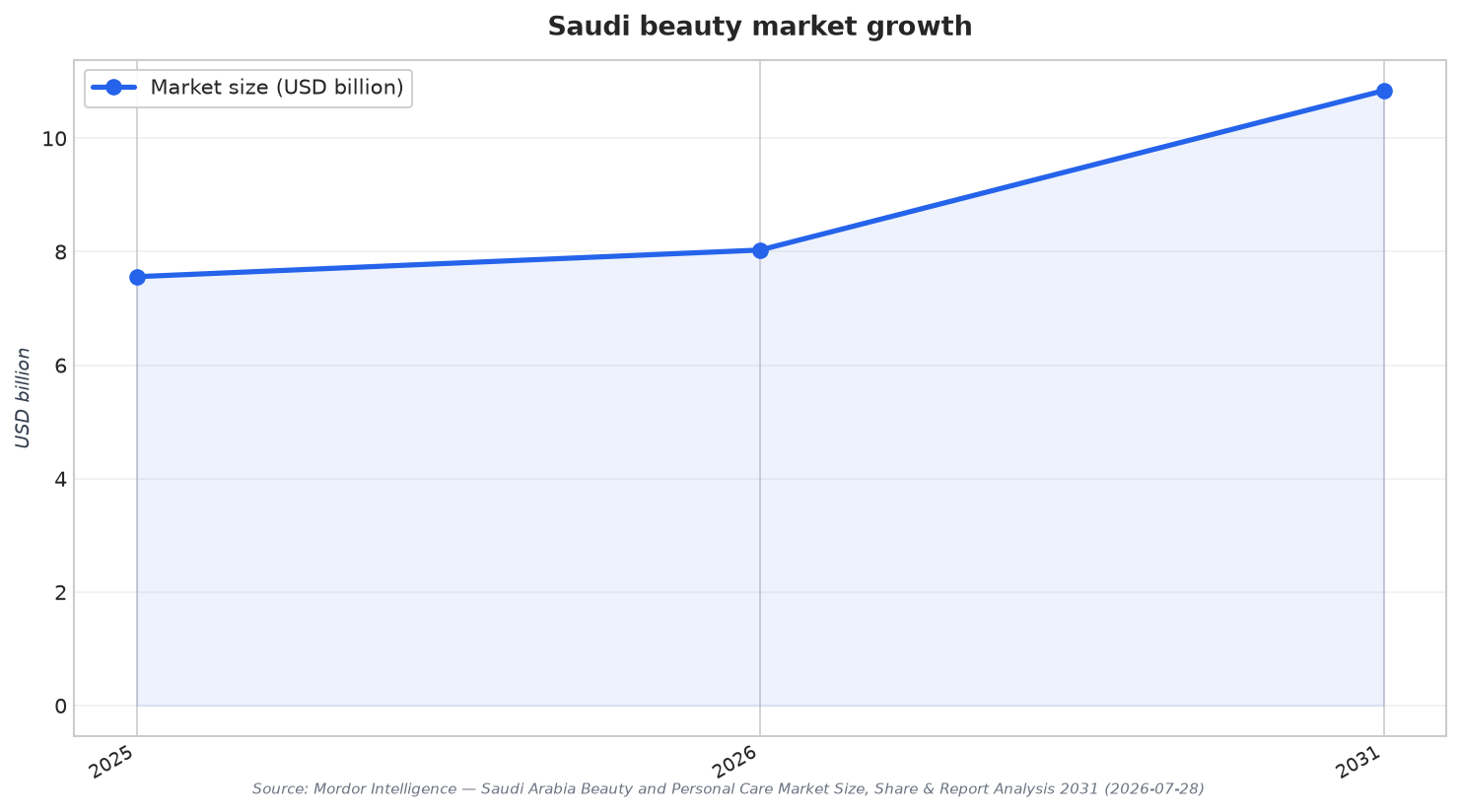
Halal cosmetics and modest beauty are becoming a defining growth theme for consumer brands in the Kingdom. Mordor Intelligence forecasts Saudi Arabia’s beauty and personal care market to grow from USD 7.56 billion in 2025 to USD 8.03 billion in 2026, reaching USD 10.84 billion by 2031 at a 6.17% CAGR (2026–2031). Within that, cosmetics are expanding at a 6.61% CAGR through 2031, while personal care held 86.64% share in 2025. This is the strategic backdrop for the Saudi Arabia halal cosmetics market conversation: growth is broad-based, but winners are increasingly those that match efficacy with cultural fit and compliance expectations.
Modest beauty demand is reinforced by everyday usage and by social change. A study cited in a Middle East cosmetics report states that over 65% of women in Saudi Arabia and the UAE use skincare and makeup products daily. At the same time, Vision 2030-linked changes are reshaping demand patterns. Mordor Intelligence notes that female workforce participation rose from 17.4% in 2017 to 36% by the first quarter of 2023, surpassing the original 30% target, and it links decorative cosmetics volume gains to broader makeup usage among working women. The result is a market where long-wear, climate-ready, and “hijab-friendly” product design can move from an adaptation to a core proposition.
Halal + Clean + Digital: The Operating System for Growth
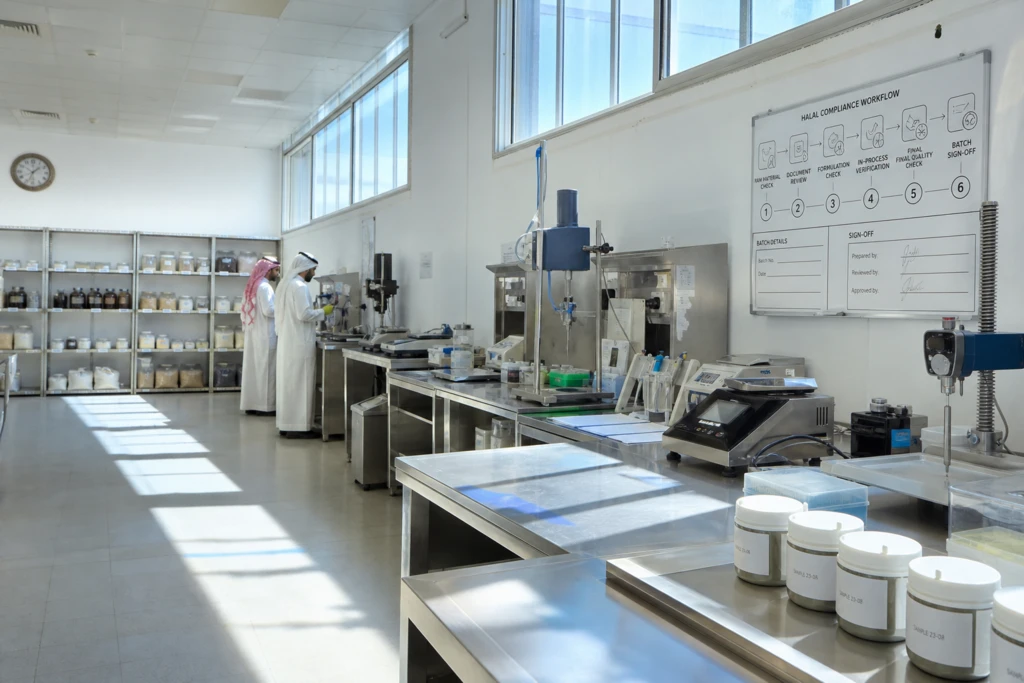
Compliance and ingredient transparency are turning into brand-builders, not just regulatory hurdles. A Saudi cosmetic products report describes rising demand for halal-certified cosmetic products in the Kingdom, driven by increasing consumer awareness and religious considerations. It also highlights the Saudi Food and Drug Authority’s leadership in halal cosmetics certification as a competitive advantage for brands seeking broader Muslim market access. In parallel, Mordor Intelligence projects that, by ingredient type, conventional formulations held 71.88% share in 2025, while natural products are forecast to grow at a 6.72% CAGR (2026–2031). For brands, that combination can translate into clearer formulation roadmaps, stronger claims discipline, and more resilient trust.
Channel strategy matters because discovery is increasingly digital-first. Mordor Intelligence reports specialty retailers controlled 56.77% of Saudi beauty and personal care sales in 2025, yet online retail is expected to be the fastest-growing channel at a 7.65% CAGR through 2031. In the broader global halal cosmetics category, online retail stores captured 40.68% of revenue in 2025 and are forecast to grow at a 14.05% CAGR (2026–2031), suggesting how quickly digitally led brands can scale once trust is established. For Saudi Arabia, this reinforces a playbook that pairs in-store credibility with high-velocity social and chat commerce, where trend cycles are compressed.
The competitive set is also heating up, with global and clean beauty signals converging on the market. A Saudi cosmetic products report projects the Saudi Arabia Cosmetic Products Market to reach USD 0.87 billion in 2025 and grow at a 7.09% CAGR to USD 1.23 billion by 2030, naming major players such as L’Oréal S.A., LVMH, Coty Inc., The Estée Lauder Companies Inc., and Beiersdorf AG. It also notes January 2025 saw L’Oréal launch a halal-certified skincare line formulated for the Middle Eastern market, and November 2024 saw Kosas launch in Saudi Arabia with skincare-infused makeup. For consumer brands, modest beauty is no longer a side assortment; it is a scalable, certification-led growth frontier with clear signals from market structure, channels, and product innovation.
How fast is Saudi Arabia’s beauty and personal care market expected to grow?
What is the outlook for cosmetics within the Kingdom’s beauty market?
What signals rising demand for halal-certified beauty in Saudi Arabia?
How is online beauty retail evolving in Saudi Arabia?
What is driving momentum in the Saudi Arabia halal cosmetics market and modest beauty segment?