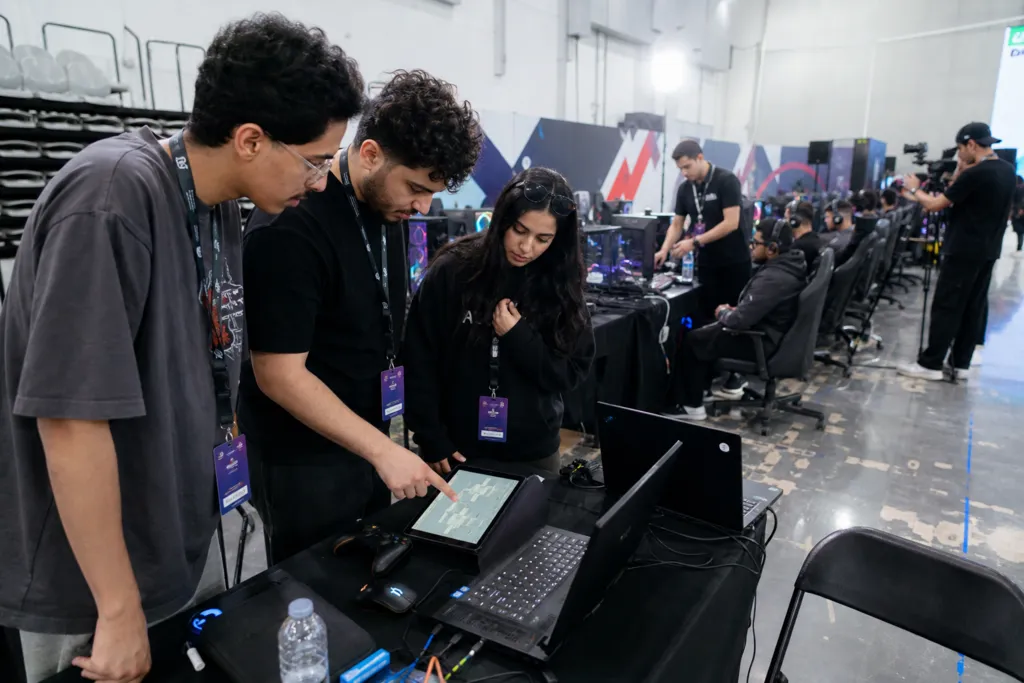
The Saudi Arabia gaming market is being shaped by an unusually direct state-backed push. Savvy Games Group says it is “committed to driving long-term growth and innovation in the games and esports industry through strategic acquisitions, investments, and commercial ventures.” It also says it hopes to reach “leadership status in the games industry” by 2030 through rapid and aggressive growth. The center of gravity is the Public Investment Fund (PIF), which has been building positions and buying companies across games and esports. The approach blends global dealmaking with a plan to turn Riyadh into a destination for competitive play and game business activity.
The headline move is a proposed $55 billion deal to take Electronic Arts private, backed by a consortium including PIF, Silver Lake, and Affinity Partners. Multiple outlets note PIF already held a 9.9% stake in EA before the announced agreement. Reuters framed the buyout as a turning point tied to the rising value of high-end gaming IP and the trend of players concentrating engagement among fewer, more popular franchises. In parallel, the broader investment logic is spelled out by PIF expectations, with Polygon citing the fund’s website projecting gaming industry revenues topping $300 billion by 2028. This is the scale backdrop for Saudi Arabia’s pursuit of influence in a global entertainment category.
Savvy, Scopely, and the Esports Stack
Savvy’s playbook has also been to buy infrastructure that connects games to spectators. Axios reports that PIF-owned Savvy Gaming Group acquired tournament organizers ESL and FACEIT for about $1.5 billion, and mobile developer Scopely for $4.9 billion. GameSpot adds that Scopely later bought Niantic’s gaming division in 2025 for $3.5 billion, linking the Saudi-backed chain to Pokémon Go. Polygon similarly describes PIF acquiring Niantic through Scopely and Savvy, while also noting Savvy owns ESL FACEIT Group, created by merging two major esports organizers. Together, these moves build a pipeline from publishing and mobile scale to tournaments and event operations.
Competitive gaming events are another pillar. Polygon reports that the PIF, via the Qiddiya Investment Company, acquired the Evolution Championship Series (Evo). 404 Media also calls Evo “the biggest video game fighting tournament in the world” and highlights senator concerns that PIF-backed deals could be used for foreign influence. BBC Sport notes Saudi Arabia has hosted major tournaments including the Esports World Cup and will host 2027’s planned Olympic Esports Games. In other words, Saudi activity is not limited to ownership stakes; it also includes hosting and controlling premium event brands that can shape calendars, media narratives, and where top players congregate.
Domestically, the ambition is codified through venue and ecosystem targets tied to Qiddiya. Polygon says the Qiddiya Esports and Gaming District in Riyadh aims to “attract 10 million visitors a year to its venues by 2030, and incubate 30 leading video game development companies.” Polygon also describes a National Strategy for Gaming and Esports that aims to incubate 250 companies, create tens of thousands of jobs, and contribute $13.3 billion to GDP, according to the PIF. BBC Sport adds context for why such a plan can be politically salient, citing commentary that 70% of the population is aged under 35. That youthful base helps explain why the Saudi Arabia gaming market is being treated as economic development, not only entertainment.
The same moves that accelerate growth also attract scrutiny. 404 Media summarizes a senators’ letter warning that the PIF’s reputation as a strategic arm of the Saudi government raises foreign influence and national security risks, and it cites a $3.3 billion investment in Activision Blizzard as part of a broader pattern. The Ringer describes the EA deal as a cultural coup and argues the accumulation of sports and entertainment assets functions as a soft-power strategy, while also referencing the assassination of Jamal Khashoggi in October 2018 and backlash to high-profile events in Riyadh. For Saudi Arabia, the race for global esports leadership is therefore unfolding on two tracks at once: building a vertically integrated global gaming footprint and defending the legitimacy of that footprint in the court of public opinion.
What is Savvy Games Group trying to achieve by 2030?
Which major gaming deals are linked to PIF and Savvy?
How does the Saudi Arabia gaming market plan connect to Qiddiya?
What is the National Strategy for Gaming and Esports targeting?
Why are Saudi gaming investments drawing political scrutiny?