In 2026, the Saudi automotive aftermarket is shifting from a purely combustion-led service model to a mixed landscape shaped by electrification. Saudi Arabia has set a target to transition 30% of vehicles in Riyadh to electric by 2030, as part of a broader plan to reduce emissions in the capital by 50%. Yet the market is early in adoption: electric vehicles account for just over 1% of overall car sales in Saudi Arabia, according to PwC’s “eMobility Outlook 2024: KSA Edition” (published September 2024). That gap between ambition and current penetration is exactly where parts and service demand gets rewritten, with workshops and fleets planning for two systems at once.
New EV activity is also broadening the vehicle parc and increasing the variety of service needs. Major EV producers are now selling in the country, including China’s BYD, which opened its first showroom in May 2024, and Tesla, which launched in Saudi Arabia in April (as reported by CNN in July 2025). BYD’s Saudi website lists the Atto 3 model with a starting price of approximately $27,000. Consumer interest is visible too: more than 40% of Saudi consumers are considering purchasing an EV in the next three years, according to PwC. For the aftermarket, this signals rising demand for EV-specific inspections, software-driven diagnostics, and new maintenance routines that differ from traditional engine-centered service.
Battery Service Becomes a Core Aftermarket Category
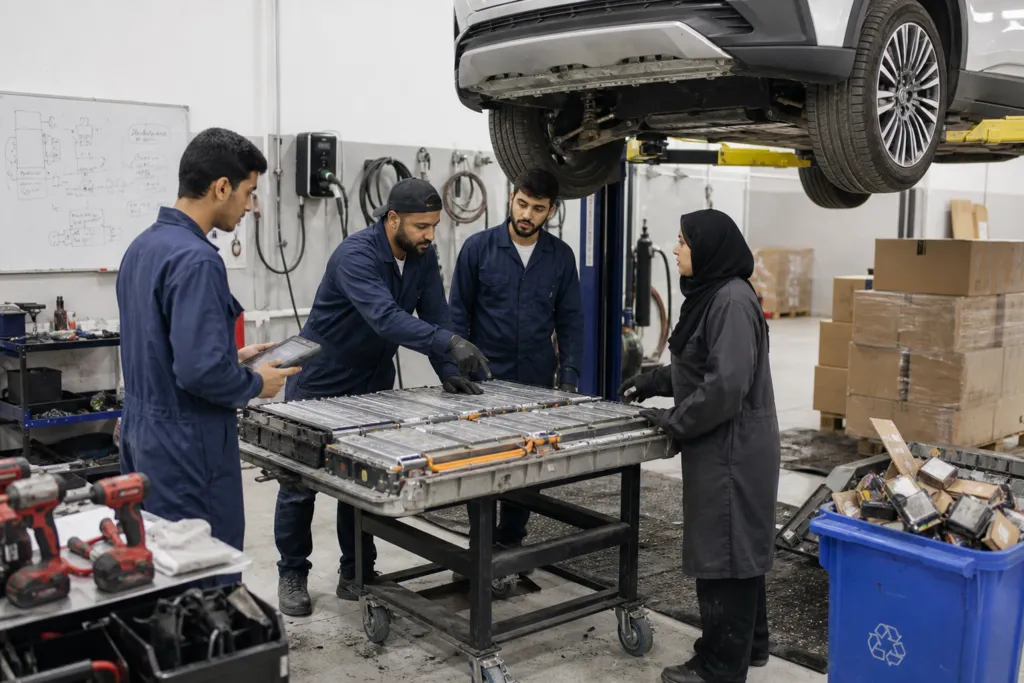
One of the clearest 2026 signals is the arrival of dedicated battery lifecycle service in Riyadh. CATL opened its first aftermarket facility in the Middle East: a 7,000 square metre service centre in Riyadh. CATL said it is currently its largest new energy aftermarket facility outside China, and described it as the first NING SERVICE Experience Center in the Middle East. The centre offers full-lifecycle services including battery diagnostics, repair, maintenance, refurbishment, training, and recycling for passenger vehicles, commercial vehicles, and energy storage systems. CATL also said the facility will help address challenges including limited charging and service infrastructure in the region, which directly affects how quickly EV service capacity can scale.
Beyond service bays, the aftermarket is being shaped by Saudi’s push to build a broader industrial ecosystem around EVs. CNN reported that Saudi isn’t just adopting EVs, it’s “building an entire industrial ecosystem” around them. PIF is the largest shareholder in Lucid, which in 2023 opened the first car manufacturing facility in the country. CEER, a joint venture between PIF and Foxconn, plans to launch its first Saudi-produced EV by 2026. A joint venture between PIF and Hyundai has also broken ground on a manufacturing plant in the country. For the Saudi automotive aftermarket, that pipeline matters because local production and a growing model mix tend to increase the need for training, tooling, and standardized procedures across independent and dealer service channels.
Regional demand signals also provide context, even when they are not Saudi-only. IMARC Group’s research cited on openPR said the GCC electric vehicles market size reached 40.3 thousand units in 2024, and is expected to reach 97.3 thousand units by 2033, exhibiting a growth rate of 9.3% for 2025–2033. This broader GCC trajectory supports the idea that the Saudi aftermarket will increasingly need EV-ready capabilities, especially around batteries and high-voltage systems. In 2026, the winners in parts and service will be the networks that expand training, build safe workflows for diagnostics and refurbishment, and meet customers where infrastructure is still catching up.
How is the Saudi automotive aftermarket changing in 2026?
What is Saudi Arabia’s EV target for Riyadh that affects service demand?
What new EV aftermarket facility opened in Riyadh, and what does it offer?
What do sources say about Saudi consumer interest in EVs?
Which EV brands and projects signal a growing model mix in Saudi Arabia?