Saudi pharmaceutical localization is shifting from an import-dependent supply model to a manufacturing-led growth strategy. One signal is market expansion. The Saudi pharmaceutical market is expected to reach USD $12.4 billion in 2025 and is projected to grow to USD $18.1 billion by 2030 at nearly 8% CAGR. This expanding demand base supports localized production and scalable contract services. Another signal is investment tied to Vision 2030. Investments in the pharmaceutical sector alone have exceeded SR7 billion, supporting industrial infrastructure that can host more local manufacturing and contract development and manufacturing organizations (CDMOs).
Contract manufacturing is becoming a practical engine for localization, not just a policy ambition. Industry reporting expects the Saudi pharmaceutical CDMO market to rise from USD $1.62 billion in 2024 to USD $2.24 billion by 2030 at a 5.45% CAGR. The same broader shift is visible inside specific service segments. The API CDMO market earned over USD $2.8 billion in 2024 and is expected to surpass USD $4.5 billion by 2033. Together, these figures point to rising demand for domestic development and manufacturing services that can serve both local needs and international partners.
The scale-up is also visible in public company performance. SPIMACO reported higher net income tied to an improved sales mix within pharmaceuticals. The private sector, described as the largest contributor to sales, posted growth of around 25%, according to the CFO. In Q4 2025, private-sector sales reached SAR 239.5 million, compared with SAR 51.9 million from government sales. Contract manufacturing also mattered. SPIMACO said contract manufacturing rose about 16% and supported profitability because it is higher margin, alongside operating efficiency and tighter discount controls. The company also launched more than eight new medications in 2025, with distribution expansion expected to support further upside in 2026.
JVs and SFDA-Ready Manufacturing Are Pulling Localization Forward
Joint ventures are another pathway for Saudi pharmaceutical localization because they combine local market access with external technical depth. A JV announced by Shilpa Medicare includes a new Saudi-based limited liability company majority owned by PPI at 70%, with Koanna holding 30%. The partnership is framed as aligning with Vision 2030 goals of economic diversification and localizing strategic industries. In the same announcement, Shilpa Group is positioned to provide global R&D, manufacturing, and regulatory capabilities. It is also responsible for preparing the complete regulatory registration dossier in compliance with the Saudi Food and Drug Authority (SFDA) and for obtaining necessary market authorization.
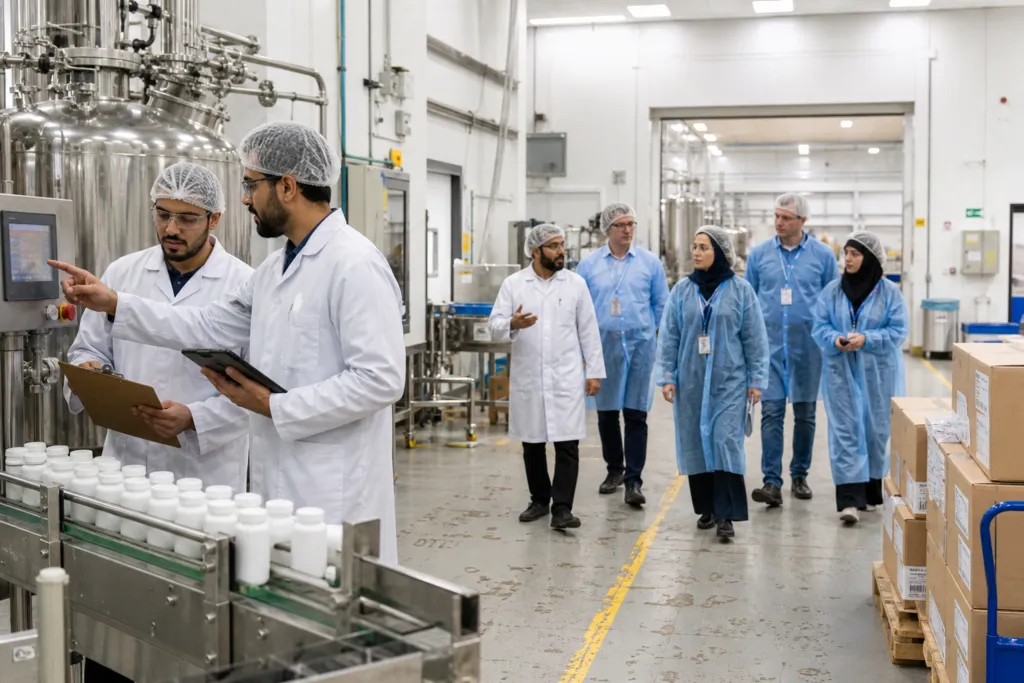
Localization is also extending into biologics. MS Pharma stated that its biologics site became the first in the Kingdom to receive SFDA GMP approval for biologics manufacturing. The company also said it plans this year to become the first supplier of locally manufactured biologics to the Saudi market. The same announcement linked these milestones to localization under the Saudi National Biotechnology Strategy and Vision 2030. These developments matter because they connect regulatory readiness with domestic manufacturing output, which is essential when localization targets emphasize dependable local supply and quality standards.
What does "Saudi pharmaceutical localization" mean in practice in these examples?
What market numbers indicate rising demand that can support localization?
How did SPIMACO’s Q4 2025 mix highlight localization-linked momentum?
How are JVs structured to support manufacturing buildout in Saudi Arabia?
What SFDA milestone was reported for biologics localization?