Downturns change the rules of buying. In Saudi Arabia’s 2026 environment, slower sentiment and higher uncertainty are not automatically deal-killers; they can also create openings for buyers who can underwrite operational fixes and negotiate around timing risk. Early-year deal data point to continuity. Saudi Arabia recorded 24 mergers and acquisitions in Q1 2026 worth $689 million, a 4% annual increase in deal volume, according to Ansarada’s Middle East M&A Market Analysis as cited by multiple reports. In the same Q1 window across the Middle East, 196 announced deals totaled $23.3 billion, versus 207 pacts worth $31.3 billion a year earlier, indicating lower regional announced value even as Saudi deal volume rose.
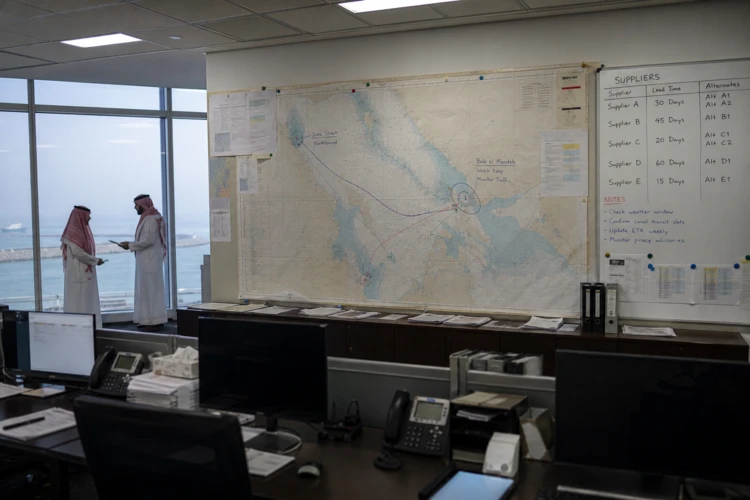
A restructuring lens matters because the 2026 slowdown signals are not only financial; they are also operational. Fitch Solutions describes a conflict-driven supply shock that pushed construction input costs in Saudi Arabia sharply higher, eroding developer demand and contributing to a forecasted contraction of construction activity in 2026. Fitch also flags disruption-risk scenarios, including a sustained Houthi blockade of Saudi Red Sea ports and a closure of the Strait of Hormuz extending beyond its base case, as potential amplifiers of supply-side pressure that can weigh further on demand. In a downturn, those pressures can translate into covenant stress, delayed projects, and the need for capital solutions that look more like restructuring than growth investing.
Where Distressed Buyers Can Focus: Cash Discipline, Costs, and Timelines
Deal selection in 2026 is also being shaped by a visible shift in how large pools of capital frame resilience. Deloitte’s April 2026 Middle East Economic Monitor says the Public Investment Fund’s 2026–2030 strategy signals a shift from rapid expansion toward long-term value creation, spending discipline, and resilience to external economic shocks. That posture can ripple into mid-market negotiations: buyers may prefer assets with clearer paths to cash discipline and operational durability, while sellers may have to accept more structure, tighter conditions, or longer diligence. Even at the market level, Fitch Solutions only slightly lowered its 2026 GDP growth forecast for Saudi Arabia from 4.8% to 4.6% in response to the ongoing US–Iran conflict, with impacts concentrated in tourism and logistics—useful context for where stress, and therefore restructuring openings, may concentrate.
Sector signals help buyers prioritize. Ansarada’s reporting coverage notes that across the Middle East in Q1 2026, technology led by volume with 68 deals worth $7.3 billion, driven by artificial intelligence, fintech, and enterprise technology. For Saudi Arabia specifically, another indicator is that transportation and technology were expected to remain the most active sectors for dealmaking through the rest of 2026, while healthcare and industrials continued to draw strategic investors. On-the-ground execution matters, too: BinDawood Holding completed the acquisition of a 51% stake in Vaza Food Co. for SAR 217.9 million after finalizing procedures tied to ownership transfer and amended bylaws, illustrating that transactions can close even when market narratives are cautious.
In practice, Saudi Arabia distressed M&A opportunities in a 2026 slowdown often arise where valuation and liquidity collide with real-world disruptions. The Saudi stock market downturn cited one snapshot: the Tadawul All Share Index settled at 10,325.20 points on Jan. 5, 2026, down 0.37% in a single session. The same reporting highlights cost pressures after diesel price hikes implemented in January 2026, with Almarai announcing an anticipated SR70 million increase in direct costs for the year. For acquirers, these kinds of cost and confidence signals can inform turnaround plans, bridge financing needs, and post-close integration priorities, especially when disruptions reshape timelines rather than eliminating deal appetite.
What did Q1 2026 deal activity signal for buyers in Saudi Arabia?
How can a construction slowdown create restructuring opportunities in 2026?
Which sectors looked most active for dealmaking through the rest of 2026?
How should buyers think about Saudi Arabia distressed M&A during the 2026 slowdown?
What cost-pressure signals were visible in early 2026 that can matter to turnaround plans?