A striking split has emerged in gold-linked consumer behaviour: jewellery volumes fell 19% year-on-year, yet jewellery spending rose 47%, according to the World Gold Council. That combination matters for retailers because it suggests shoppers are paying more per unit even as they purchase fewer pieces. In practice, this can lift revenue at the till while putting pressure on unit sales targets, inventory turns, and entry-price assortment. It also aligns with the same source’s warning that jewellery demand may stay under pressure from inflation and broader economic headwinds, even while investment demand remains supportive.
In Saudi Arabia, the growth backdrop is measurable in market revenue expectations. Grand View Research estimates the country’s jewelry market generated USD 6,142.7 million in 2025 and is expected to reach USD 9,388.0 million by 2033, implying a 5.6% CAGR from 2026 to 2033. Category mix also matters when retailers plan space and buying: rings were the largest segment in 2025, with a 38.15% revenue share. For the Saudi Arabia jewellery market, those figures frame why a higher-spend, lower-volume pattern is strategically important: value can rise while product preferences concentrate in fewer, high-intent segments.
Luxury Demand, Tourism Spend, and the Price of Gold
Luxury demand signals across the region reinforce that pricing can reshape buying without eliminating it. Designer Signals notes that gold near USD 4,715/oz already cut UAE jewellery volumes by 40%, showing how high input prices can suppress unit demand even when buyer conviction stays intact. In Saudi Arabia, the same report highlights tourism dynamics that can support premium categories: total visitor numbers grew 8% to 37.2m, and total tourism spend reached SAR 82.7bn (USD 22.1bn). It also reports that even as Saudi inbound arrivals fell 13%, inbound spending fell only 7%, implying higher per-visitor expenditure and strong gifting and fine-jewellery purchase behaviour among repeat visitors.
Within premium tiers, spending can also be tied to culturally driven occasions. Ken Research’s luxury jewelry coverage for Saudi Arabia states that over 65% of luxury jewelry purchases are estimated to be linked to weddings and religious celebrations, with average spending per wedding reaching SAR 160,000 (USD 42,666). The same source values the Saudi Arabia luxury jewelry market at USD 3.5 billion, based on a five-year historical analysis, and points to rising demand among millennials and Gen Z alongside expanding luxury retail outlets and international brand entries. Together, these factors help explain why higher spending can persist even when affordability pressures curb volumes.
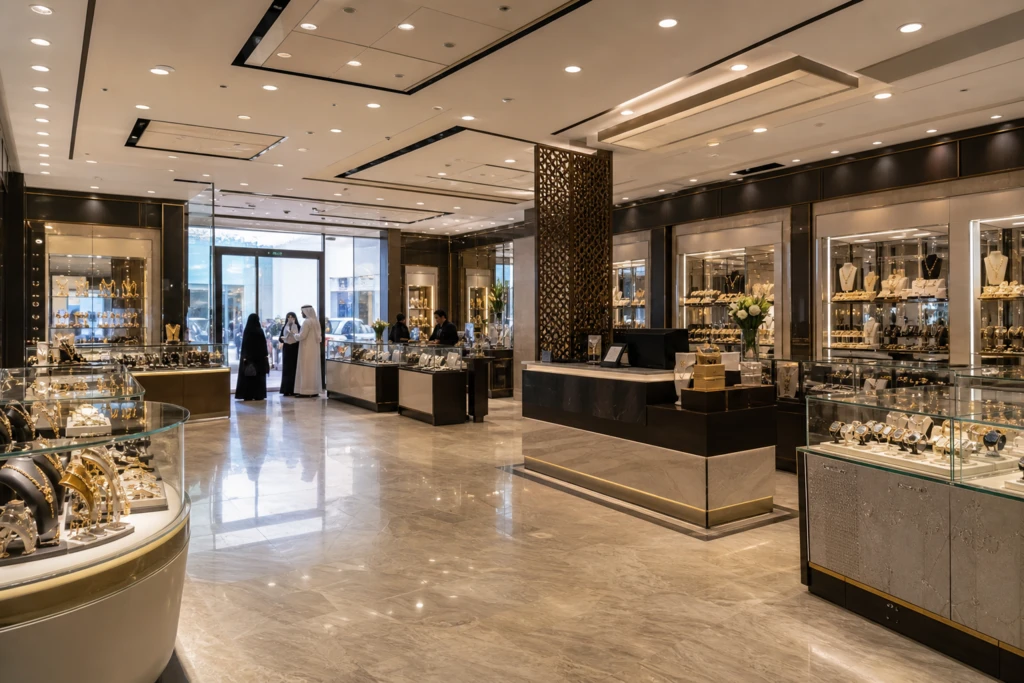
For gold and luxury retailers, the signal is to plan for a market where value, certification, and channel strategy matter as much as raw footfall. Mordor Intelligence reports that offline retail stores held 81.27% share in 2025 in the global gold jewelry market, while online retail stores are projected to advance at a 5.23% CAGR through 2031. It also reports that, by purity, 22-karat jewelry held 47.23% share in 2025, while 18-karat jewelry is projected to grow at a 3.81% CAGR through 2031. In a climate where spending can rise as units fall, assortment architecture, price ladders, and trust-building signals become central to sustaining revenue quality.
What does a 47% rise in jewellery spending alongside a 19% drop in volumes imply?
How large is Saudi Arabia’s jewelry market, and what growth is expected?
Which product segment leads revenue in Saudi Arabia’s jewelry category mix?
What do the latest travel and tourism figures suggest for luxury jewellery sales in Saudi Arabia?
How is the Saudi Arabia jewellery market influenced by weddings and celebrations?