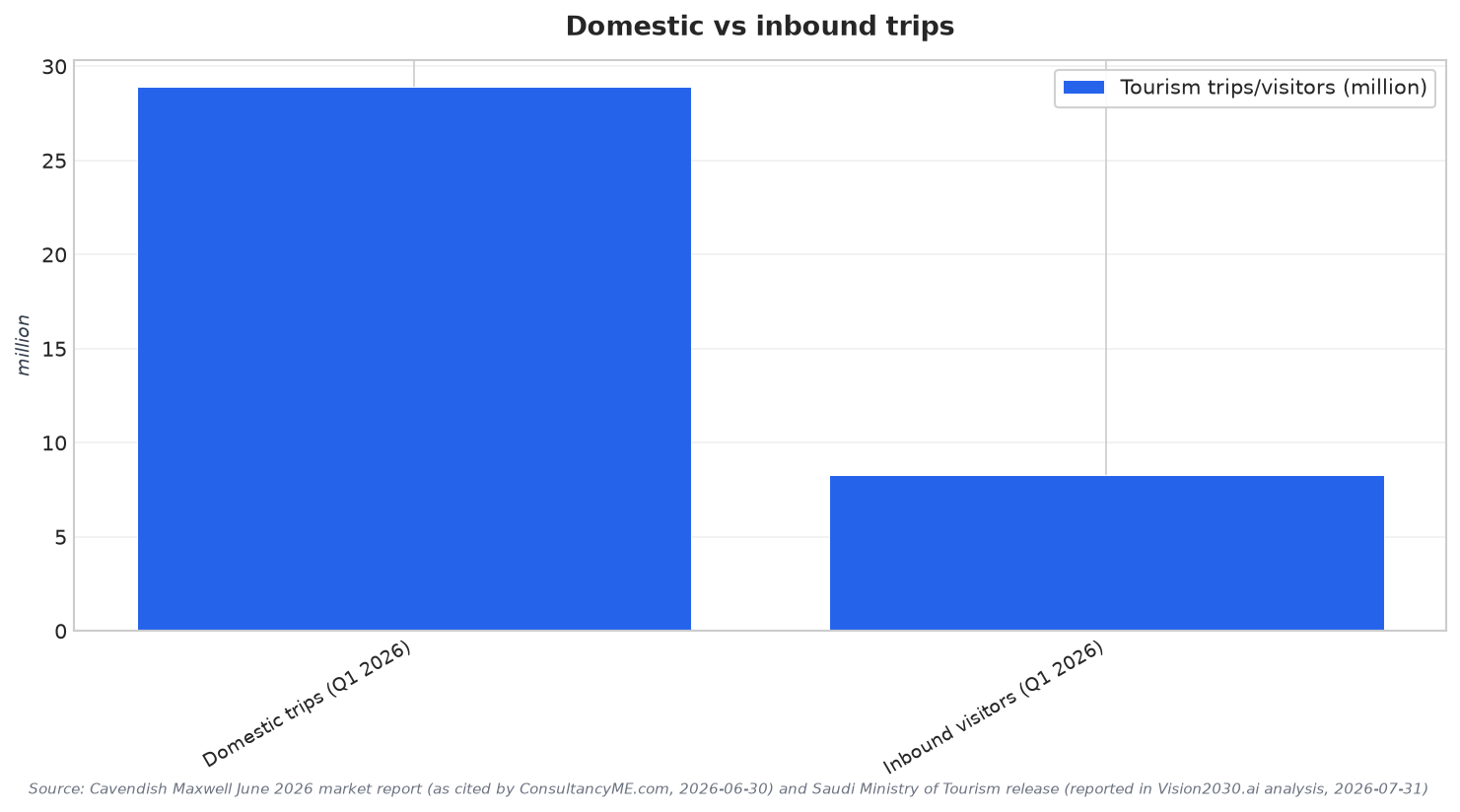
Saudi tourism operators are facing a mixed demand signal in 2026. Between January and March 2026, Saudi Arabia recorded 37.2 million tourism trips, up 8% year on year, according to figures carried from the Ministry of Tourism’s 8 April 2026 release. But the details matter. Inbound international visitors fell 13% to 8.3 million in Q1 2026, while domestic trips rose 16% to 28.9 million. In practical terms, that means growth is being carried by residents travelling inside the Kingdom, even as international volume softens.
This shift changes both marketing priorities and revenue management. International visitors were 22% of total trips in Q1 2026 but generated 58% of total tourism spending. Inbound spending totalled SAR 48.0 billion, described as a 7% decline versus Q1 2025, while domestic spending rose 8% to SAR 34.7 billion. Some reports also noted that spend per inbound visitor rose by approximately 6% year on year, with average expenditure around SAR 5,780. For hotels, attractions, and DMCs, the message is clear: domestic volume can stabilize occupancy, but product design must protect yield.
How to Pivot Without Discounting Your Brand
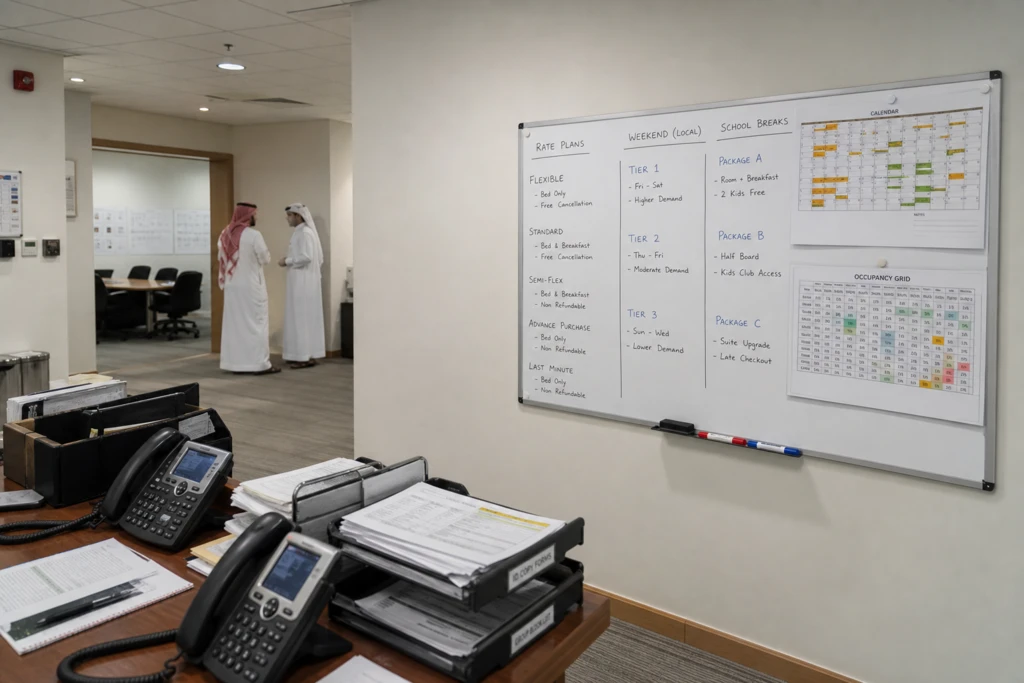
Start with packages that fit the domestic rhythm already visible in the data and commentary: peaks around Ramadan, Eid, and Hajj season, and high-frequency short breaks that are counted as separate trips. Build two-tier offers. The first tier targets value-seeking residents with clear inclusions (breakfast, late checkout, family add-ons) rather than rate cuts. The second tier targets premium domestic occasions—weekend celebrations, wellness stays, and “city switch” micro-trips between hubs—where perceived value, not the lowest price, closes the sale. Operators in Makkah and Madinah can lean into seasonal demand, while urban hotels can tailor fast-booking, short-lead inventory for residents.
Next, move marketing spend toward channels that convert domestically and measure success by repeat rate, not just reach. Cavendish Maxwell’s analysis described how the impact of weaker inbound demand was “largely offset” by domestic travel, with particular strength in destinations like Makkah and Madinah. That points to a playbook: localized creative, Arabic-first landing pages, and loyalty mechanics that reward second and third trips. Mordor Intelligence also highlights that domestic tourism reached 93.3 million trips in 2025, generating SAR 127.1 billion, suggesting a deep base market to cultivate. For independents, partnering with chains or marketplaces can help compete, as chain hotels held 57.74% market share in 2025.
Finally, keep an “inbound-ready” layer even while pivoting to local demand. The inbound decline was tied in reporting to geopolitical tensions, yet those who did arrive still represented the majority of spending. That makes selective international distribution worth maintaining, but with tighter targeting: focus on higher-intent segments and dates where domestic compression pushes rates up. For planning in Saudi Arabia domestic tourism 2026, treat the domestic traveller as the occupancy backbone and international guests as the margin driver. A balanced commercial plan that serves both groups is the most durable response to diverging volume and value trends.
What happened to domestic trips and inbound arrivals in Q1 2026?
How did tourism spending split between international and domestic travellers?
Did inbound visitor value change even though arrivals fell?
How can hospitality brands pivot for Saudi Arabia domestic tourism 2026 without heavy discounting?