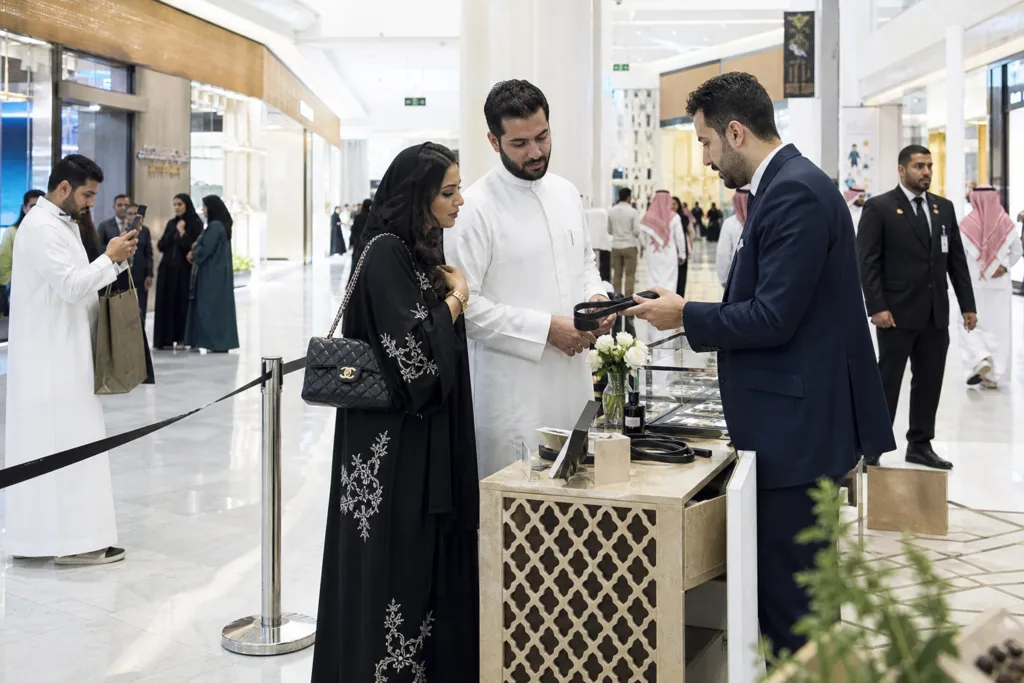
The Saudi Arabia luxury goods market is being built around ecosystems, not single stores. In Riyadh, Cenomi Centers’ CEO Alison Rehill-Erguven described a customer journey that stacks everyday needs with premium moments: health checks, dentist appointments, grocery shopping, and coffee in one trip. That mix matters because it creates more touch points for brands. Cenomi Centers is the kingdom’s largest mall operator, with 21 destinations across 10 cities drawing more than 109 million visitors annually. In that context, luxury becomes part of a broader, repeatable routine rather than a rare, standalone purchase.
New supply is also being designed specifically to raise the ceiling for luxury. Two flagship assets coming to market this year, Westfield Jeddah and Westfield Riyadh, will each include luxury precincts of at least 215,000 square feet. Rehill-Erguven noted these formats “technically, at this moment in time, don’t exist in the kingdom today.” The investment logic is not only about adding stores. PIF frames retail development as building ecosystems that are “unique, engaging, and commercially viable,” a standard that pushes brands to localise service, experiences, and community, not just product assortments.
There is also a measurable conversion gap that retail ecosystems aim to close. At a February panel, Georges Barakat, head of market and commercial strategy for retail at PIF’s local real estate investment division, said currently only 4 percent of tourists visiting Saudi Arabia spend on luxury, compared to double digits in comparable markets. For luxury houses, that implies a localisation challenge in how tourists are welcomed, guided, and activated. The goal becomes turning visits into spend through better precinct design, clearer pathways to luxury zones, and experiences that feel culturally aligned and frictionless.
Localization Now Means Talent, Platforms, and Feel
Brand leaders are framing localisation as emotional relevance without losing identity. On localisation, Ghanim argued brands should adapt “without surrendering their identity,” describing activations around the Abu Dhabi F1 finale across a portfolio from Lululemon to AllSaints. He also said luxury’s winners will differentiate through how they make shoppers feel: “Feeling seen, feeling appreciated.” In Saudi, that idea is reinforced by institutional investment in the fashion ecosystem. The Saudi 100 Brands program, now in its fourth year, incubates more than 100 local labels annually.
The kingdom is also adding infrastructure that helps brands localise through product, storytelling, and talent pipelines. Istituto Marangoni opened the kingdom’s first international fashion campus. A permanent showroom partnership with White Milano launches this year. Riyadh Fashion Week expanded last October with a strong lineup of local designers alongside international houses, including Stella McCartney and Vivienne Westwood. Çakmak said that “five years ago” nobody had an answer about what fashion in Saudi looks like, while today Saudi has made a “major impact” as a destination for retail and talent and an opportunity for international brands.
Localization is also accelerating through online infrastructure, not only flagship stores. Trendyol, Turkey’s dominant e-commerce platform, entered Saudi two years ago and now serves 3 million to 4 million Saudi customers with 200,000 daily orders and roughly 10,000 onboarded merchants. Crucially, 60 percent of sales now come from local retailers, up from zero at launch. Mohamed ElAnsari, CEO of Trendyol Gulf, summed it up: “Localization for us is the name of the game.” For luxury brands, that signals a clear expectation: local partnerships, local merchandising, and local execution across channels.
What is driving localization in the Saudi Arabia luxury goods market?
What new luxury retail formats are coming to Saudi Arabia?
What share of tourists currently spend on luxury in Saudi Arabia?
How important is e-commerce localization in Saudi?