Saudi Arabia’s diversification push is no longer just a policy narrative. It is showing up in the structure of the economy and in the latest reported growth mix. Investment Minister Khalid Al Falih said 50.6% of the economy is now “completely decoupled” from oil, and he added that about 40% of government revenue now comes from non-oil sources. PwC’s Economy Watch described a further milestone: non-oil sectors account for around 56% of Saudi Arabia’s SAR 4.7 trillion economy. Together, those updates frame why Saudi non-oil GDP growth has become the key headline to watch.
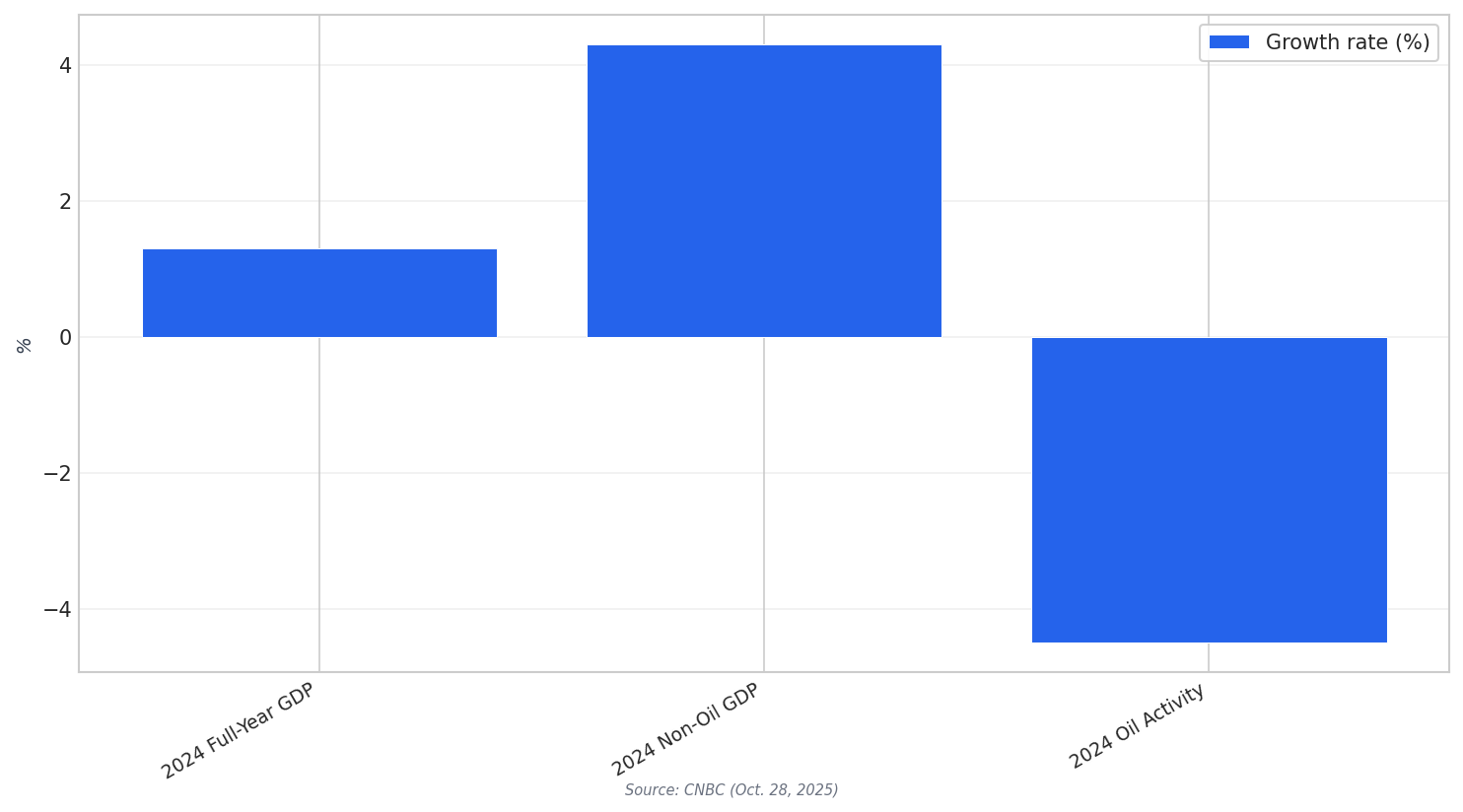
Recent growth splits reinforce the shift. CNBC reported Saudi Arabia posted a 1.3% rise in full-year GDP in 2024, mainly driven by a 4.3% increase in non-oil segments, while oil activity fell 4.5% year on year. Reuters, cited by Oilandgas360, said non-oil growth was 4.8% in the first half of 2025 versus overall real GDP growth of 3.6% in the same period. The same Reuters report said non-oil activity contributed more than 55% to total GDP. Another late-2025 roundup echoed the trend, stating non-oil GDP rose about 4.6% in H1 2025 and contributed over 55% of growth.
Sector Winners and Losers in the Diversification Mix
Tourism is a clear winner in the current mix, backed by a measurable rise in GDP share. Tourism Minister Ahmed Al-Khateeb said tourism’s share of GDP increased to 5% in 2024 from 3% in 2019, as Saudi Arabia opens resorts and expands airlines and airports to attract visitors from outside the country. He also said Saudi Arabia aims to raise tourism’s contribution to 10% of GDP by 2030 and eventually reach 20%. Services linked to retail, hospitality, and broader services also feature in PwC’s description of where non-oil expansion has been supported. These areas align with the government’s push into new growth engines beyond hydrocarbons.
Industry and more complex manufacturing also stand out as beneficiaries of the shift, with reported gains in activity and export breadth. Consultancy-me said that by the third quarter of 2025, non-oil business activity rose 48% year on year, signaling a broadening private sector. It also reported that the range of manufactured goods expanded to 612 in 2024, which is 54 more than in 2020, and that complex, knowledge-intensive products increased from 100 in 2020 to 123 in 2024. The same source said these complex exports average $3.3 billion annually, around 7% of all non-oil exports, and reach 126 global destinations, with plastics, organic chemicals, and nuclear reactors or boilers comprising about 90% of complex export value.
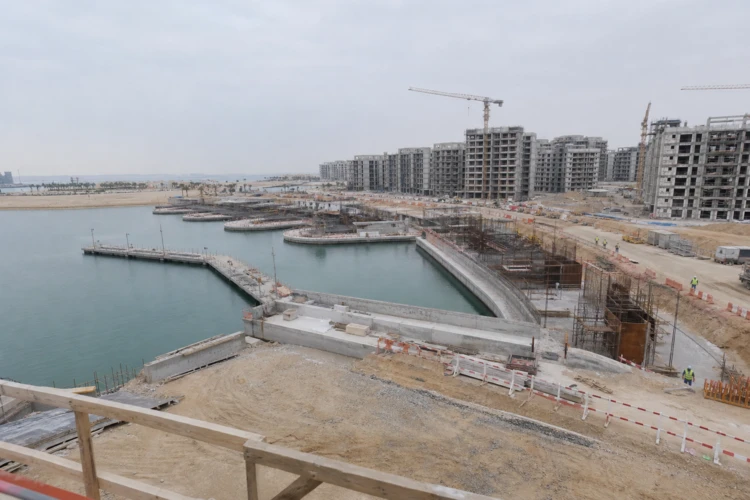
There are also losers and pressure points, especially where diversification remains exposed to oil cycles or where execution bottlenecks force reprioritization. PwC cautioned that future non-oil sector growth drivers are still closely linked to the oil sector, and its economists estimated a 20:1 relationship, meaning a 10% change in oil prices is associated with a 0.5% change in non-oil GDP. PwC also estimated that a sustained 10% decline in oil prices could reduce cumulative non-oil GDP by around SAR 430 billion over three years versus projected growth. Reuters reported Vision 2030 initiatives face delays and recalibrations, and said NEOM has faced repeated implementation delays and has been scaled back as Riyadh prioritizes infrastructure deemed essential for hosting global sporting events such as the 2034 World Cup.
What does “decoupled from oil” mean in Saudi Arabia’s latest updates?
What do the latest figures say about Saudi non-oil GDP growth?
Which sectors look like winners in the diversification push?
What risks could slow non-oil momentum even as it grows?