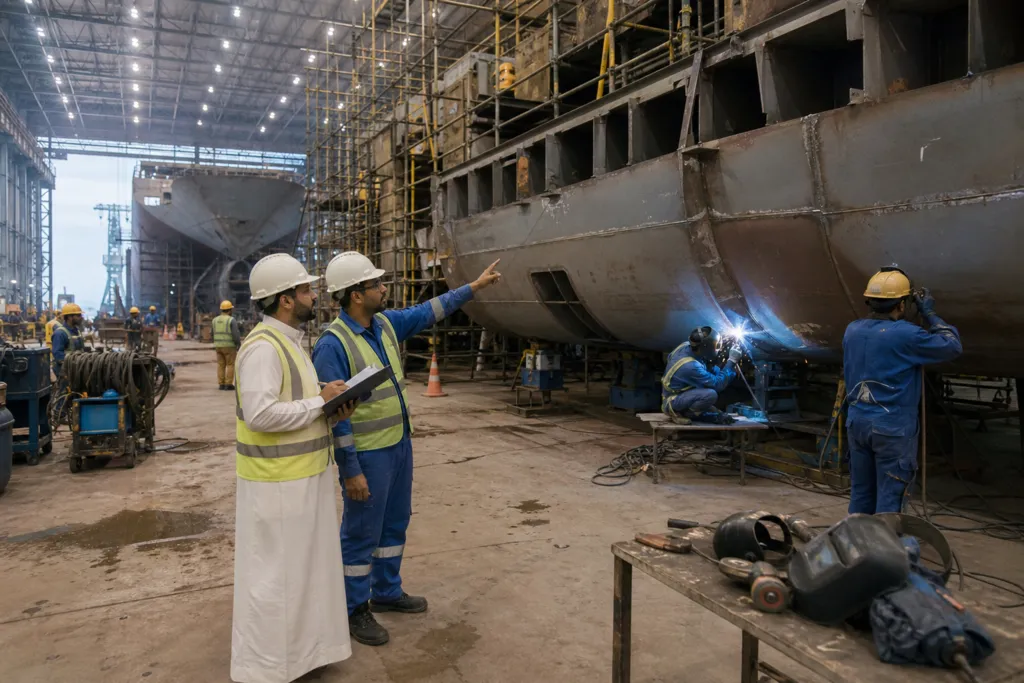
Shipyards and maritime manufacturing are becoming central to the Saudi Arabia maritime industry narrative under Vision 2030. International Maritime Industries (IMI) frames new builds as the start of “Saudi Arabia’s first large-scale shipbuilding program.” Bahri also describes the same shift as a “defining moment” that modernizes its fleet while laying foundations for a “sustainable and globally competitive” sector. The common thread is localization. Both companies link new construction to long-term value for the national economy, higher resilience, and stronger supply chains that support customers and stakeholders.
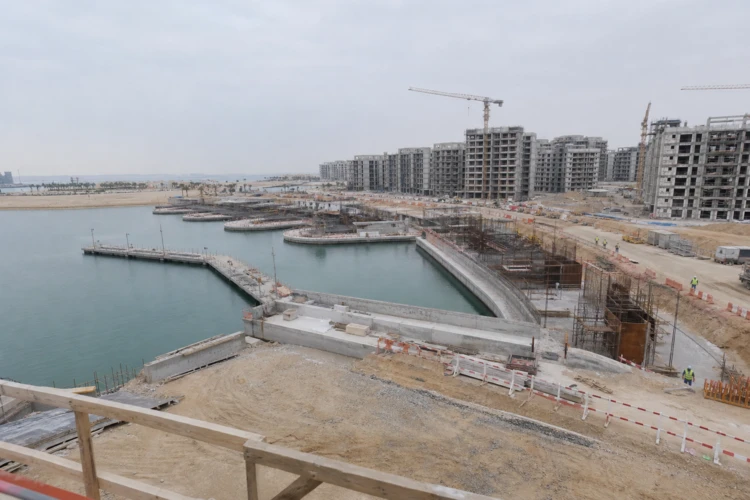
IMI’s Ras Al-Khair shipyard is described as a state-of-the-art facility and “the largest full-service maritime facility in the MENA region.” The geared Ultramax vessels ordered by Bahri are positioned as flexible assets that can access ports with limited infrastructure. Bahri and IMI argue that this capability supports expansion into niche markets and emerging trade routes. The stated goal is to reduce exposure to market volatility, while improving resilience, competitiveness, and sustainability as industry conditions evolve.
From Yard Buildout to Local Supply Chains
Saudi Arabia is also courting international participation to expand shipbuilding and establish local supply chains. A shipbuilding and marine equipment roundtable discussed plans tied to Vision 2030, with the Kingdom seeking investment and participation from Korean companies. HD Hyundai is constructing the IMI Shipyard and the Makeen engine manufacturing company within the King Salman International Complex for Maritime Industries in Al Jubail. Full operations are scheduled for 2026 for the shipyard and 2027 for the engine plant. Once completed, the facilities are expected to include three large docks, four Goliath cranes, and seven berths, enabling construction of up to 40 vessels annually.
Maritime manufacturing is not limited to commercial shipbuilding. IMI and ARO signed a landmark agreement for a new offshore jack-up rig, KINGDOM 4. The project follows the earlier construction of KINGDOM 3, described as the first offshore jack-up drilling rig built in Saudi Arabia. IMI and ARO say the work strengthens local supply chains and advances “global leadership” ambitions in line with Vision 2030. The framing is consistent: offshore capability is treated as part of an emerging maritime industries sector, not a standalone niche.
Services and human capital are being built alongside steel and infrastructure. At the Saudi Maritime Logistics Congress, Bahri was highlighted as a Founding Strategic Partner, with other partners including Mawani and TGA. Bahri’s ecosystem approach includes a Letter of Intent with Ma’aden to explore localization and resilient supply chains, and a partnership with the Saudi Logistics Academy to enhance employment opportunities and skills development. Bahri Ship Management also expanded its service portfolio to provide technical ship management and crewing services to other operators, widening the domestic capabilities that surround new shipyards.
The Red Sea is also part of the strategic picture. One report says Saudi Arabia is positioning the Port of NEOM on the western side of the country as an alternate shipping route amid chaos at the Strait of Hormuz, with ambitions to connect the Gulf with Europe and Africa. It also notes a shift from the east coast toward the Red Sea, while adding that the Port of NEOM does not handle oil. At the same time, the report says Yanbu on the west coast has seen a 4x increase in oil exports since February, linked to an east-west pipeline. Together, these signals show how industrial buildout and route options are being discussed in the same breath as the Saudi Arabia maritime industry push.
What is driving shipbuilding growth in the Saudi Arabia maritime industry?
Where are key shipyard projects being developed?
What capacity is expected from the Al Jubail complex once complete?
How is offshore manufacturing developing alongside shipbuilding?
How does the Red Sea feature in Saudi Arabia’s maritime positioning?