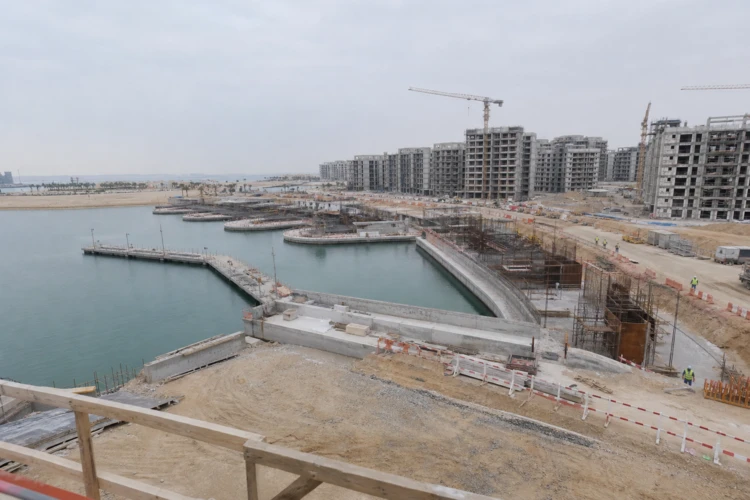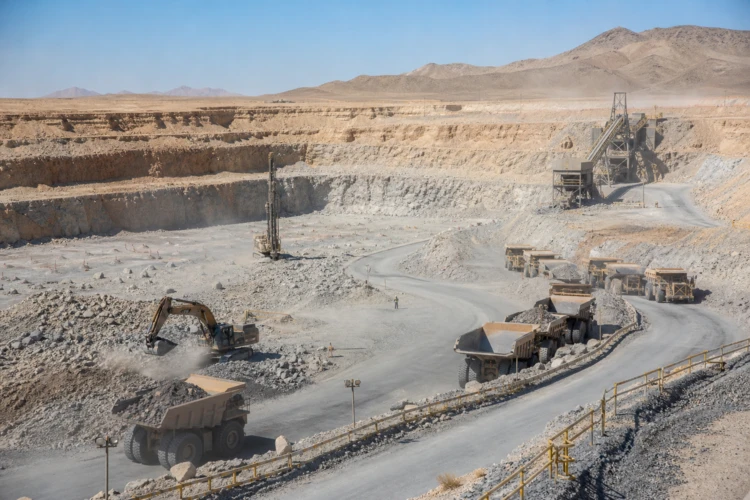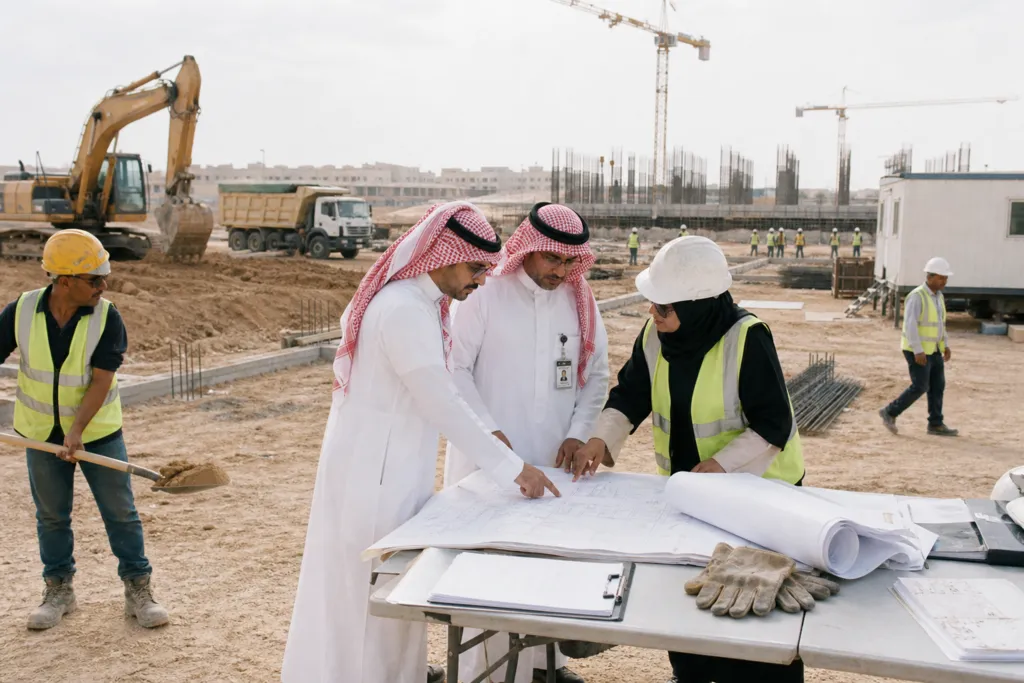
Saudi Arabia has started construction on a major hyperscale facility in Riyadh: the Saudi Data and Artificial Intelligence Authority (SDAIA) Hexagon data centre. Ground has been broken and the foundation stone was laid late last week. It has been described as the world’s largest government data centre. The project matters because it is designed to host more than 290 government systems in one place. SDAIA president Abdullah bin Sharaf Al-Ghamdi linked the build to goals that include data sovereignty and security, alongside innovation and the digital economy. In parallel, he promised more centres to come.
In physical terms, the Hexagon has unusually large published specifications. It will ultimately occupy 2.78 million square metres and is planned for 480MW of power capacity. The design is certified Tier IV. Data Centre Dynamics reported a distinctive architectural concept: two concentric hexagons with a court in the middle of the facility. The project has also reportedly been designed to meet green building requirements, but no additional detail has been provided on the sustainability features, or on the construction timetable and launch date. Even with those unknowns, the stated capacity signals a step change in the scale of Saudi government cloud infrastructure.
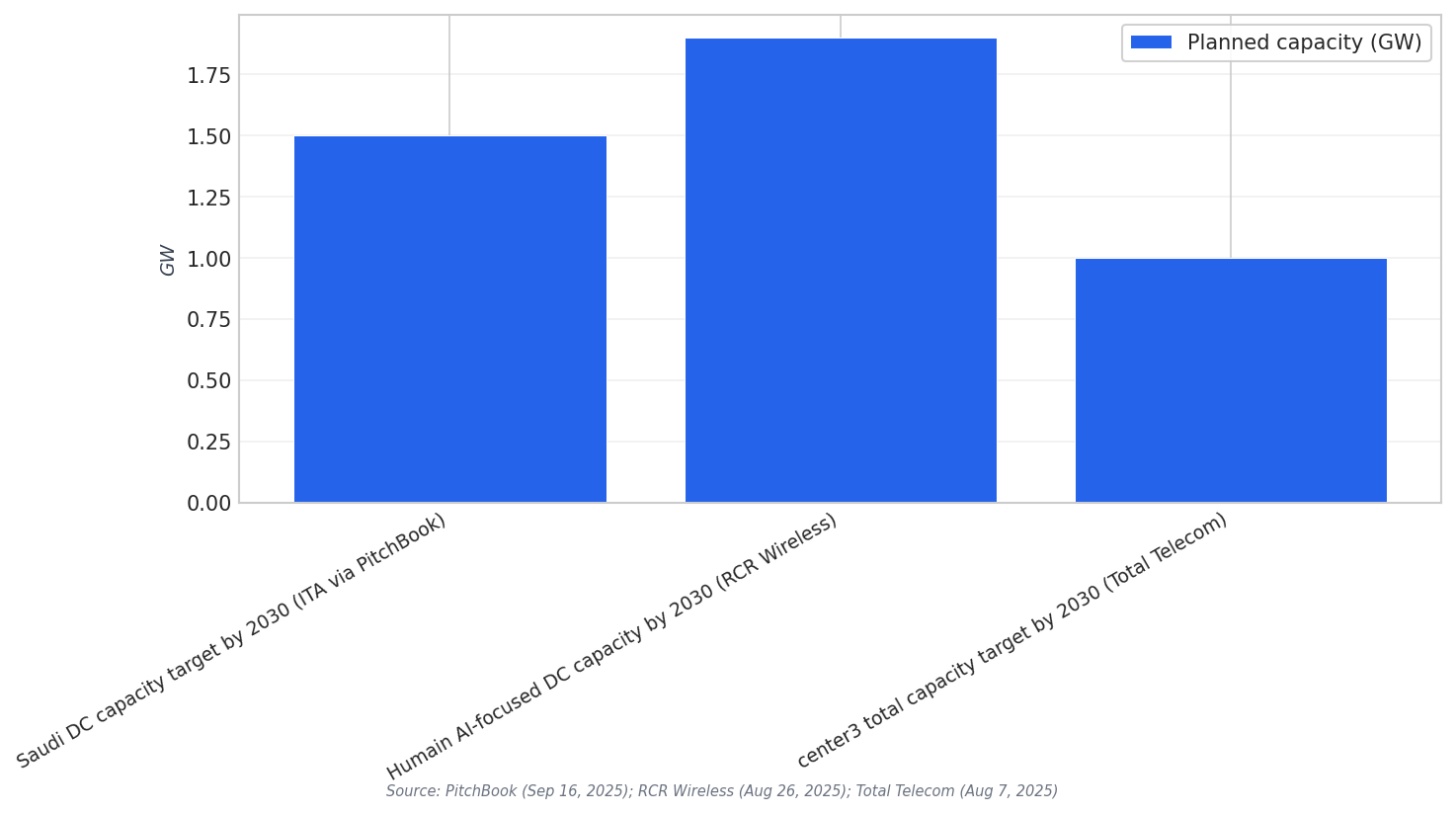
The broader context is an accelerating build-out of regional and national data centre capacity, and the Hexagon sits inside that momentum. Saudi Arabia has set a target of developing up to 1.5 gigawatts of data center capacity by 2030, according to a US International Trade Administration market intelligence report cited by PitchBook. Separately, Humain’s roadmap includes developing up to 1.9GW of AI-focused data center capacity by 2030, with plans to scale to 6.6GW over the next four years, according to RCR Wireless. Those targets are not the same thing as SDAIA’s plans, but they show why a large, government-led build like the Hexagon can reshape expectations for local capacity.
Why Hexagon Changes the Cloud Conversation in Riyadh
The Hexagon’s stated mission is not only scale. It is also centralisation of public-sector compute and a clearer line on sovereignty and security. Hosting more than 290 government systems inside a certified Tier IV design implies a push toward consistent resilience standards across agencies. SDAIA itself was funded in 2018, and its transformation strategy was approved in 2019, with the authority described as the competent national body concerned with data and AI including big data. The new facility therefore becomes a physical anchor for that mandate, and a signal that government demand will be an important load on Saudi cloud capacity.
Hexagon also arrives as other Saudi initiatives scale quickly. Humain has started building its first data centers in Riyadh and Dammam, with operations expected to begin in early 2026, and launch in the second quarter of 2026, with an initial capacity of up to 100MW per site, according to Bloomberg as reported by RCR Wireless. Total Telecom reported that stc subsidiary center3 plans to expand to a total capacity of 1 gigawatt by 2030, with a milestone of 300MW of installed capacity by 2027, and noted about $3 billion invested so far plus an additional $10 billion planned by the end of the decade. Taken together, the Saudi Arabia Hexagon data center becomes part of a wider capacity surge that can pull more workloads onshore.
What is the Saudi Arabia Hexagon data center?
How big is the Hexagon Project in Riyadh?
What is known about the Hexagon’s design and sustainability goals?
How does Hexagon fit into wider Saudi data centre expansion plans?