Saudi Arabia plays a central role in the global economy. Its oil exports influence international markets, while its investment environment attracts companies from around the world. However, regional conflicts and geopolitical tensions continue to shape how businesses operate in the Kingdom. Understanding the Saudi Arabia Business Impact of these tensions is important for investors, companies, and policymakers who want to navigate the market effectively.
One of the most important factors affecting Saudi Arabia’s economy is its reliance on oil. According to the International Monetary Fund, the country’s GDP growth was projected to reach 4.5% in 2022, but this growth remains closely linked to global oil prices. Oil exports dominate government income, and the World Bank estimates that petroleum accounts for around 90% of government revenue. This dependency means geopolitical conflicts that disrupt energy markets can quickly influence economic performance. When oil prices rise due to regional instability, revenues increase. However, volatility also creates uncertainty for long-term planning.
Foreign investment is another area where geopolitical tensions create visible effects. According to the UNCTAD World Investment Report, Saudi Arabia attracted $1.6 billion in foreign direct investment (FDI) in 2021, compared with $5.6 billion in 2020. This significant decline highlights how global investors respond quickly to uncertainty. Surveys also reinforce this concern. The PwC Middle East Economic Outlook found that 79% of international investors view geopolitical instability as a major risk when considering investment in Saudi Arabia. As a result, companies often delay expansion plans or reconsider their investment strategies during periods of tension.
Business confidence inside the Kingdom also reflects these challenges. A 2022 survey reported by Arab News revealed that 62% of businesses in Saudi Arabia experienced declining confidence because of regional conflicts and geopolitical uncertainty. Companies often respond to instability by slowing investment, reducing hiring, or postponing major projects. The World Economic Forum has also warned that instability in neighboring countries could result in a 15% decline in business activity in sectors such as tourism and hospitality. These industries depend heavily on international travel and investor confidence, making them particularly sensitive to regional security issues.
Impact on Tourism, Employment, and Economic Stability
Tourism has become an important sector in Saudi Arabia’s economic diversification strategy. The Saudi Commission for Tourism and National Heritage estimates that tourism could grow by 3–4% annually. However, geopolitical tensions threaten this progress. External crises and regional instability can discourage travelers and reduce international arrivals. The UN World Tourism Organization (UNWTO) reported that international tourist arrivals dropped by 70% in 2020, highlighting how quickly external shocks can disrupt the sector.
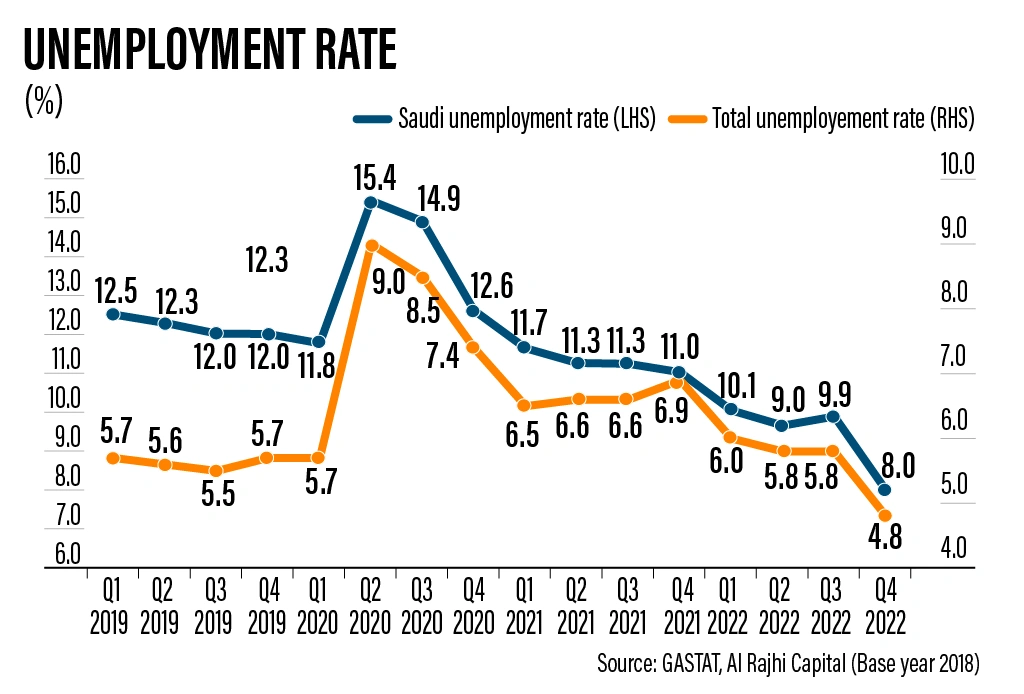
The effects of geopolitical tensions also extend to the labor market. According to the Saudi Arabian General Authority for Statistics, the national unemployment rate was 6.6% in 2021. Some sectors, particularly hospitality and tourism, have faced stronger pressure due to reduced travel and business activity. Economic uncertainty also affects workforce planning. A McKinsey & Company report indicated that 55% of Saudi businesses planned to reduce their workforce because of uncertainties linked to geopolitical tensions.
Read also: Lubricant Demand in Saudi Arabia Under Vision 2030
These statistics show how geopolitical tensions shape multiple aspects of the Saudi economy. Oil revenues remain a powerful driver of growth, but they also expose the economy to global volatility. Foreign investors respond quickly to risk signals, while businesses adjust their strategies when confidence declines. At the same time, sectors such as tourism and hospitality face particular vulnerability because they rely on international mobility and investor sentiment.
In summary, the Saudi Arabia Business Impact of war and geopolitical tensions goes beyond short-term disruptions. It influences investment flows, business sentiment, employment levels, and sector growth. For companies considering expansion into the Kingdom, understanding these dynamics is essential for making informed strategic decisions.